TETRA TECH
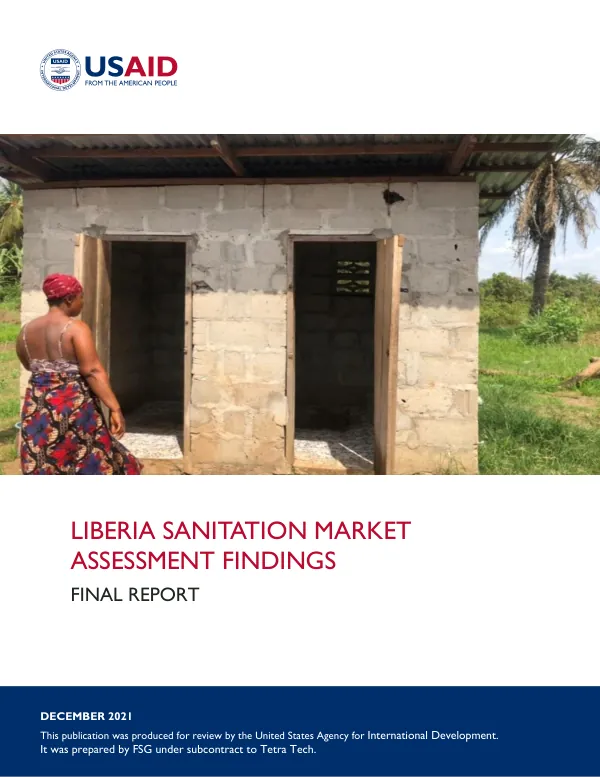
Liberia Sanitation Market Assessment Findings: Final Report
The sanitation market in Liberia is characterized by a significant gap between the demand for improved sanitation facilities and the availability of such facilities.
2021 · 50 pages
Sign in to readA free account is required to download.
Abstract
According to the Liberia Demographic and Health Survey (LDHS), in 2019, approximately 44% of households in Liberia reported using improved sanitation facilities, while 56% reported using unimproved facilities or practicing open defecation. The Joint Monitoring Programme (JMP) estimates that Liberia has a sanitation coverage rate of 34%, with a significant urban-rural disparity. The sanitation market in Liberia is driven by a range of factors, including government policies, market demand, and the availability of sanitation products and services. The Government of Liberia (GoL) has implemented various initiatives to improve sanitation, including the National Sanitation Policy and the Liberia Sanitation and Hygiene Strategy. However, the market remains largely informal, with a lack of standardization and regulation. Key barriers to market-based sanitation in Liberia include a lack of access to finance, limited market awareness, and inadequate infrastructure. Many households in Liberia lack access to credit or other financial services, making it difficult for them to purchase improved sanitation facilities. Additionally, there is a lack of awareness about the benefits of improved sanitation, which can make it difficult to promote market-based sanitation initiatives. The report identifies several key recommendations for improving the sanitation market in Liberia. These include innovating on and promoting affordable, context-appropriate, and desirable toilet products, providing customer finance in the form of soft loans and targeted, market-compatible subsidies, investing in enhancing the availability and viability of sanitation enterprises, addressing unfavorable beliefs and building awareness, and shaping market rules to create favorable regulations and policies. The report also highlights the importance of addressing the root causes of open defecation, including a lack of access to sanitation facilities, inadequate waste management, and cultural and social norms that discourage the use of improved sanitation facilities. To address these challenges, the report recommends implementing a range of interventions, including the promotion of affordable and accessible sanitation products, the provision of financial incentives for households to adopt improved sanitation practices, and the development of community-led total sanitation (CLTS) programs to promote behavior change and social norms. The Liberia Sanitation Market Assessment Final Report provides a comprehensive analysis of the sanitation market in Liberia, highlighting the key challenges and opportunities for improving sanitation outcomes. The report provides a range of recommendations for policymakers, practitioners, and other stakeholders seeking to improve sanitation outcomes in Liberia.