LEAGUE FOR INTERNATIONAL FOOD EDUCATION (LIFE)
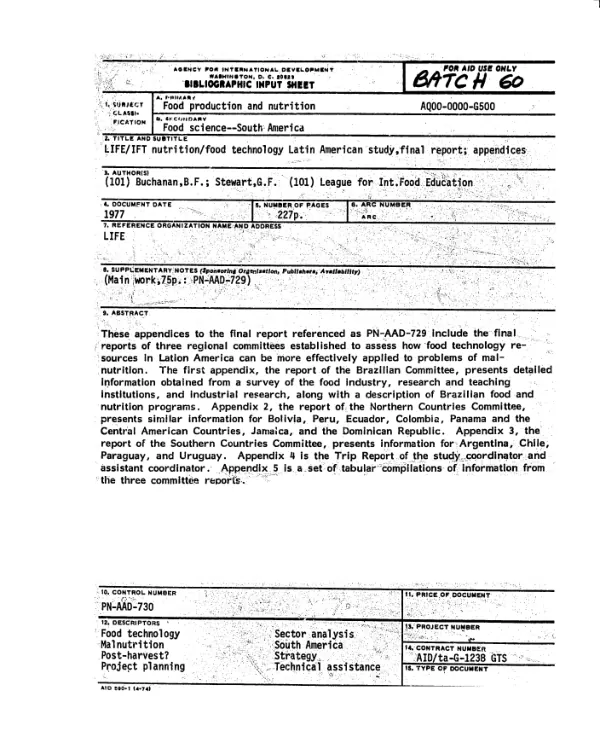
Life/IFT nutrition/food technology Latin American study, final report
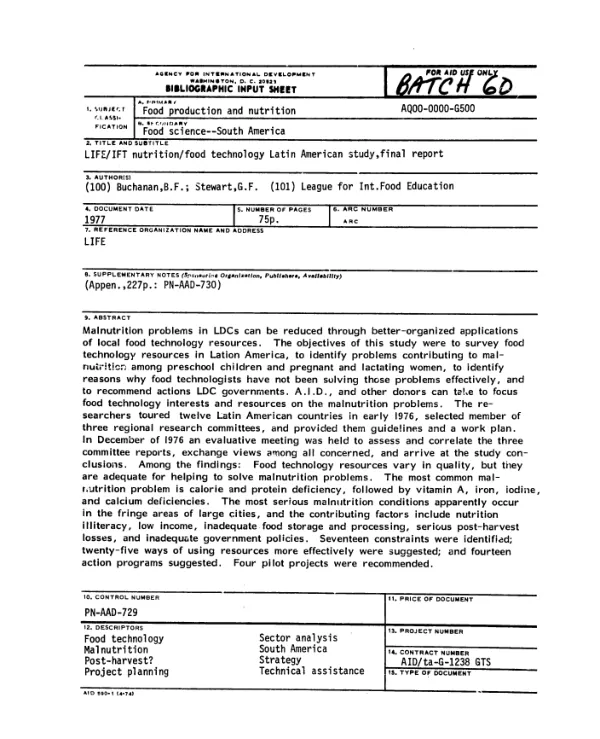
The objectives of this study were to survey food technology resources in Latin America, to identify problems contributing to malnutrition among preschool children and pregnant and lactating women, to identify reasons why food technologists have not been solving those problems effectively, and to recommend actions to LDC governments.
Buchanan, B. F.; Stewart, G. F. · 1970
Sign in to readA free account is required to download.
Abstract
AID, and other donors, can take to focus food technology interests and resources on the malnutrition problems. The researchers toured twelve Latin American countries in early 1976, selected members of three regional research committees, and provided them guidelines and a work plan. In December of 1976, an evaluative meeting was held to assess and correlate the three committee reports, exchange views among all concerned, and arrive at the study conclusion. Among the findings: Food technology resources vary in quality, but they are adequate for helping to solve malnutrition problems. The most common malnutrition problems are calorie and protein deficiency, followed by vitamin A, iron, iodine, and calcium deficiencies. The most serious malnutrition conditions apparently occur in the fringe areas of large cities, and the contributing factors include nutrition illiteracy, low income, inadequate food storage and processing, serious post-harvest losses, and inadequate government policies. Seventeen constraints were identified; twenty-five ways of using resources more effectively were suggested; and fourteen action programs suggested. Four pilot projects were recommended.
Connected topics