THE INSTITUTE OF INTERNATIONAL EDUCATION
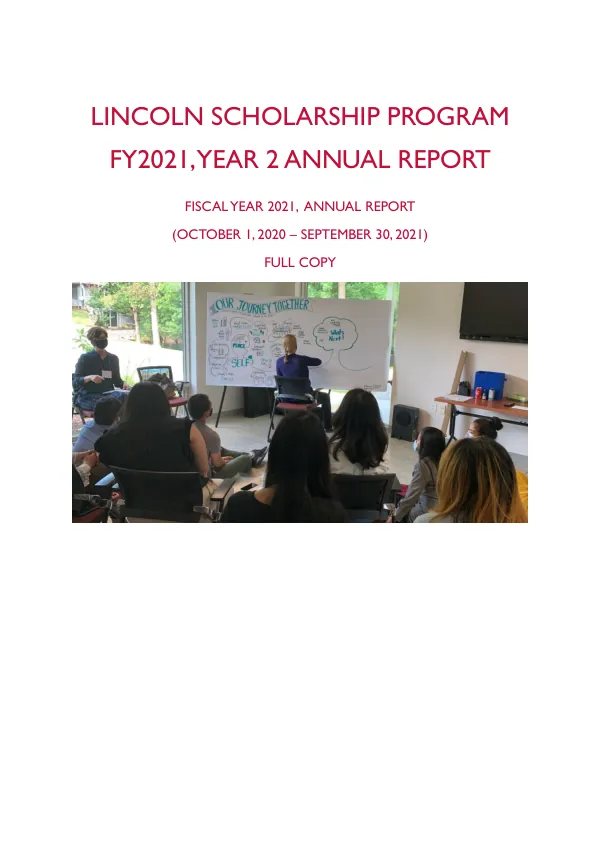
Lincoln Scholarship Program FY2021, Year 2 Annual Report
The Lincoln Scholarship Program is a cooperative agreement between the United States Agency for International Development (USAID) and the Institute of International Education (IIE).
2021 · 40 pages
Sign in to readA free account is required to download.
Abstract
The program aims to provide educational opportunities to Burmese students, with a focus on conflict resolution, leadership, and diversity, equity, and inclusion. The program is implemented over a period of seven years, from August 28, 2019, to August 27, 2026, with a total award amount of $28,000,000. The program is divided into three cohorts, with each cohort consisting of a group of students who undergo a rigorous selection process. The selection process includes a written application, interviews, and a review of academic records. Once selected, the students undergo a pre-academic training program, which includes courses on conflict resolution, leadership, and English language proficiency. The program's results are measured through a monitoring and evaluation system, which tracks the students' progress and outcomes. The system includes a range of indicators, such as the number of students who complete their academic programs, the number of students who secure internships or jobs, and the number of students who return to Burma and contribute to the country's development. In Year 2 of the program, a total of 25 students were selected for Cohort 1, with 15 students selected for Cohort 2. The students underwent a range of activities, including conflict resolution workshops, leadership training, and networking events. The program also included a pre-academic training program, which consisted of courses on conflict resolution, leadership, and English language proficiency. The program's results for Year 2 show a significant increase in the number of students who completed their academic programs. A total of 20 students completed their programs, with 15 students securing internships or jobs. The program also reported a significant increase in the number of students who returned to Burma and contributed to the country's development. The program's lessons learned and actions to strengthen Year 3 include the need to improve the selection process, to increase the number of students who complete their academic programs, and to enhance the program's monitoring and evaluation system. The program also plans to expand its alumni network and to increase its engagement with the Burmese government and civil society organizations. The program's donor coordination activities include regular meetings with USAID and other stakeholders to discuss program progress and outcomes. The program also engages with a range of partners, including George Mason University, CoreSkills, LLC, and the American Chamber of Commerce Myanmar. The program's priorities for the next reporting period include the implementation of a branding and marking plan, the awarding of scholarships to Cohort 3, and the provision of pre-academic training to Cohort 3 students. The program also plans to establish an alumni network and to increase its engagement with the Burmese government and civil society organizations.
Related documents