USAID DEC
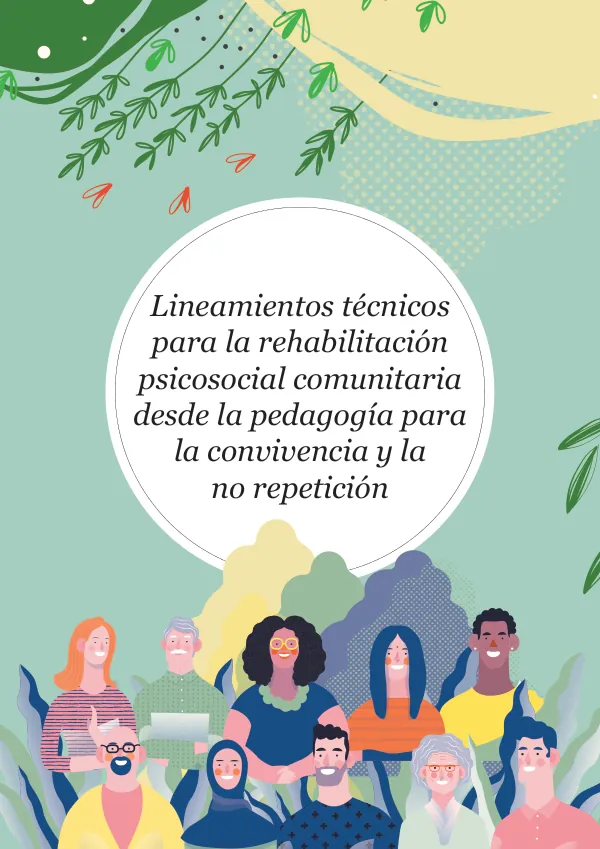
Lineamientos técnicos para la rehabilitación psicosocial comunitaria desde la pedagogía para la convivencia y la no repetición
Sign inMINISTERIO DE PREVISION SOCIAL AND SALUD PUBLICA
Lineamientos técnicos para la rehabilitación psicosocial comunitaria desde la pedagogía para la convivencia y la no repetición
The rehabilitation of communities after conflict requires a comprehensive approach that addresses the social, emotional, and psychological needs of individuals and communities.
2020 · 44 pages
Sign in to readA free account is required to download.
Abstract
The Pedagogía para la Convivencia y la No Repetición (PCNR) is a strategy aimed at promoting community-based rehabilitation and fostering a culture of peace and non-repetition of violent acts. The PCNR is based on the understanding that communities have the capacity to generate actions that facilitate transformation and strengthen the collective fabric. The strategy proposes the construction of a technical and methodological framework for rehabilitation based on the understanding of six components that serve as units of analysis for defining actions to be developed by the Equipos de Acción Comunitaria (EAC) with different social groups. These components are: spaces of dialogue and collective mourning, recovery and generation of social practices associated with exchange and conviviality, reflection on collective imaginaries of future projects, creation of scenarios for social pedagogy, promotion of conviviality pacts, and construction of family ties affected by the armed conflict. The EAC will play a crucial role in promoting spaces for conversation and reflection through pedagogical and ludic tools that problematize the experiences of the conflict, recognize the social suffering, and identify the needs for work in the facilitation and co-construction of community conviviality processes. The EAC will also promote the strengthening of community capacities that allow the achievement of actions projected by the communities within the framework of the strategy. The PCNR is aligned with the six components and the relationship between social suffering and community actions. The strategy proposes a technical and methodological framework consisting of three pedagogical axes for conviviality and three categories of community-based rehabilitation. The three pedagogical axes for conviviality are: Gestión del conflicto (conflict management), Reconciliación (reconciliation), and Pedagogías de paz (peace pedagogies). The three categories of community-based rehabilitation are: Categoría 1, Categoría 2, and Categoría 3. The PCNR aims to provide a clear technical line for the understanding of community processes around conviviality, their impact on community-based rehabilitation, and mental health. The strategy will allow actors, professionals, and community managers to have the precise tools to recognize the different community actions that have been taken and will be taken to address social suffering, the dynamics and needs of community-based rehabilitation, and the implications for community mental health. The implementation of the PCNR will be carried out through the EAC, which will work with different social groups and the community in general. The EAC will promote spaces for conversation and reflection, and will provide tools for the facilitation and co-construction of community conviviality processes. The strategy will be implemented in phases, from 3 to 6, and will be reflected in the instrument "Herramientas pedagógicas y lúdicas para la construcción de espacios conversacionales". The PCNR is a comprehensive approach that addresses the social, emotional, and psychological needs of individuals and communities. The strategy aims to promote community-based rehabilitation, foster a culture of peace and non-repetition of violent acts, and provide a clear technical line for the understanding of community processes around conviviality.