USAID
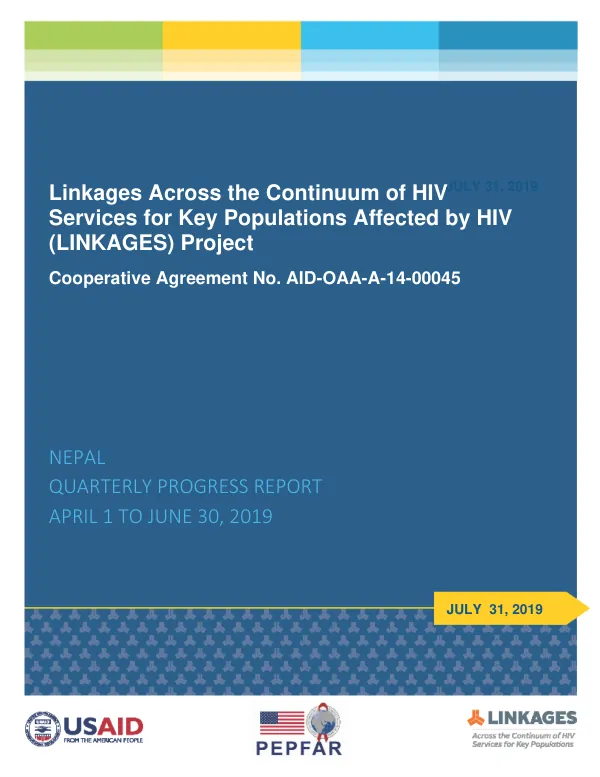
LINKAGES Quarterly Report (April 1 to June 30, 2019) - Nepal
The LINKAGES project in Nepal aimed to increase the availability of comprehensive prevention, care, and treatment services for key populations affected by HIV.
2019 · 41 pages
Sign in to readA free account is required to download.
Abstract
In the third quarter of fiscal year 2019, the project accelerated and intensified HIV case finding among key populations, including female sex workers, men who have sex with men, male sex workers, and transgender people. The project provided HIV testing services to 15,019 individuals, including 81% through community-led testing or test for triage approach, and STI services to 2,457 individuals through 11 static clinics. The project also provided early infant diagnosis for 21 HIV-exposed babies, with two female babies diagnosed HIV-positive. Of all individuals tested for HIV, 33% were female sex workers, 13% were men who have sex with men or male sex workers, 3% were transgender people, 41% were clients of female sex workers, and 10% were "other" individuals. The project employed different approaches to accelerate HIV case finding, including index case testing, enhanced peer outreach approach, and social media. A total of 311 individuals were diagnosed HIV-positive, including 20% female sex workers, 10% men who have sex with men or male sex workers, 4% transgender people, 31% clients of female sex workers, and 35% "other" individuals. The project also provided care in the community to 1,356 people living with HIV, including 320 female sex workers, 101 men who have sex with men, 28 male sex workers, 44 transgender people, 449 clients of female sex workers, and 414 "other" individuals. The project provided anti-retroviral therapy to 270 people living with HIV, including 60 female sex workers, 25 men who have sex with men, 6 male sex workers, 7 transgender people, 77 clients of female sex workers, and 95 "other" individuals. Of these, 214 (69%) were newly diagnosed HIV-positive in this quarter. The project also diagnosed and treated 878 individuals for sexually transmitted infections, including 532 female sex workers, 41 men who have sex with men, 12 male sex workers, 7 transgender people, 194 clients of female sex workers, and 92 "other" individuals. The project's result area 1 aimed to increase the availability of comprehensive prevention, care, and treatment services, including reliable coverage across the continuum of care for key populations. The project provided HIV testing services to 15,019 individuals, including 81% through community-led testing or test for triage approach, and STI services to 2,457 individuals through 11 static clinics. The project also provided early infant diagnosis for 21 HIV-exposed babies, with two female babies diagnosed HIV-positive. The project's result area 2 aimed to increase the availability of comprehensive prevention, care, and treatment services, including reliable coverage across the continuum of care for key populations. The project provided HIV testing services to 15,019 individuals, including 81% through community-led testing or test for triage approach, and STI services to 2,457 individuals through 11 static clinics. The project also provided care in the community to 1,356 people living with HIV, including 320 female sex workers, 101 men who have sex with men, 28 male sex workers, 44 transgender people, 449 clients of female sex workers, and 414 "other" individuals. The project's result area 3 aimed to increase the availability of comprehensive prevention, care, and treatment services, including reliable coverage across the continuum of care for key populations. The project provided HIV testing services to 15,019 individuals, including 81% through community-led testing or test for triage approach, and STI services to 2,457 individuals through 11 static clinics. The project also provided anti-retroviral therapy to 270 people living with HIV, including 60 female sex workers, 25 men who have sex with men, 6 male sex workers, 7 transgender people, 77 clients of female sex workers, and 95 "other" individuals.
Related documents