USAID DEC
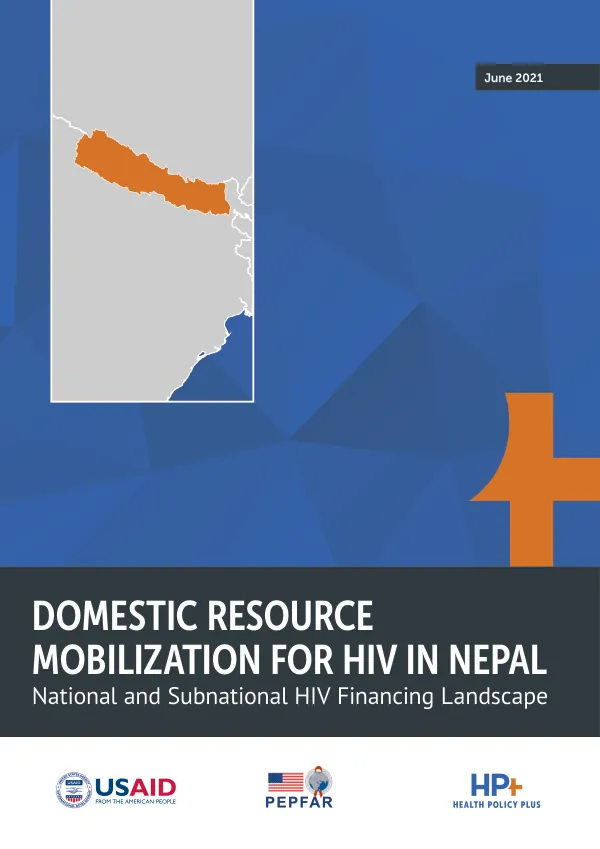
Domestic Resource Mobilization for HIV in Nepal: National and Subnational HIV Financing Landscape
Sign inAVENIR HEALTH
Domestic Resource Mobilization for HIV in Nepal: National and Subnational HIV Financing Landscape
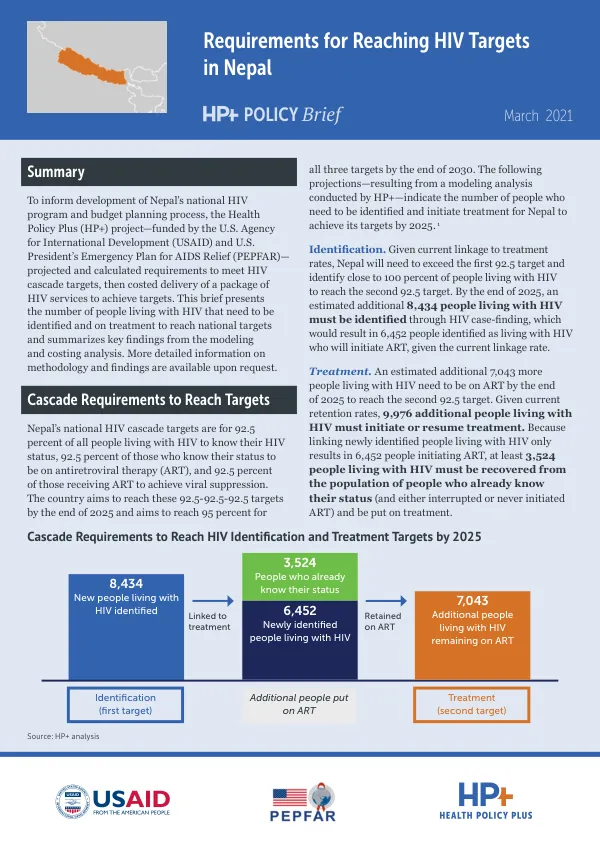
Nepal's national HIV targets aim to achieve 92.5% of all people living with HIV knowing their status, 92.5% of those who know their status to be on antiretroviral therapy (ART), and 92.5% of those receiving ART to achieve viral suppression by the end of 2025.
2021 · 24 pages
Sign in to readA free account is required to download.
Abstract
The country also aims to reach 95% for all three targets by the end of 2030. Despite significant improvements in cascade achievements, Nepal still loses a significant portion of people living with HIV along the HIV care continuum. The current cascade gap is substantial, with 78% of people living with HIV knowing their status, 63% on ART, and 47% receiving viral load testing. The HIV program in Nepal is heavily dependent on external financing from donors. As donor funding for HIV declines, the government of Nepal will need to increase domestic allocations to HIV to fund priority HIV services and ensure sustainability of the HIV program. The recent transition of the government to a federal republic means that subnational governments and entities, including provinces and municipalities, receive an increasing share of the national HIV budget and have more authority to raise and spend their own revenues. Understanding the role of these new subnational entities in funding Nepal's HIV program is crucial. Nepal's economy is heavily reliant on remittances and tourism, making it vulnerable to the impacts of COVID-19. The country's projected gross domestic product (GDP) growth rate for 2020 reduced to 2.3% due to the pandemic, and estimates for 2021 are also revised down to 3.1% growth. Prospects of lower economic growth coupled with the need for increased government spending to deal with the pandemic will limit fiscal space available for the government, impacting the domestic funding available for health and HIV in the short-term. The objectives of this report are to analyze the current HIV financing landscape at the national and subnational level in Nepal and assess the potential for increased domestic resource mobilization for HIV programming considering the impact of COVID-19 on Nepal's economic outlook. A previous analysis estimated the resources required to reach the 92.5-92.5-92.5 HIV targets set in Nepal's HIV Strategic Plan and identified a USD 19.5 million funding gap for fiscal year 2020-21. To continue Nepal's trajectory toward achieving national cascade targets, more domestic resources are needed. The report examines the current HIV financing landscape in Nepal, including the national HIV budget, subnational HIV budgets, and external HIV funding. It also assesses the potential for increased domestic resource mobilization for HIV programming, considering the impact of COVID-19 on Nepal's economic outlook. The report provides an analysis of the resources required to reach the 92.5-92.5-92.5 HIV targets and identifies a funding gap for fiscal year 2020-21. The findings of this report will inform policy decisions and support the development of strategies to increase domestic resource mobilization for HIV programming in Nepal. Nepal's HIV financing landscape is characterized by a heavy reliance on external financing from donors. The national HIV budget is allocated by the Ministry of Health and Population (MOHP), while subnational governments and entities, including provinces and municipalities, receive an increasing share of the national HIV budget. The report examines the current allocation of HIV funding at the national and subnational level and assesses the potential for increased domestic resource mobilization for HIV programming. The report also examines the impact of COVID-19 on Nepal's economic outlook and its implications for domestic funding available for health and HIV. The pandemic has reduced Nepal's projected GDP growth rate for 2020 and estimates for 2021, limiting fiscal space available for the government. The report assesses the potential for increased domestic resource mobilization for HIV programming in this context.
Related documents