FHI 360
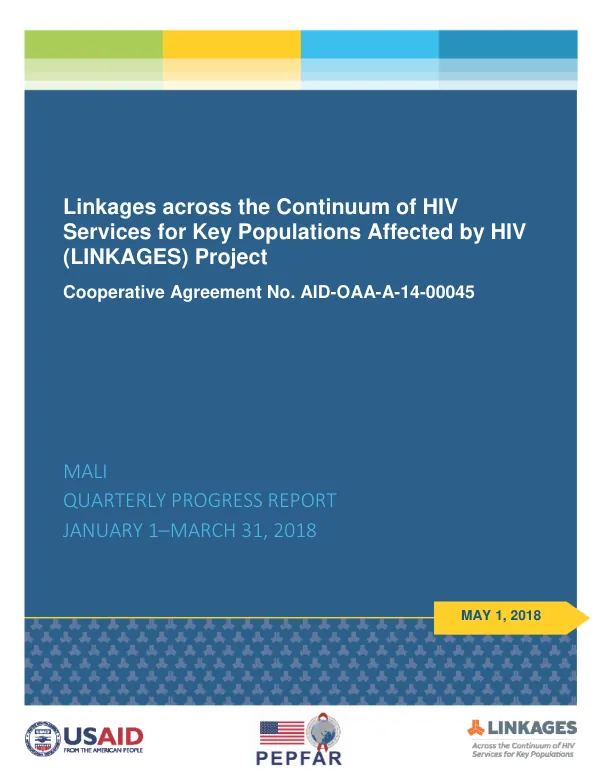
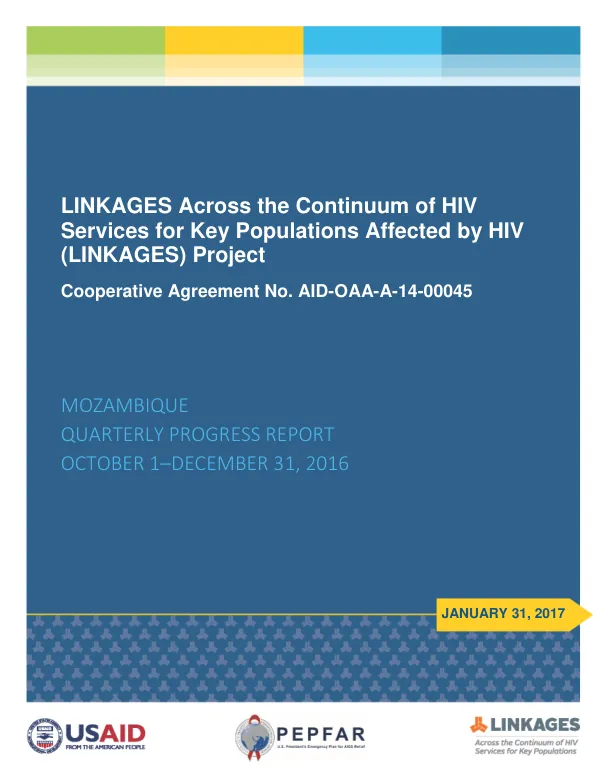
LINKAGES Quarterly Report (October 1 – December 31, 2016) – Mozambique
The LINKAGES project in Mozambique aimed to increase the availability of comprehensive prevention, care, and treatment services for key populations affected by HIV.
2016 · 14 pages
Sign in to readA free account is required to download.
Abstract
The project was implemented in seven sites, including Zambézia and Gaza, and focused on reaching female sex workers (FSWs) and men who have sex with men (MSM). The project's overall achievement in the reporting period was the consolidation of project activities in all sites, with data being reported by all seven sites. The project implemented various activities to improve access to quality peer education, social and behavior change communication (SBCC) materials, condoms and lubricants, and training of trainers (TOTs). A total of 14 new peer educators were trained in Chimoio and Beira, bringing the cumulative number of trained peer educators to 139. The project also distributed 3,360 leaflets to FSWs and 1,050 to MSM, covering aspects of HIV prevention, consistent condom use, STIs, tuberculosis, and gender-based violence. The project continued to collaborate with implementing partners, peer educators, and other stakeholders to support and expand condom and lubricant outlets to target groups in all project sites. A total of 250 condom dispensers were installed in hot spots, and 101,227 condoms and 13,244 lubricants were distributed. The project also held seven rollout TOTs in all project sites, training a total of 165 individuals, mostly from the Ministry of Health. The project achieved a cumulative 192 TOTs in KP-friendly approaches, representing 85 percent of the set target. The project also improved the patient's flow in the health facilities that were selected as referrals centers for KP members. Two health facilities in Gaza province were visited and provided with necessary technical assistance, and two focal persons were identified and trained on stigma and discrimination related to KP. The cumulative HIV cascade results for FSWs at the end of Q1 showed that 3,034 FSWs were reached and 1,099 were tested, representing 27 percent and 17 percent of the set targets regarding KP_PREV and HTS_TST respectively. The project still faces a remarkable gap between the achieved and set targets, but the results indicate an increase in the number of FSWs reached and tested compared to the previous quarter. The project's success can be attributed to effective planning by teams and individuals, as well as the provision of technical assistance to implementing partners in the use of microplanning. The project also trained 20 peer educators in conducting risk assessment, aiming to provide them with appropriate skills to conduct risk assessment when reaching FSWs. The acquired skills will help the peer educators to determine patients' risk for HIV and other STIs, and to provide individualized risk-reduction counseling and support positive behavior change. The project's collaboration with the Ministry of Health and other stakeholders has also contributed to its success. The project has trained 165 individuals in issues addressing stigma and discrimination against members of key populations, and has established and supported two community adherence groups of female sex workers in Tete province. The project has also capacitated them to advocate for positive prevention behaviors and mutual support. The project's achievements and challenges will be reported in the next quarter, and the project will continue to work towards its targets and objectives. The project's success will depend on the continued collaboration and support of all stakeholders, including the Ministry of Health, implementing partners, and community members.