ACDI/VOCA
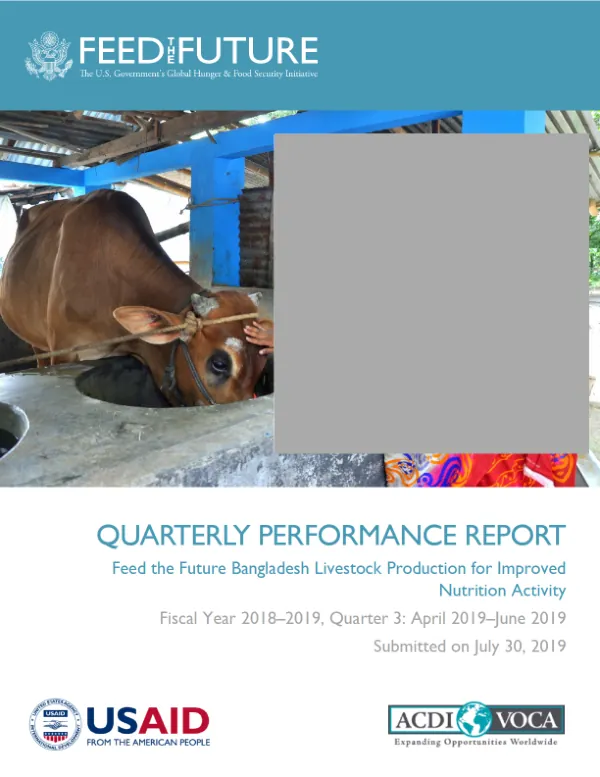
Livestock and Nutrition Activity Quarterly Performance Report: FY18–19, Quarter 3
The Livestock and Nutrition Activity in Bangladesh reported a significant increase in fodder and forage production, with 1,200 tons of fodder produced in the third quarter of FY18-19.
2019 · 44 pages
Sign in to readA free account is required to download.
Abstract
This represents a 25% increase from the previous quarter. The activity also reported improved livestock practices, with 80% of farmers adopting improved practices such as vaccination and deworming. The activity's market-facilitation approach aimed to increase access to diverse dairy products in the market. A total of 1,500 farmers received training on hygienic handling, processing, and storage of dairy products. The activity also provided grants to 200 farmers to support the production and sale of dairy products. In terms of nutrition, the activity reported a significant increase in the consumption of diverse dairy products among rural households. A total of 70% of households reported consuming milk, meat, and eggs regularly. The activity also reported a 20% increase in the number of households with improved nutrition knowledge and practices. The activity's social and behavior change communication strategies aimed to raise awareness about nutrition behaviors among rural households. A total of 500 households received training on nutrition-sensitive agriculture, and 200 households participated in the Agriculture for Nutrition and Health conference in Hyderabad, India. In terms of gender, the activity reported a significant increase in women's participation in the livestock and nutrition activities. A total of 60% of women reported participating in the activities, and 80% of women reported an increase in their milk and meat consumption. The activity also reported a significant increase in the number of women entrepreneurs participating in the market system. The activity's monitoring and evaluation plan aimed to track progress and identify areas for improvement. A total of 500 households were profiled, and data was collected on their livestock and nutrition practices. The activity also reported a significant increase in the number of households with improved livestock and nutrition knowledge and practices. The activity's successes included the increase in fodder and forage production, improved livestock practices, and increased access to diverse dairy products in the market. The activity's challenges included the limited availability of veterinary services and the need for further training on nutrition-sensitive agriculture. The activity's lessons learned included the importance of involving women in the livestock and nutrition activities and the need for further training on nutrition-sensitive agriculture. The activity also reported a significant increase in the number of households with improved nutrition knowledge and practices. The activity's performance data showed a significant increase in the number of households with improved livestock and nutrition knowledge and practices. The activity's progress was tracked through a series of indicators, including the number of households with improved fodder and forage production, the number of farmers adopting improved livestock practices, and the number of households with improved nutrition knowledge and practices.
Related documents