OHIO STATE UNIVERSITY
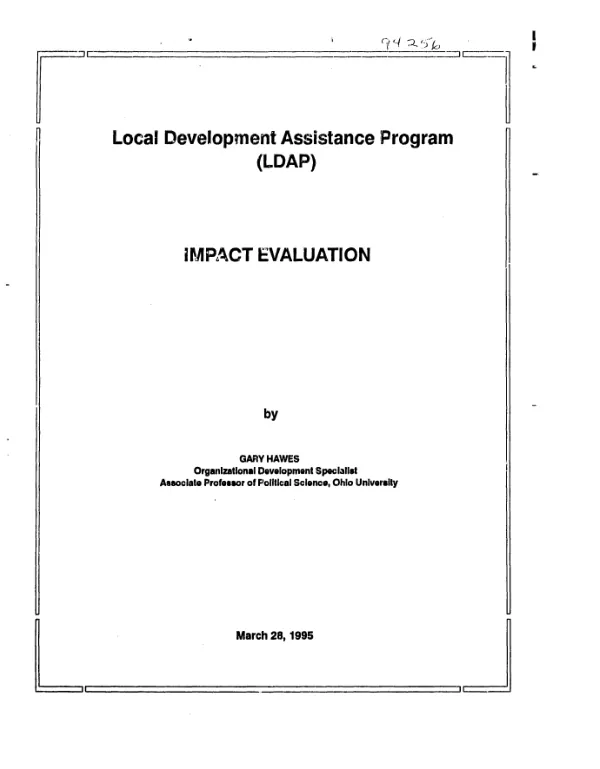
Local development assistance program (LDAP) : impact evaluation
Following 14 years of authoritarian rule and the restoration of democracy in 1986, the Government of the Philippines (GOP) began a series of political and administrative reforms.
Hawes, Gary · 1995
Sign in to readA free account is required to download.
Abstract
The Local Development Assistance Program (LDAP), which was implemented from 9/90 to 3/95 (against an original PACD of 12/93), was designed to support these reforms and in the process contribute to decentralization of an overly concentrated administrative system and improvement in the quality of local governance. This evaluation, based on extensive interviews in Manila at the level of the local government units (LGUs), was designed to gauge the impact of LDAP. LDAP combined policy studies and tranche monitoring with support for non-governmental organizations to enhance the quality and extent of civic participation in local governance. The evaluation team concluded that the Philippine government undertook and largely completed a massive reform of the administrative system within a 3-year period. Further, the team concluded that LDAP was a major contributor to the success of these reforms. The program was well-designed and well-managed and the timing was excellent. The provision of TA and monitoring helped to implement major reforms in a difficult environment. LGUs now have much more autonomy and authority, and are using this authority, often in partnership with participating representatives of the civic society, to innovate and improve the quality of local governance. The financial situation of LGUs also increased dramatically: over the period 1991-95, GOP allotments of discretionary resources to LGUs rose from 11 billion pesos to 52 billion pesos. (Author abstract, modified)