USAID DEC
Long-acting Reversible Contraceptives (LARCs): IUDs and Implants
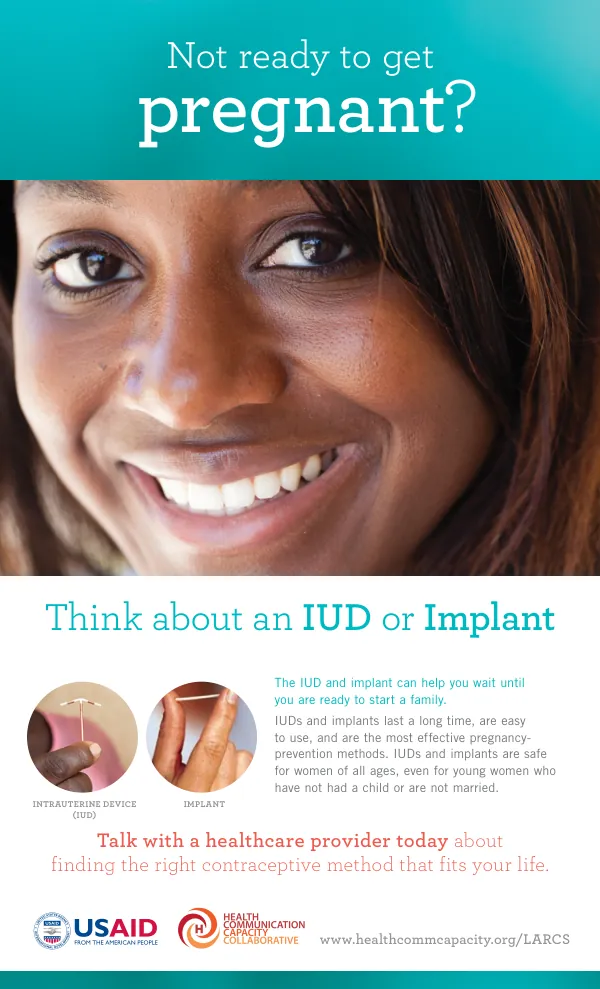
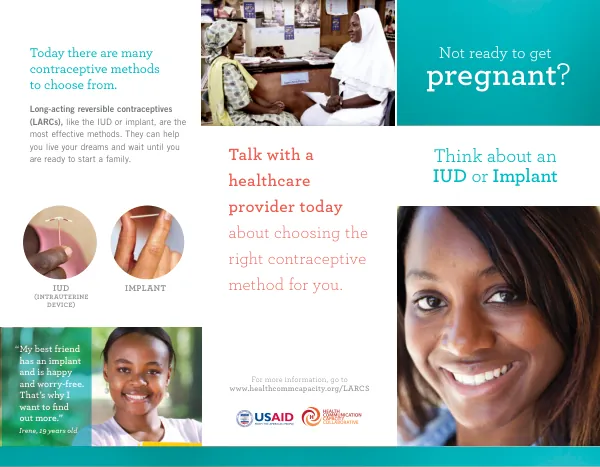
Long-acting reversible contraceptives (LARCs), such as the IUD and implant, are the most effective methods of contraception.
2016 · 4 pages
Sign in to readA free account is required to download.
Abstract
They provide long-term protection against pregnancy and are safe for young women, even those who have not had a child or are not married. IUDs and implants are effective at preventing pregnancy, with 99 women in 100 being protected from unintended pregnancy if using one of these methods. The IUD is a small, T-shaped piece of soft plastic that is carefully inserted into the uterus by a trained health provider. It provides protection against pregnancy and stays in place for up to 12 years, depending on the type of IUD. The implant is one or two small, flexible rods, about the size of a matchstick, that are carefully inserted into the inner side of either upper arm by a trained health provider. It also provides protection against pregnancy and stays in place for 3 to 5 years, depending on the type of implant. Both IUDs and implants are private, not visible to others, and convenient, as they do not require daily pills to take or injections to schedule. They can be removed when a woman is ready to get pregnant, and side effects are common but often manageable. IUDs and implants do not protect against STIs or HIV, and a condom should be used with one of these methods to prevent these infections. Examples of IUDs include the "Copper-T" and implant types include the "NXT." Women who have used these methods have reported positive experiences, such as Fatima, who got an IUD when she first got together with her partner and had it removed when they were ready to start a family.