SAVE THE CHILDREN FUND
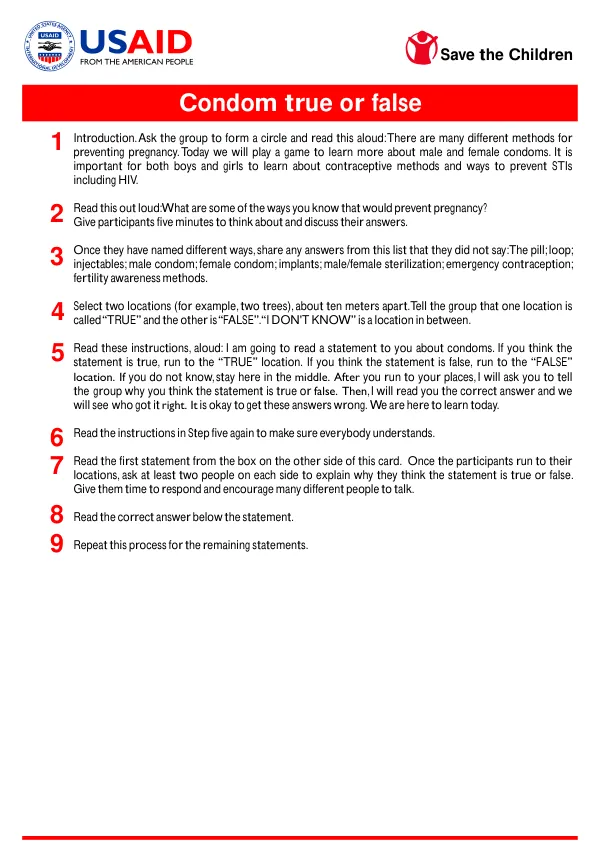
Condom True or False Game for Education on Contraception and STIs
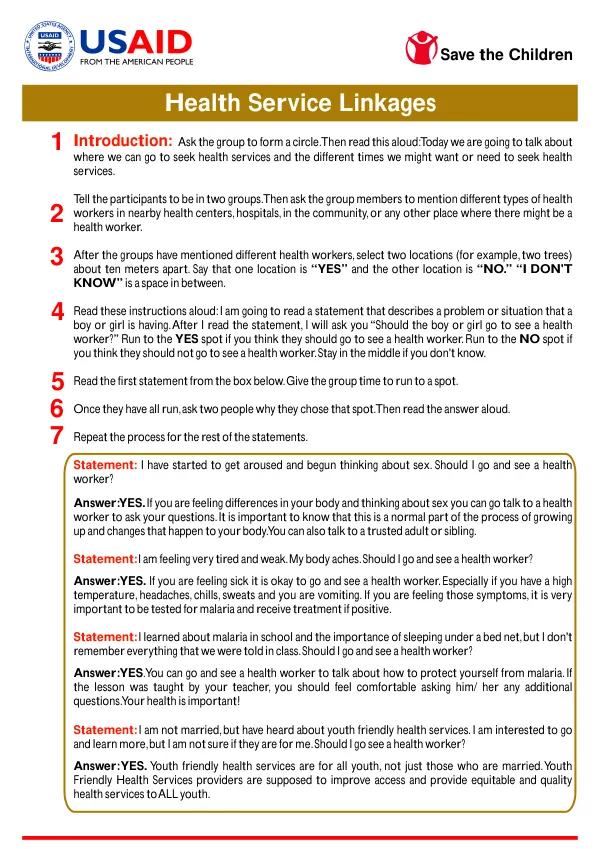
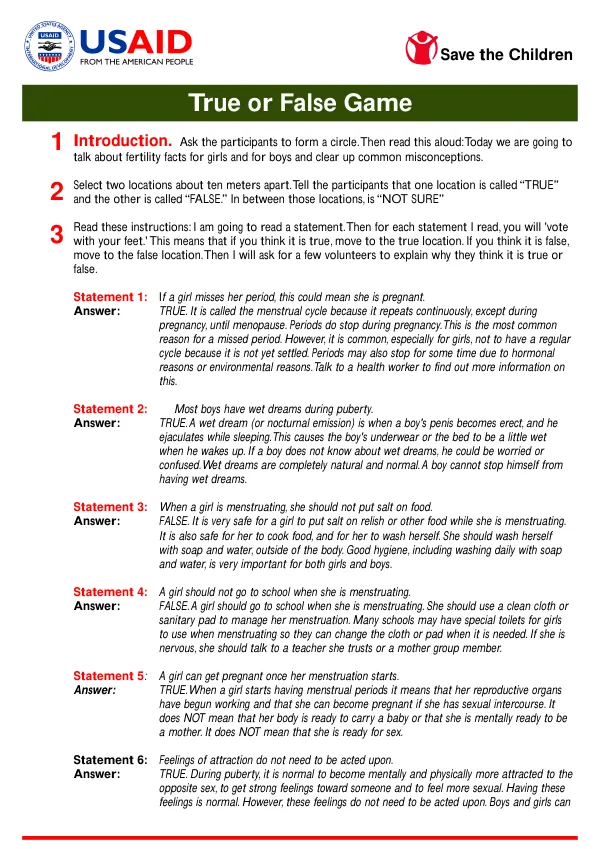
The use of male and female condoms as a method of preventing pregnancy and sexually transmitted infections, including HIV, is a crucial aspect of reproductive health education.
2 pages
Sign in to readA free account is required to download.
Abstract
Condoms are the only contraceptive method that can protect against pregnancy and sexually transmitted infections, including HIV, at the same time. This dual protection makes condoms an essential tool in preventing the spread of HIV and other STIs. The effectiveness of condoms in preventing pregnancy and STIs is well-documented. However, there are several misconceptions about condom use that can lead to incorrect information and potentially harmful practices. For example, using multiple condoms at once can increase the risk of breakage and reduce the effectiveness of the condom. Similarly, using a male and female condom together can increase friction and lead to the condoms tearing or bursting. The female condom, in particular, is often misunderstood. It is a flexible, wide, and comfortable device that fits into the shape of the vagina. Female condoms have been carefully designed to fit any woman's body and any man's penis, and they cannot get lost inside the body. They are a viable alternative to male condoms and can be used for vaginal sex. Another common misconception is that using a condom puts individuals at risk of getting cancer or other diseases. This is a myth with no scientific basis. Condoms are designed to prevent the transmission of STIs, including HIV, and they do not increase the risk of cancer or other diseases. In terms of reuse, condoms should be used only once and for one encounter. Reusing a condom can increase the risk of breakage and reduce its effectiveness. It is essential to use a new condom for each act of sex to ensure maximum protection against pregnancy and STIs. The importance of education and awareness about condoms and other contraceptive methods cannot be overstated. Both young men and young women need to learn about contraception to make informed decisions about their reproductive health. This education should include accurate information about condoms, their effectiveness, and their proper use. In many communities, there is a lack of accurate information about condoms and other contraceptive methods. This can lead to misconceptions and potentially harmful practices. It is essential to provide young people with accurate information and resources to access condoms and other forms of contraception. In conclusion, condoms are a vital tool in preventing pregnancy and STIs, including HIV. However, there are several misconceptions about condom use that can lead to incorrect information and potentially harmful practices. Education and awareness about condoms and other contraceptive methods are essential to ensure that young people make informed decisions about their reproductive health.
Related documents