MINISTRY OF HEALTH
Malaria Prevention and Treatment in Zambia
Malaria is a life-threatening disease caused by parasites that are passed on to people through the bites of infected mosquitoes.
2012 · 2 pages
Sign in to readA free account is required to download.
Abstract
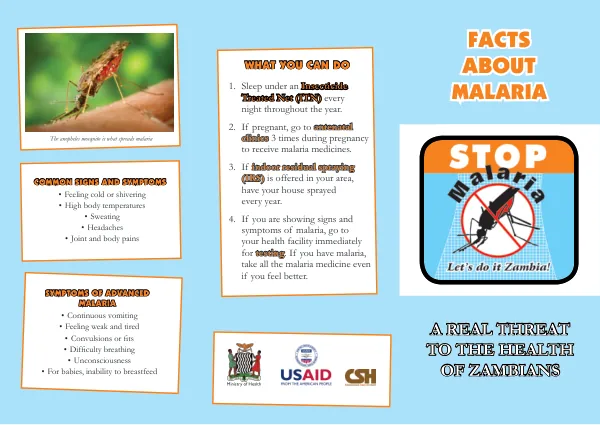
The anopheles mosquito is the primary vector responsible for spreading malaria. Pregnant women, children under 5, and individuals with chronic illnesses are most vulnerable to malaria due to their weakened immune systems. The first symptoms of malaria include fever, headache, chills, or vomiting, which may be mild and difficult to recognize as malaria. If left untreated, malaria can quickly progress into a severe illness and lead to death. The only sure way to diagnose malaria is through a malaria blood slide test or a rapid diagnostic test (RDT). Early treatment is critical in preventing the progression of malaria into a severe illness. Artemisinin-based Combination Therapies (ACTs) are recommended for the treatment of simple or uncomplicated malaria, while quinine is used to treat severe or complicated malaria. Fansidar is only recommended for the prevention of malaria during pregnancy and treatment of children weighing under 5 kg. Prevention methods recommended by the government include the use of Insecticide Treated Nets (ITNs), Indoor Residual Spraying (IRS), and preventive medicine for pregnant women. Additionally, individuals can take steps to manage their environment by covering ditches, minimizing stagnant water, and ensuring proper drainage to reduce mosquito breeding sites. Malaria medicines in Zambia include ACTs, quinine, and Fansidar. It is essential to inform a health worker about any previous medication taken before starting malaria treatment. Completing the full course of medication is crucial to ensure complete recovery, and sharing or keeping medication for future use is not recommended. Malaria medicines should be taken with plenty of food and water, and if vomiting occurs within an hour of taking the medicine, an additional dose should be administered.