MEDICAL SERVICE CORP. INTERNATIONAL
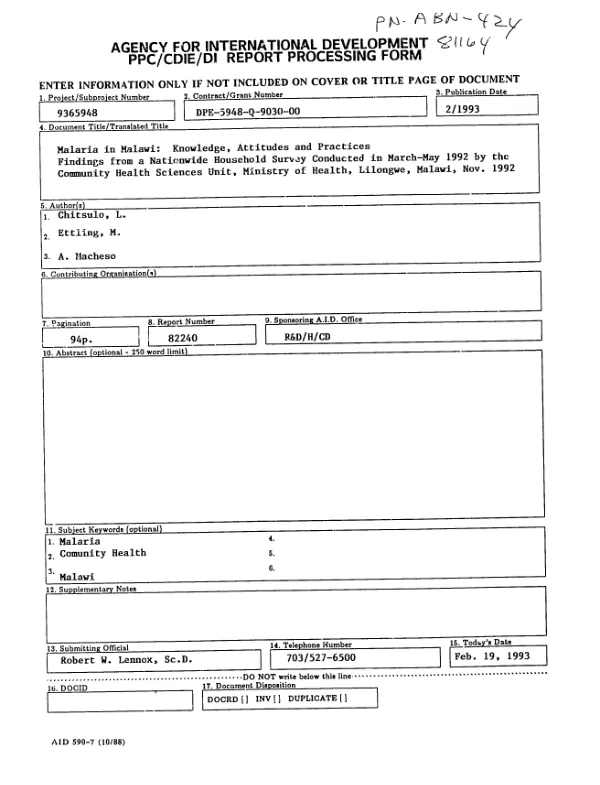
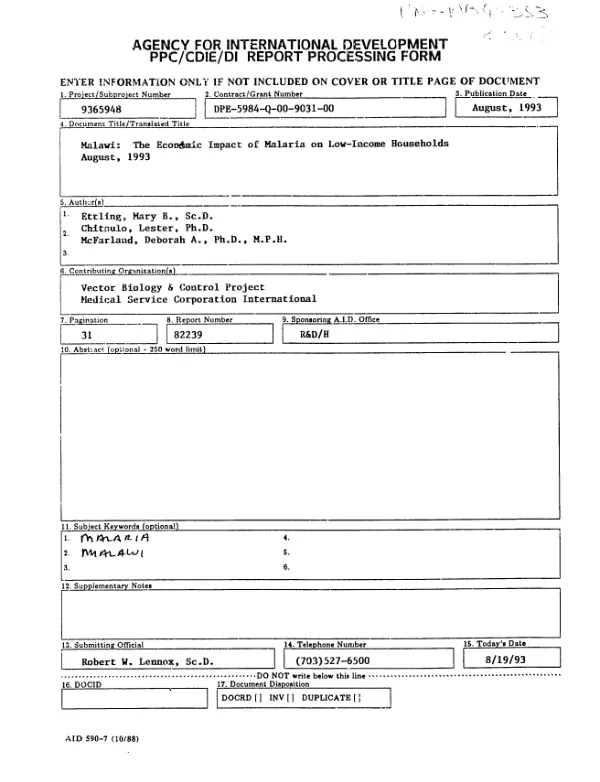
Malawi : the economic impact of malaria on low-income households
One of the most significant and least examined effects of malaria, one of Malawi"s worst health problems, is its economic impact on the poor.
Ettling, Mary B.; Chitsulo, Lester +1 more · 1993
Sign in to readA free account is required to download.
Abstract
This report examines that impact by looking at sources of income for poor households, occupations and educational levels of their heads, and time loss and monetary expenditures for prevention and treatment. Data for the report were gathered from a 1992 USAID-supported nationwide survey of knowledge, attitudes, and practices regarding malaria, and from interviews with over 1,000 malaria patients at 21 health facilities. The greatest economic impact on low-income households was the treatment of suspected malaria, which represented 9.6% of the average annual income and 19.8% of disposable income. In addition to these expenditures, low-income households experienced a drop in productivity and subsequent loss of income. Adults, either ill or caring for an ill child, forfeited wages amounting to 2.4% of annual income. Overall, the costs of malaria accounted for 13% of the average annual income of these poor households.
Connected topics
Related documents