ICF
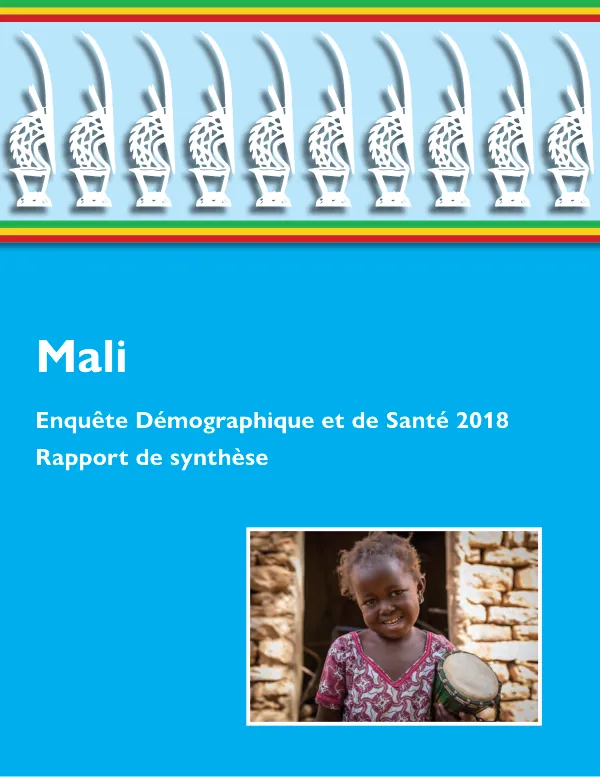
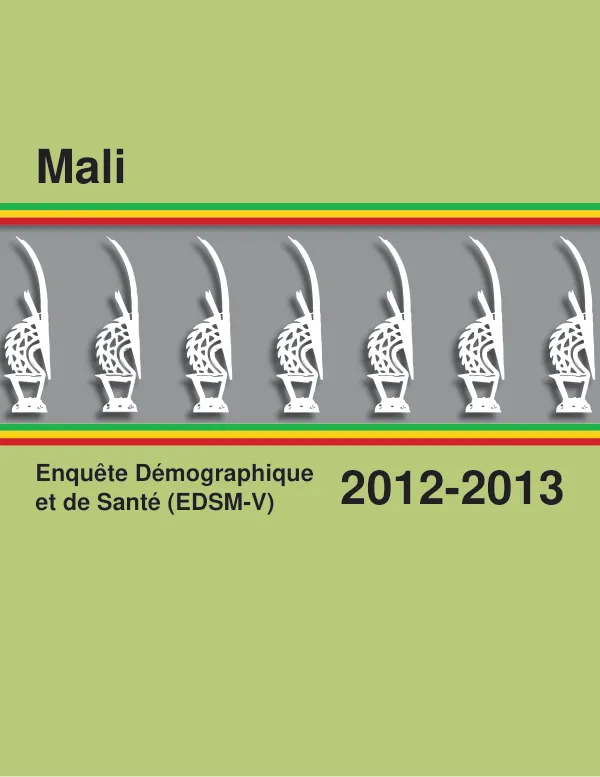
Mali Enquête Démographique et de Santé (EDSM V) 2012-2013
The Enquête Démographique et de Santé (EDSM V) 2012-2013 was conducted in Mali from November 2012 to February 2013.
2014 · 577 pages
Sign in to readA free account is required to download.
Abstract
The survey was executed by INFO-STAT in collaboration with the Cellule de Planification et de Statistiques (CPS), the Secteur Santé, Développement Social et Promotion de la Famille (SSDSPF), and the Institut National de la Statistique (INSTAT). The EDSM V was initiated by the Government of Mali and is part of the MEASURE DHS program, which aims to collect, analyze, and disseminate data on population and health, evaluate the impact of implemented programs, and plan new strategies for improving health and well-being. The survey was funded by the Government of Mali, the United States Agency for International Development (USAID), and the Canadian International Development Agency (ACDI). ICF International provided technical assistance under the MEASURE DHS program funded by USAID. The survey was conducted in collaboration with various national organizations, including the Directions Régionales du Plan et de la Statistique, the Directions Régionales de la Santé, the Gouvernorats of the regions, and the Ministry of Territorial Administration. The survey aimed to collect data on population and health characteristics, including demographic, socioeconomic, and health indicators. The survey used a multi-stage sampling design, with a sample of 15,000 households selected from 20 regions of Mali. The survey collected data on various topics, including household characteristics, population characteristics, education, health, and economic activities. The survey found that the majority of households in Mali have limited access to basic services such as electricity, improved water sources, and sanitation facilities. The survey also found that the majority of the population has limited education and economic opportunities. The survey reported that the literacy rate among women is low, with only 25% of women aged 15-49 able to read and write. The survey also collected data on health indicators, including fertility rates, infant mortality rates, and maternal mortality rates. The survey found that the fertility rate in Mali is high, with an average of 6.5 children per woman. The survey also reported that the infant mortality rate is high, with 83 deaths per 1,000 live births. The survey's findings have implications for policy and program development in Mali. The survey highlights the need for improved access to basic services, education, and economic opportunities for the population. The survey also highlights the need for improved health services, including reproductive health services, to reduce fertility rates and improve maternal and child health outcomes. The survey's methodology and organization are described in detail in the survey report. The survey used a multi-stage sampling design, with a sample of 15,000 households selected from 20 regions of Mali. The survey collected data on various topics, including household characteristics, population characteristics, education, health, and economic activities. The survey's data collection instruments included questionnaires, a test for HIV/AIDS, and a cartographic exercise. The survey's data were analyzed using various statistical techniques, including descriptive statistics and regression analysis. The survey's findings are presented in the survey report, which includes tables, figures, and text describing the survey's results. The survey's report also includes a discussion of the survey's limitations and recommendations for future surveys. The survey's methodology and organization are described in detail in the survey report. The survey used a multi-stage sampling design, with a sample of 15,000 households selected from 20 regions of Mali. The survey collected data on various topics, including household characteristics, population characteristics, education, health, and economic activities. The survey's data collection