ICF
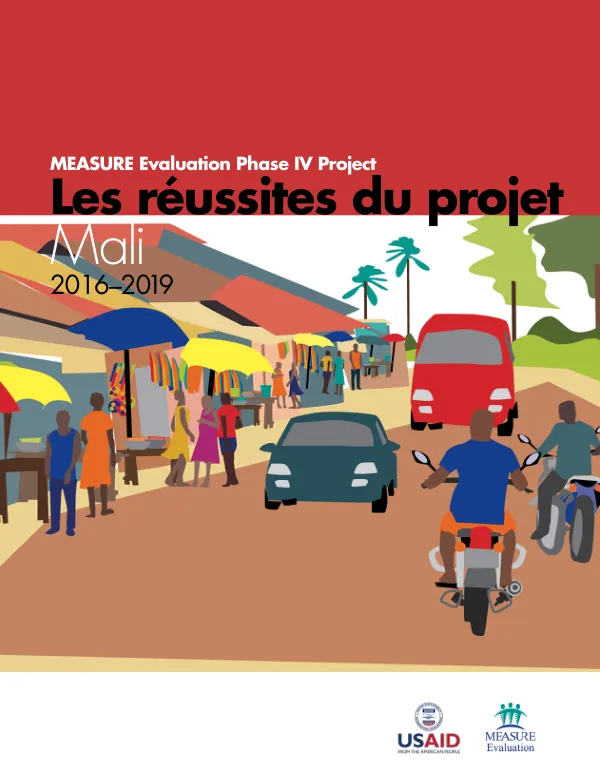
MEASURE Evaluation Phase IV Project: Les réussites du projet Mali
The MEASURE Evaluation Phase IV Project in Mali aimed to strengthen the country's health information system (HIS) from 2016 to 2019.
2020 · 32 pages
Sign in to readA free account is required to download.
Abstract
The project was funded by the U.S. Agency for International Development (USAID) and implemented by the University of North Carolina at Chapel Hill in partnership with several international organizations. The project's main objective was to improve the quality and use of health data in Mali, with a focus on the national health information system (SNIS). The project team worked closely with the Malian Ministry of Health (MS) and other stakeholders to develop a comprehensive approach to strengthening the HIS. One of the key challenges facing the project was the lack of coordination among stakeholders, including the MS, international organizations, and local partners. To address this issue, the project team proposed an incremental approach to aligning stakeholders and implementing initiatives in a coordinated manner. The project team began by engaging in dialogue with key stakeholders, including the MS, Population Services International (PSI), and other partners. They held a series of meetings to discuss the project's objectives, identify areas of overlap, and develop a shared understanding of the HIS's strengths and weaknesses. Through these efforts, the project team was able to build a coalition of stakeholders who were committed to supporting a single, unified HIS for the country. The coalition grew gradually, with new partners joining the effort and committing to support the HIS's development and implementation. The project's approach to strengthening the HIS was based on several key principles, including the importance of coordination, collaboration, and data quality. The team worked closely with stakeholders to develop a comprehensive plan for improving the HIS, which included the development of a national health information system, the implementation of a district health information software (DHIS2), and the establishment of a data quality improvement program. The project's results were significant, with the HIS's coverage and quality improving substantially over the course of the project. The project team was able to establish a robust and sustainable HIS that was capable of providing high-quality data to support decision-making at all levels of the health system. The project's success was due in large part to the strong partnerships that were established between the project team, the MS, and other stakeholders. These partnerships enabled the project team to leverage the resources and expertise of multiple organizations, which helped to accelerate the project's progress and ensure its sustainability. The project's findings and recommendations were presented in a series of reports and publications, which provided a detailed account of the project's activities, results, and lessons learned. These reports were widely disseminated and helped to inform the development of future HIS strengthening initiatives in Mali and other countries. Overall, the MEASURE Evaluation Phase IV Project in Mali was a highly successful initiative that made significant contributions to the country's health information system. The project's approach to strengthening the HIS was based on a deep understanding of the country's health system and the needs of its stakeholders, and it provided a model for future HIS strengthening initiatives in the region.