USAID DEC
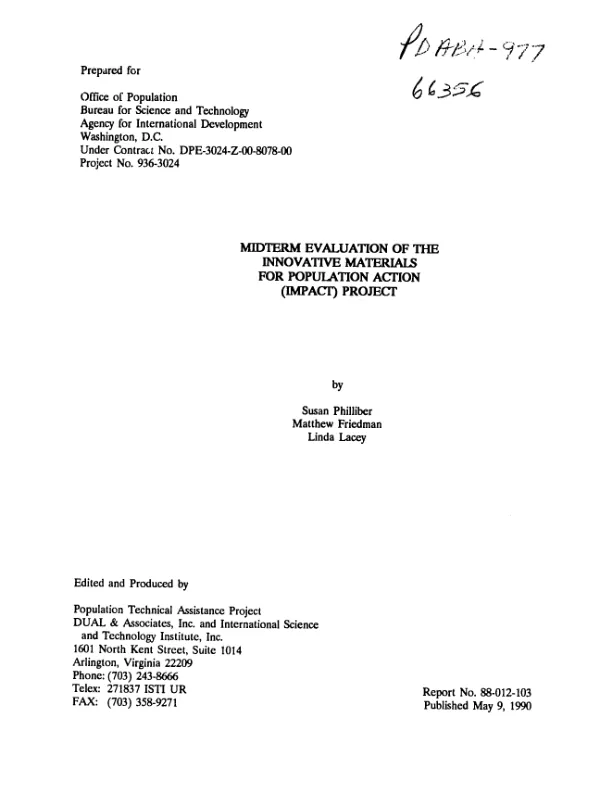
Midterm evaluation of the innovative materials for population action (IMPACT) project
Sign inDUAL & ASSOCIATES, INC.
Midterm evaluation of the innovative materials for population action (IMPACT) project
Interim evaluation of a project to disseminate population research findings in a succinct and visually appealing manner to developing country policymakers and leaders as well as to the population donor community (including A.I.D.).
Philliber, Susan|Friedman, Matthew|Lacey, Linda · 1990
Sign in to readA free account is required to download.
Abstract
External evaluation covers the period 8/85-4/90. The project has produced a large number and range of professional, attractive, accurate, and well-received materials about population issues. Major subprojects have used a number of dissemination strategies, including radio, newspapers, interactive computer simulations, and country-specific booklets, to inform policymakers of population issues. Minor subprojects have generated booklets that highlight successful family planning programs in the public and private sectors and that can be distributed to other countries. In general, the topics are perceived as relevant, important, and useful by different audiences. One-third of policymakers surveyed say project materials have made a noticeable contribution to population or family planning policy in their countries. However, it is recommended that the materials be made more credible and appealing by including more local and regional information and by conveying local rather than U.S. endorsement. Project management is functioning smoothly and staff are competent, dedicated, and motivated. Although in-house recordkeeping systems have been inadequate, they are improving. On the negative side, the project has not been successful in reaching a great number of policymakers, the intended target audience. The current mailing list strategy is costly, labor- intensive, and somewhat inefficient. On the other hand, the materials are being used by audiences other than policymakers in such activities as training. A follow-on project is recommended, which should focus on local or regional materials, collaboration with other cooperative agreements, technology transfer, and tighter targeting of audiences.