MANAGEMENT SYSTEMS INTERNATIONAL
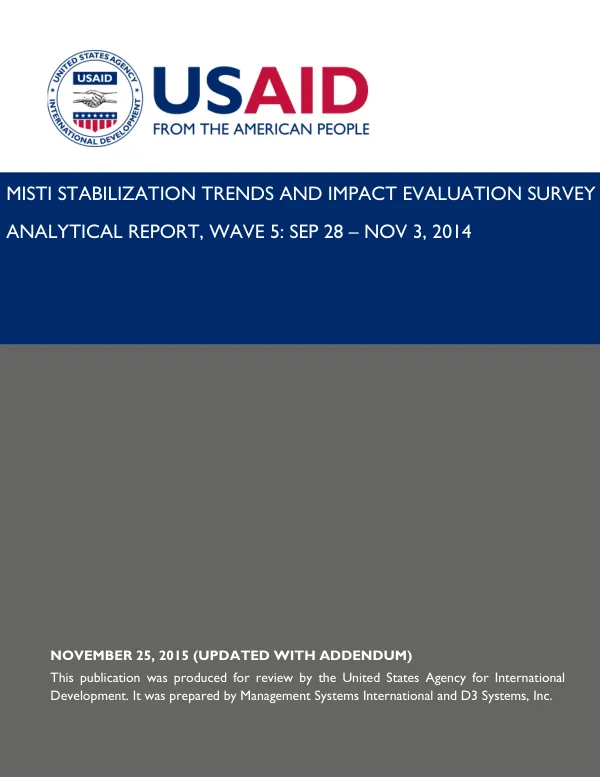
MISTI Stabilization Trends and Impact Evaluation Survey Analytical Report, Wave 5
The MISTI Stabilization Trends and Impact Evaluation Survey Analytical Report, Wave 5, was conducted from September 28 to November 3, 2014.
2015 · 598 pages
Sign in to readA free account is required to download.
Abstract
The report provides an analysis of stabilization trends and impact in three key areas: North, South, and East. The report is based on data collected through surveys and assessments conducted in these regions. The report highlights the importance of stability in key areas, with a focus on governance, service provision and development, community cohesion and resilience, quality of life, rule of law, security, corruption, economic activity, grievances, and media. The analysis reveals trends and patterns in these areas, providing insights into the impact of stabilization initiatives. In the North, the Stability in Key Areas - North (SIKA-N) project was implemented, with a focus on governance, service provision and development, and community cohesion and resilience. The project aimed to improve the quality of life for local residents, enhance the rule of law, and promote economic activity. The analysis shows that the project had a positive impact on governance, with improvements in service provision and development, and community cohesion and resilience. The report also highlights the importance of addressing corruption, economic activity, grievances, and media in the stabilization process. The analysis shows that these factors have a significant impact on the stability of the region and the effectiveness of stabilization initiatives. Overall, the report provides a comprehensive analysis of stabilization trends and impact in three key areas, highlighting the importance of governance, service provision and development, community cohesion and resilience, quality of life, rule of law, security, corruption, economic activity, grievances, and media in the stabilization process. The report provides valuable insights for policymakers and practitioners working in the field of stabilization and conflict resolution.