MANAGEMENT SYSTEMS INTERNATIONAL
Sectoral Synthesis of FY2015 Evaluation Findings: E3 Bureau
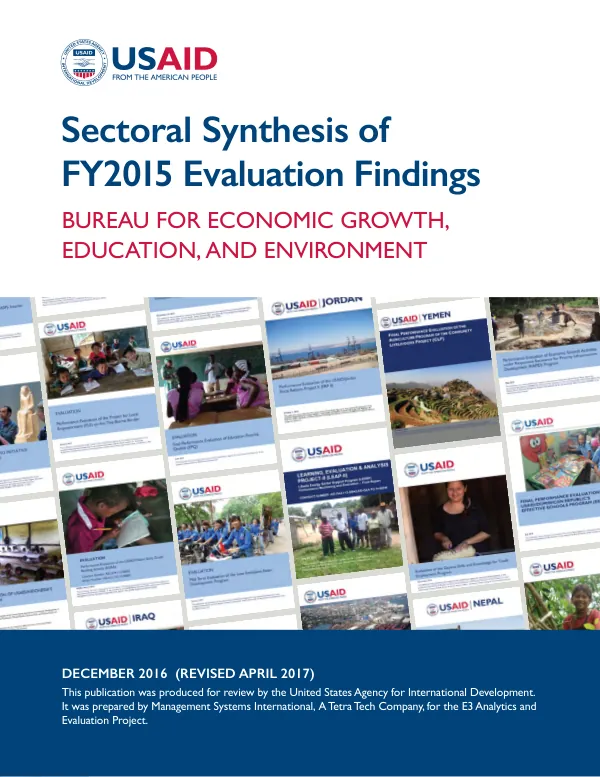
The E3 Analytics and Evaluation Project is a comprehensive evaluation initiative conducted by the Bureau for Economic Growth, Education, and Environment.
2017 · 176 pages
Sign in to readA free account is required to download.
Abstract
The project's primary objective is to assess the effectiveness of various economic growth, education, and environmental initiatives implemented by the United States Agency for International Development (USAID) in FY2015. The evaluation process involved a thorough analysis of 92 evaluation reports, which were conducted across six sectors: economic policy, local sustainability, private capital and microenterprise, trade and regulatory reform, education, and energy and infrastructure. The reports were assessed for their quality, methodology, and findings, with a focus on identifying key themes, trends, and areas for improvement. The analysis revealed several key themes across the E3 Bureau, including the importance of addressing project outcomes and attribution, innovative practices, gender aspects, private sector engagement, and governance issues. The evaluation reports showed a significant increase in the quality of evaluation report scores over the years, with 2015 evaluations demonstrating a higher level of quality compared to previous years. The sectoral synthesis of FY2015 evaluation findings highlights the achievements and challenges faced by the E3 Bureau in implementing its evaluation initiatives. The report provides a comprehensive overview of the evaluation process, methodology, and findings, as well as recommendations for future improvements. The evaluation reports were conducted across various regions, with a focus on identifying regional trends and patterns. The analysis revealed that the E3 Bureau has made significant progress in implementing its evaluation initiatives, with a notable increase in the number of evaluations conducted in 2015 compared to previous years. The report also highlights the importance of collaboration and partnership in the evaluation process, with contributions from various stakeholders, including USAID, Management Systems International, and the Palladium Group. The evaluation team consisted of experts from various fields, including economics, education, and environmental science, who worked together to analyze the evaluation reports and identify key findings and recommendations. The sectoral synthesis of FY2015 evaluation findings provides a valuable resource for policymakers, practitioners, and researchers interested in understanding the effectiveness of economic growth, education, and environmental initiatives implemented by USAID. The report's findings and recommendations can inform future policy decisions and program implementation, ultimately contributing to the achievement of USAID's development goals. The evaluation reports were assessed using a rigorous methodology, which involved a thorough analysis of the reports' quality, methodology, and findings. The evaluation team used a range of tools and techniques, including content analysis and quality review checklists, to assess the reports' quality and identify areas for improvement. The report's findings and recommendations are presented in a clear and concise manner, making it accessible to a wide range of stakeholders. The report's tables, figures, and annexes provide additional information and context, allowing readers to delve deeper into the evaluation findings and recommendations. Overall, the sectoral synthesis of FY2015 evaluation findings provides a comprehensive and insightful analysis of the E3 Bureau's evaluation initiatives. The report's findings and recommendations can inform future policy decisions and program implementation, ultimately contributing to the achievement of USAID's development goals.
Related documents