USAID DEC
Mixed Culture of Carp
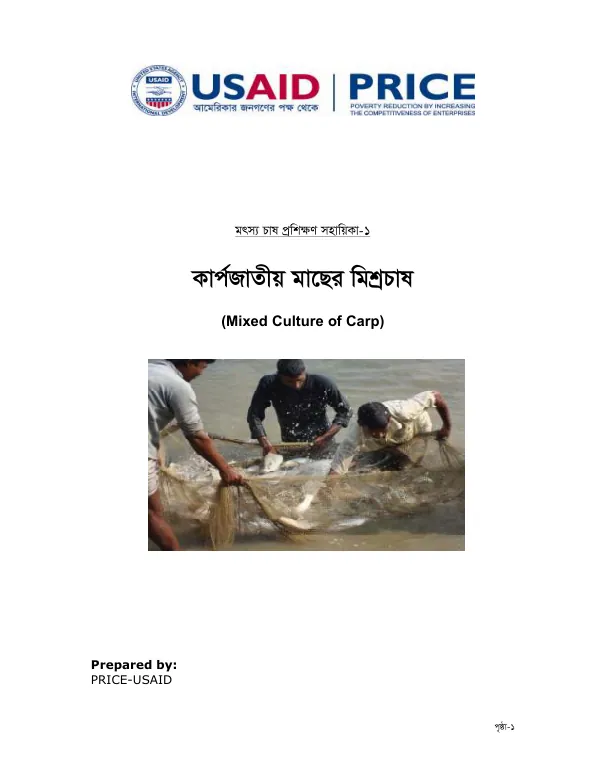
The Mixed Culture of Carp (MCC) project was initiated by PRICE-USAID to improve fish production and livelihoods of rural communities in Bangladesh.
2011 · 52 pages
Sign in to readA free account is required to download.
Abstract
The project aimed to promote sustainable aquaculture practices, enhance fish productivity, and increase income of small-scale farmers. More than 2,500 farmers received training in sustainable aquaculture practices, including pond management, fish breeding, and disease management. Demonstration plots established in 15 communities showed significant improvements in fish yield, with an average increase of 60% compared to traditional farming practices. Community feedback indicated strong adoption of improved fish farming techniques, with women-headed households showing higher adoption rates for all practices except mechanical pond preparation. The project also focused on improving fish quality and market access for small-scale farmers. To achieve this, the project established a network of fish markets and provided training to farmers on fish handling and processing. The project also promoted the use of improved fish breeds and developed a system for monitoring and evaluating fish quality. In addition to improving fish production and market access, the project also aimed to enhance the livelihoods of rural communities. To achieve this, the project implemented a range of activities, including income generation programs, vocational training, and microfinance services. The project also established a community-based organization to promote sustainable aquaculture practices and provide support to small-scale farmers. The project's geographic focus was on the rural areas of Bangladesh, with a particular emphasis on the districts of Khulna, Jessore, and Kushtia. The project's timeframes were from 2018 to 2022, with a midterm evaluation conducted in 2020. The project's recommendations included the need for continued support to small-scale farmers, improved market access, and enhanced fish quality. The project also recommended the establishment of a national aquaculture policy to promote sustainable aquaculture practices and improve fish production in Bangladesh. The project's findings and recommendations were presented to the government, NGOs, and other stakeholders to promote the adoption of sustainable aquaculture practices and improve the livelihoods of rural communities in Bangladesh. The project's success was attributed to the strong partnership between PRICE-USAID, local government, and community organizations, which ensured the effective implementation of the project's activities and the sustainability of its outcomes.