FUTURES GROUP INTERNATIONAL, LLC
Modes of Transmission Model - MOT for Belize
The Modes of Transmission Model - MOT, developed by the Ministry of Public Health of Belize's National AIDS Program, estimates the number of new HIV infections expected in Belize for 2014.
2014 · 42 pages
Sign in to readA free account is required to download.
Abstract
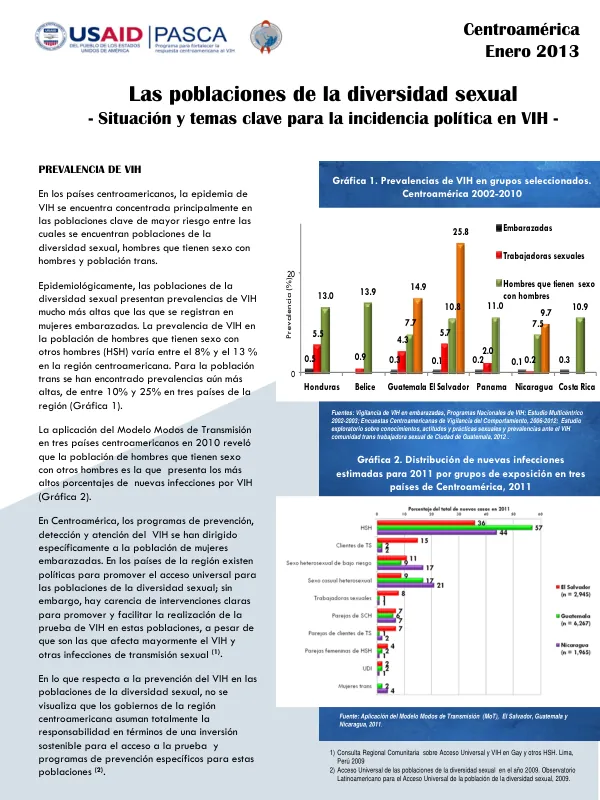
The model is based on the current prevalence of HIV infection, the number of individuals with particular exposures, and the rates of these exposures. Belize is situated on Central America's Caribbean coast, consisting of six administrative districts, and implements a national public health system that delivers free services through a network of institutions. However, the access of the male population to public health services is still limited, with only 30% of male respondents reporting ever using health services, and 45% expressing that they had never used a health service for any purpose. The HIV epidemic in Belize was initially considered generalized, but current data suggest a concentrated epidemic, with HIV prevalences of 13.8%, 0.9%, and 0.6% in men who have sex with men (MSM), female sex workers (FSW), and pregnant women, respectively. The country does not currently implement studies to measure the incidence of HIV, which is why an MOT analysis has been required. The objectives of the MOT model are to estimate the number of new HIV infections, determine the main HIV risk behaviors addressing the HIV epidemic, use MOT results to improve national public health policies, and determine principal deficiencies in HIV/STIs data to program new studies to address these limitations. The MOT model categorizes the adult population aged 15-49 years old into 13 risk behavior groups according to their main source of exposure to HIV. The model assumes that the risk of infection in susceptible individuals is a simple binomial function of their number of partners and the number of sex acts with each partner. The availability and quality of data were analyzed to determine pertinence to run the model. The results of the MOT analysis indicate that the expected number of new HIV infections is 130 (99-150), with men who have sex with other men (MSM) producing the highest proportion of new HIV infections (63.5%, 48.8%-75.6%). Persons engaged in casual heterosexual sex (CHS) and stable heterosexual couples (SHC) also generate significant proportions of new HIV infections. The conclusions of the MOT model suggest that MSM, CHS, and SHC will generate the highest proportions of new HIV infections in Belize. Although further epidemiological research is required, current data suggest that injecting drug users (IDUs) do not play a significant role in HIV dynamics in Belize. Information on regular, sexual partners of overall risk behaviors pre-determined to set the MOT model is lacking currently, and the availability and quality of HIV risk behavioral data are still weak. The MOT model provides a framework for understanding the dynamics of the HIV epidemic in Belize and can be used to inform national public health policies and program new studies to address the limitations in HIV/STIs data.