ABT ASSOCIATES
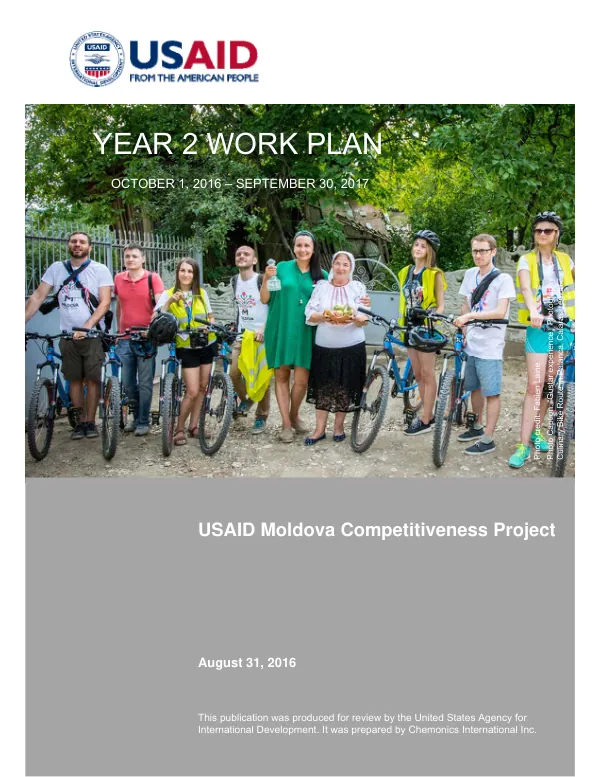
Moldova Competitiveness Project Year 2 Work Plan
The USAID Moldova Competitiveness Project began in 2015 with the goal of improving the competitiveness of Moldova's economy.
2016 · 92 pages
Sign in to readA free account is required to download.
Abstract
The project focused on four key sectors: wine and tourism, light industry (fashion manufacturing), information and communications technology (ICT), and precision engineering. The project aimed to increase productivity and quality, expand market linkages, and improve the sector-enabling environment and increase capacity in each sector. In the wine and tourism sector, the project implemented several activities to increase productivity and quality, including the development of a viticulture and winemaking excellence center in Stauceni and the design of a wine of Moldova academy. The project also aimed to expand market linkages through activities such as building the wine of Moldova brand equity and increasing awareness about Moldovan wines. Additionally, the project worked to improve the sector-enabling environment and increase capacity by continuing policy upgrading and legal regulatory reforms in the wine industry. In the light industry sector, the project focused on increasing productivity and quality through activities such as developing the ZIPhouse accelerator and raising skills through education. The project also aimed to expand market linkages by repositioning Moldova as a full product manufacturing partner and supporting the internationalization of Moldovan fashion brands in regional markets. Furthermore, the project worked to improve the sector-enabling environment and increase capacity by assisting APIUS to develop an industry white paper and advocate for policy and regulatory changes. In the ICT sector, the project implemented several activities to increase productivity and quality, including adapting university-level ICT education to industry needs and improving STEM education and promoting tech careers at the secondary education level. The project also aimed to expand market linkages through activities such as accelerating the adoption and use of technology by SMEs and other non-IT sectors. Additionally, the project worked to improve the sector-enabling environment and increase capacity by improving public policies for the technology ecosystem and capacity building for ATIC. In the precision engineering sector, the project focused on increasing productivity and quality through activities such as increasing productivity and efficiency for manufacturing companies. The project also aimed to expand market linkages by improving marketing skills and export capacity for more developed and higher value markets. Furthermore, the project worked to improve the sector-enabling environment and increase capacity by mapping the high precision engineering cluster. The project also included cross-cutting activities to support implementation, including the sector engagement, enhancement, and development (SEED) fund and inclusive development activities. The SEED fund provided support for sector-specific activities, while the inclusive development activities aimed to promote inclusive growth and reduce poverty. The project's geographic focus was Moldova, with a specific emphasis on the wine and tourism, light industry, ICT, and precision engineering sectors. The project's timeframes were from 2015 to 2018, with a focus on implementing activities and achieving project goals during this period. The project's recommendations were based on the project's findings and lessons learned, and were intended to inform future development initiatives in Moldova.