USAID DEC
Monitoring, Evaluation & Learning (MEL) PLAN for FEED THE FUTURE GUATEMALA – PROYECTO DE SOLUCIONES INNOVADORAS PARA CADENAS DE VALOR AGRÍCOLA – PROINNOVA
Sign inUSAID
Monitoring, Evaluation & Learning (MEL) PLAN for FEED THE FUTURE GUATEMALA – PROYECTO DE SOLUCIONES INNOVADORAS PARA CADENAS DE VALOR AGRÍCOLA – PROINNOVA
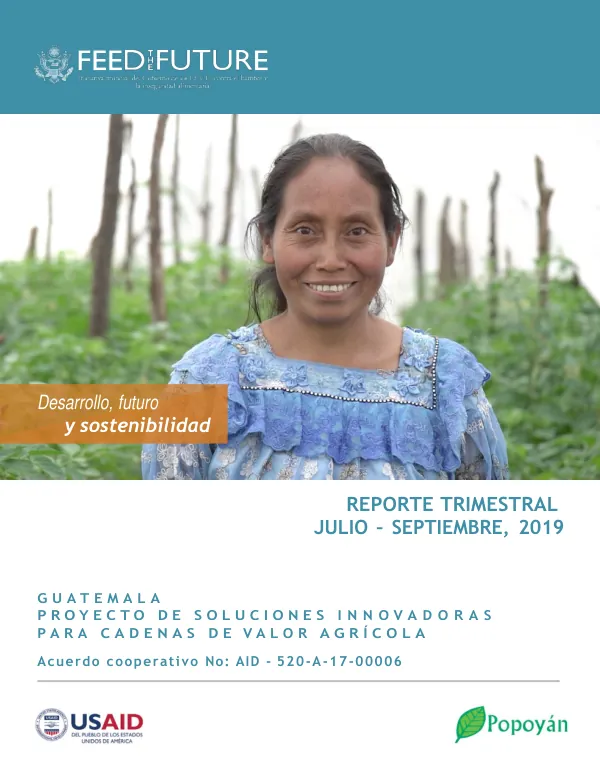
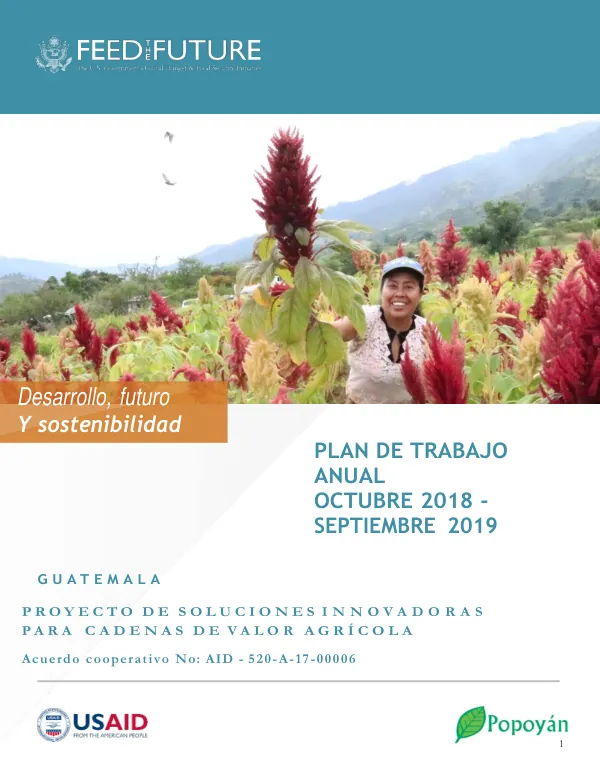
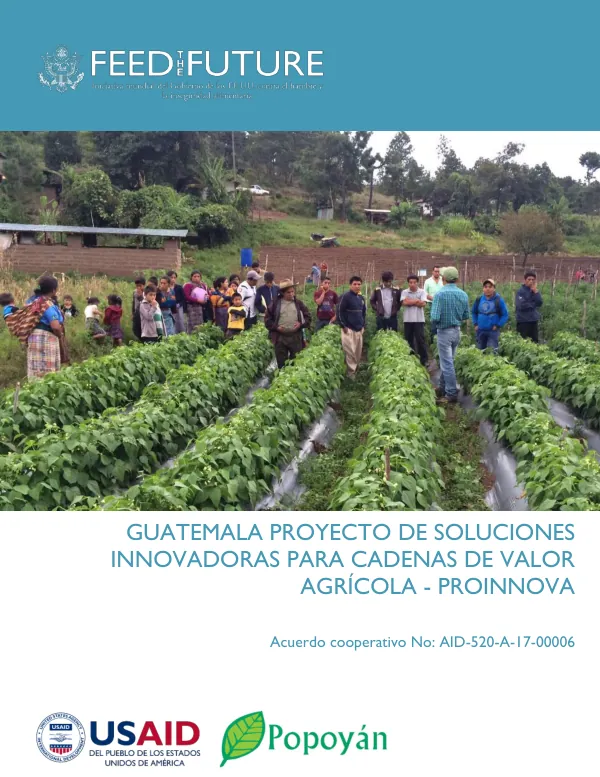
The Feed the Future Guatemala - Proyecto de Soluciones Innovadoras para Cadenas de Valor Agrícola - PROINNOVA project began in 2017 with a cooperative agreement between USAID and Agropecuaria Popoyán S.A.
2018 · 31 pages
Sign in to readA free account is required to download.
Abstract
The project aims to reduce poverty and chronic malnutrition in the western highlands of Guatemala by increasing the incomes of rural families and improving the resilience of small agricultural households in five departments of the region. The project is part of the Feed the Future (FTF) initiative, which is a US government global food security strategy that focuses on six areas: inclusive agricultural sector growth, gender integration, improved nutrition, private sector engagement, research and development of capacities, and resilience. USAID Guatemala has been implementing the FTF-Multianual Strategy (FTF-MYS), which describes the plan of implementation for the US government's food security and nutrition strategy in Guatemala. The project's integrated and systemic approach aims to increase the incomes of rural households, reduce vulnerability to chronic malnutrition, and adapt to climate vulnerability over the next five years. During the initial start-up period, it is essential to collect lessons learned, methodology, successes, and opportunities for improvement to build a common vision of development in the area. The project's activities focus on five key areas: increasing agricultural productivity and diversification, expanding markets and commercial alliances, improving the resilience of natural systems to climate change, improving the resilience of communities to hunger and malnutrition, and strengthening governance and enabling conditions for change. The project's technical results include the verification of initial field conditions, the construction of economic corridors, and the design of ProCompite - Manual of Sub-agreements. The project also aims to improve the resilience of natural systems to climate change through the development of micro-watersheds, EMMP's, and other initiatives. The project's monitoring and evaluation plan includes the use of key performance indicators (KPIs) to track progress and measure the impact of the project's activities. The plan also includes the development of a balanced scorecard (BSC) to provide a comprehensive view of the project's performance. The project's implementation is being carried out in collaboration with various stakeholders, including the Government of Guatemala, the private sector, and local communities. The project's activities are being implemented in five departments of the western highlands of Guatemala, including Huehuetenango, Quetzaltenango, San Marcos, Huehuetenango, and Totonicapán. The project's budget for the first year is approximately $1.5 million, which will be used to support the project's activities, including the hiring of staff, the purchase of equipment and supplies, and the implementation of project activities. The project's budget is being managed by Agropecuaria Popoyán S.A., which is responsible for ensuring that the project's activities are carried out in accordance with the project's objectives and the terms of the cooperative agreement. The project's progress is being monitored and evaluated through regular meetings with project stakeholders, including USAID, the Government of Guatemala, and local communities. The project's progress is also being monitored through the use of KPIs and other performance metrics. The project's long-term goal is to improve the livelihoods of rural households in the western highlands of Guatemala by increasing their incomes and improving their access to markets and other economic opportunities. The project's activities are being designed to be sustainable and to have a lasting impact on the communities in which they are being implemented.
Related documents