USAID
Monitoring the Efficacy of and Resistance to Antimalarial Medicines
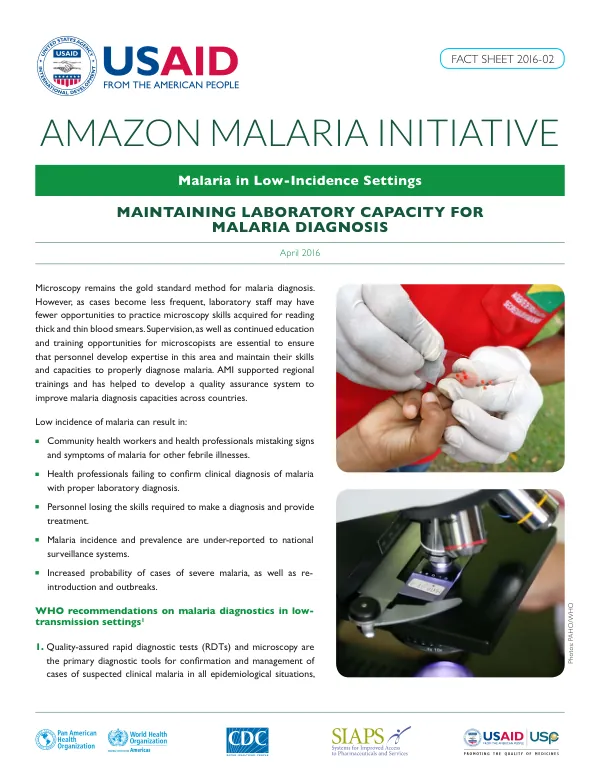
The emergence of antimalarial resistance is a concern in the Americas, particularly in South America where Plasmodium falciparum parasites are resistant to chloroquine.
2016 · 2 pages
Sign in to readA free account is required to download.
Abstract
The World Health Organization (WHO) is concerned that parasites may develop resistance to the antimalarial medicine artemisinin as well as partner medicines in artemisinin-based combination therapies. Evaluating the efficacy of and resistance to antimalarial drugs in low-incidence settings is crucial, and various methods are available for this purpose, including in vivo studies, in vitro tests, and molecular analysis. In vivo therapeutic efficacy studies (TES) of antimalarial medicines continue to be essential for orienting changes in malaria treatment policies, as they correlate best with patients' clinical response to the drugs. However, conducting in vivo studies in low-incidence settings poses challenges, including difficulties in enrolling and following up patients, increased costs and duration of studies, and the need to ensure the quality of studies. Despite these challenges, it is recommended that a TES be conducted at least every three years, or a multi-center study may be implemented involving various locations within the country or neighboring countries with similar epidemiological characteristics. In addition to in vivo studies, other elements of early warning systems, such as in vitro studies and molecular markers, may help track the emergence of resistance and complement the information provided by TES. In vitro studies measure the susceptibility of malaria parasites to antimalarial medicines, while molecular markers test for resistance to antimalarials, including chloroquine, mefloquine, sulfadoxine-pyrimethamine, and artemisinin. However, reliable markers are not available for all parasite species. Monitoring the efficacy of and resistance to antimalarial medicines requires following standard protocols and stringent quality control and quality assurance procedures. Well-trained clinical and laboratory personnel who strictly follow the protocol are essential, as are laboratories capable of conducting molecular biology tests, ascertaining the presence of the drug and its metabolites in serum, and/or doing in vitro tests where indicated. Due to the low rate of transmission of malaria, it is often difficult to obtain enough P. falciparum malaria patients for the necessary sample size, particularly in dispersed and mobile populations.