CARE
Monitoring Viral Persistence in Ebola Survivors in Guinea
Ebola virus disease (EVD) survivors in Guinea can retain the virus in certain bodily fluids, including sperm, breast milk, and spinal fluid, for up to 32 months after testing negative for Ebola.
2018 · 3 pages
Sign in to readA free account is required to download.
Abstract
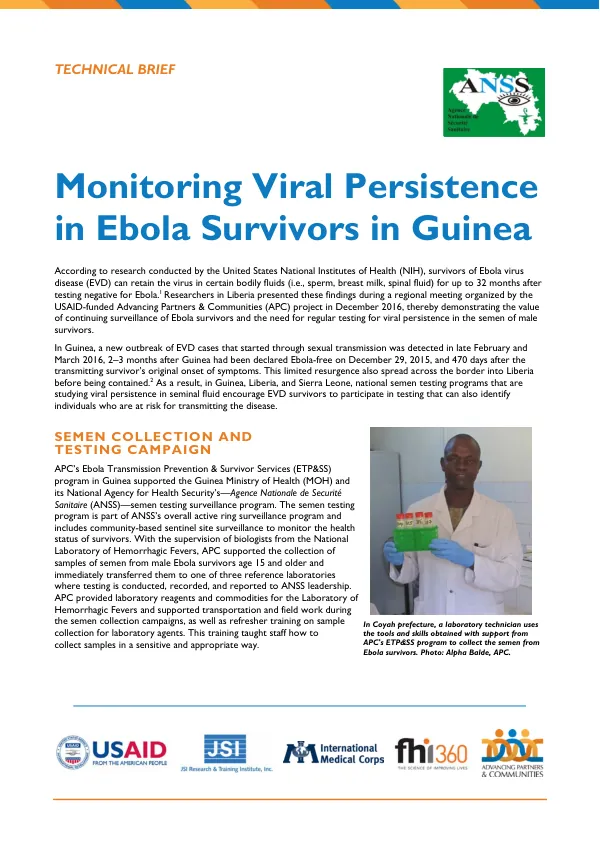
Researchers presented these findings during a regional meeting in December 2016, highlighting the importance of continuing surveillance and regular testing for viral persistence in male survivors. A new outbreak of EVD cases in Guinea was detected in late 2016, 2-5 months after the country had been declared Ebola-free. The outbreak spread across the border into Liberia before being contained. In response, national semen testing programs were implemented in Guinea, Liberia, and Sierra Leone to identify individuals who are at risk of transmitting the disease. The Ebola Transmission Prevention and Survivor Services (ETPSS) program, supported by the Advancing Partners & Communities (APC) project, worked with the Guinea Ministry of Health and the National Agency for Health Security (ANSS) to establish a semen testing surveillance program. The program aimed to monitor the health status of survivors and identify individuals who are at risk of transmitting the disease. The semen testing program involved collecting samples from male Ebola survivors aged 15 and older and transferring them to reference laboratories for testing. APC provided laboratory reagents, commodities, and commodities for the Laboratory of Hemorrhagic Fevers, as well as transportation and field work support during the collection campaigns. The program also provided refresher training on sample collection for laboratory agents. Community-based sentinel site surveillance was used to monitor the health status of survivors, and eligible participants were educated on the importance of testing for the health of themselves and their families. Local survivor associations and community-based sentinel surveillance sites were involved in the program to gain consent from survivors and reduce stigma. The program achieved high coverage, with 83.6% of eligible male survivors participating in the semen testing in October-November 2017, 88.4% in January 2018, and 89.5% in April 2018. The results of the testing campaigns will contribute to the prevention of EVD and the body of research on the largest Ebola outbreak ever recorded. However, challenges were encountered, including survivor privacy concerns, remote locations of survivors, and religious considerations. Some survivors were reluctant to provide semen samples due to fear of stigma, while others were unable to provide samples due to remote locations or religious beliefs. Additionally, some survivors provided false samples, and others had migrated to other regions, making it difficult to track them down. Lessons learned from the program include the importance of RENASEG's participation in the sensitization campaign, which helped to decrease stigma and increase participation. Training laboratory personnel to explain semen collection in a sensitive and private manner also helped to obtain consent from survivors. Providing a transportation stipend as an incentive to leave their village for the collection site also motivated people to participate. The program concluded that the semen testing of Ebola survivors is a key part of the ANSS's active ring surveillance program for EVD. The program provided valuable information on a regular basis, and the last semen testing campaign was conducted in April 2018. The ANSS requires support from other partners to continue these campaigns until evidence demonstrates a definitive end to viral persistence.
Related documents