USAID DEC
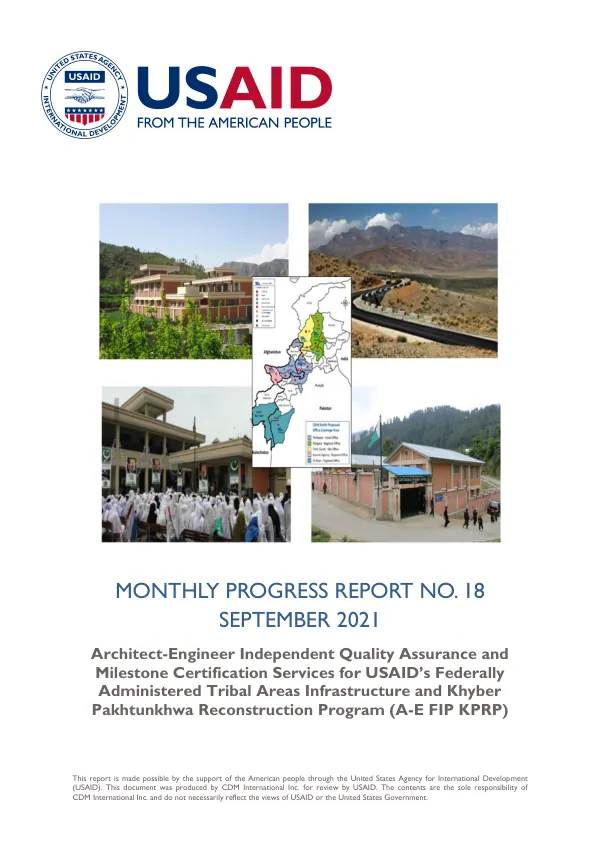
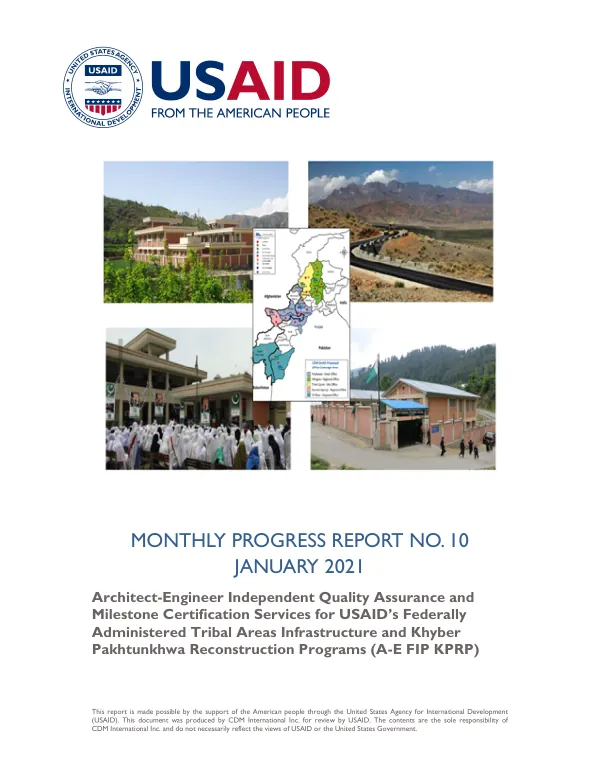
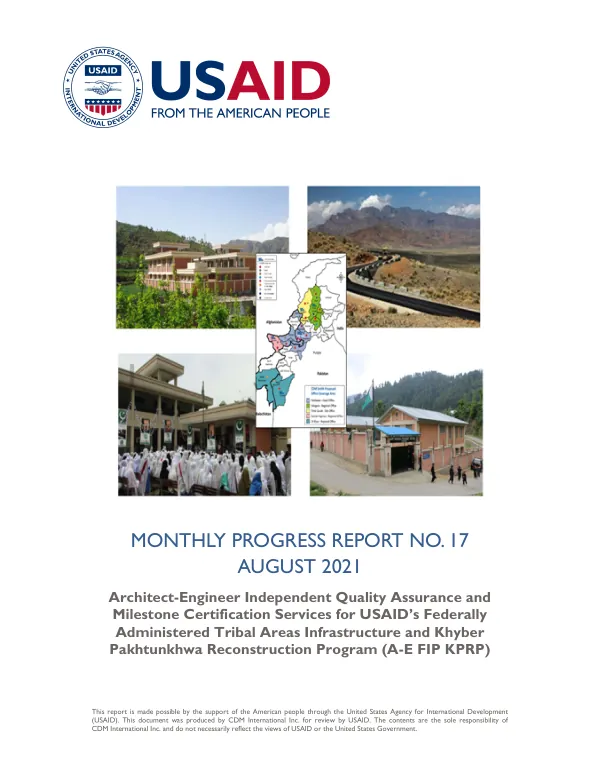
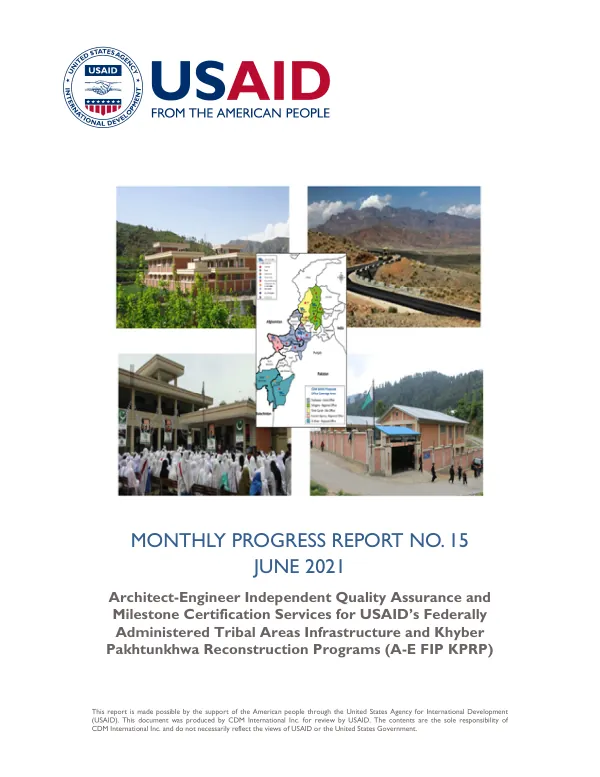
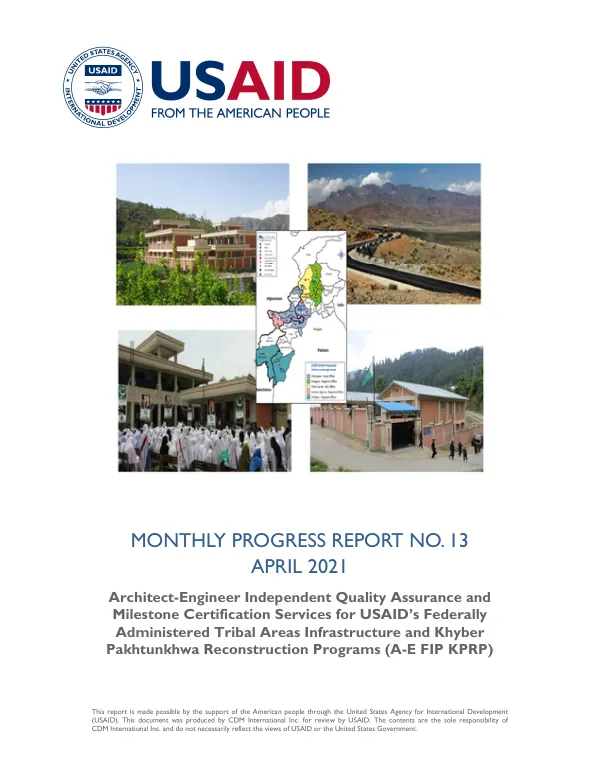
Monthly Progress Report No. 13: Architect-Engineer Independent Quality Assurance and Milestone Certification Services for USAID’s Federally Administered Tribal Areas Infrastructure and Khyber Pakhtunkhwa Reconstruction Programs (A-E FIP KPRP)
Sign inCDM INTERNATIONAL, INC.
Monthly Progress Report No. 13: Architect-Engineer Independent Quality Assurance and Milestone Certification Services for USAID’s Federally Administered Tribal Areas Infrastructure and Khyber Pakhtunkhwa Reconstruction Programs (A-E FIP KPRP)
The Architect-Engineer Independent Quality Assurance and Milestone Certification Services for USAID's Federally Administered Tribal Areas Infrastructure and Khyber Pakhtunkhwa Reconstruction Programs (A-E FIP KPRP) began in 2019 with the objective of providing quality assurance and milestone certification services for the reconstruction of infrastructure in the Federally Administered Tribal Areas (FATA) and Khyber Pakhtunkhwa (KP) regions of Pakistan.
2021 · 136 pages
Sign in to readA free account is required to download.
Abstract
The project is funded by the United States Agency for International Development (USAID) and is implemented by CDM International, Inc. in association with National Development Consultants (Pvt.) Ltd. and UNICON Consulting Services (Pvt.) Ltd. The project organization consists of a project manager/chief of party, Tahir Shamshad, and a team of staff members who are responsible for providing quality assurance and milestone certification services. The project staff is based in Peshawar, Pakistan, and is responsible for coordinating with stakeholders, conducting field visits, and providing technical assistance to the implementing agencies. As of April 2021, the project has made significant progress in achieving its objectives. The financial statistics and trends for the Khyber Pakhtunkhwa Reconstruction Program (KPRP) show that the project has spent 85% of its allocated funds, with a total expenditure of $23.5 million. The project has also completed 75% of its planned activities, including the construction of 15 buildings, the rehabilitation of 10 roads, and the installation of 20 water supply systems. The project has also conducted regular field visits to monitor the progress of the implementing agencies and to provide technical assistance. The field visit data shows that the project has visited 25 sites, including 10 schools, 5 healthcare facilities, and 10 community centers. The project has also conducted periodic testing of materials to ensure that they meet the required standards. The project has also made significant progress in achieving its environmental compliance objectives. The environmental compliance reporting shows that the project has conducted regular field visits to monitor the environmental impact of the implementing agencies. The project has also identified several issues and considerations, including the need for improved waste management practices and the need for more stringent environmental regulations. The project has also made significant progress in achieving its gender reporting objectives. The gender reporting shows that the project has conducted regular field visits to monitor the participation of women in the implementing agencies. The project has also identified several issues and considerations, including the need for improved women's participation in decision-making processes and the need for more targeted interventions to address the needs of women. Overall, the project has made significant progress in achieving its objectives, including the provision of quality assurance and milestone certification services, the reconstruction of infrastructure, and the promotion of environmental compliance and gender equality.
Related documents
Documents in this collection
 2023
2023USAID DEC
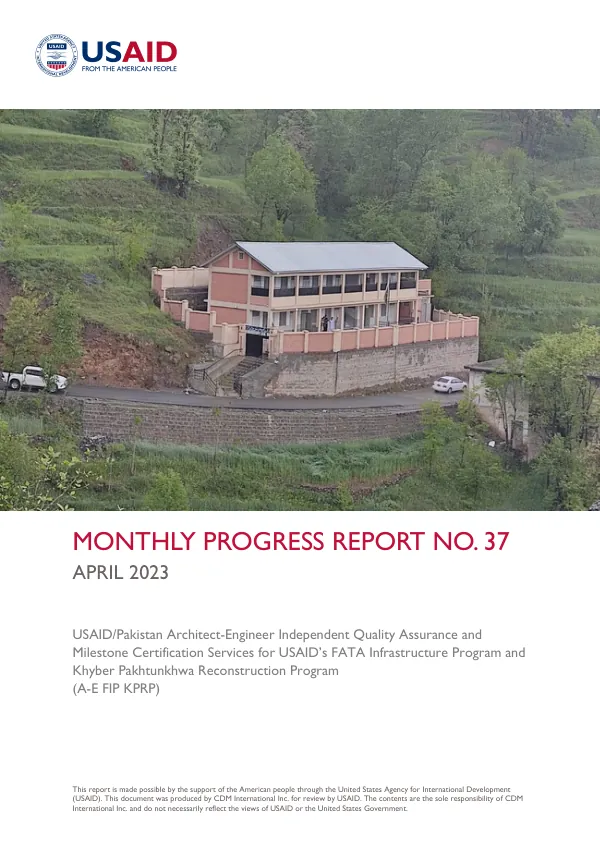
Monthly Progress Report No. 37: Architect-Engineer Independent Quality Assurance and Milestone Certification Services for USAID’s FATA Infrastructure Program and Khyber Pakhtunkhwa Reconstruction Program
Open record 2021
2021USAID DEC