USAID DEC
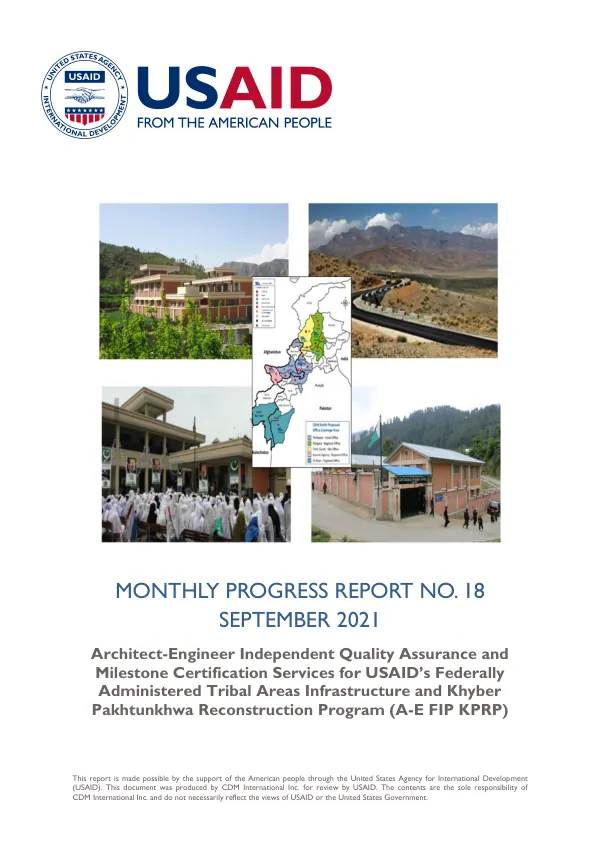
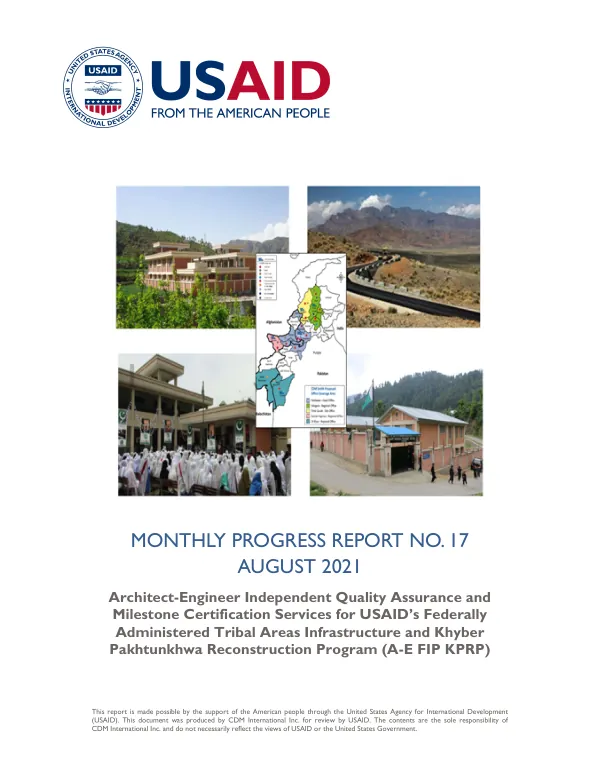
Monthly Progress Report No. 17 - August 2021: Architect-Engineer Independent Quality Assurance and Milestone Certification Services for USAID’s Federally Administered Tribal Areas Infrastructure and Khyber Pakhtunkhwa Reconstruction Program (A-E FIP KPRP)
Sign inCDM INTERNATIONAL, INC.
Monthly Progress Report No. 17 - August 2021: Architect-Engineer Independent Quality Assurance and Milestone Certification Services for USAID’s Federally Administered Tribal Areas Infrastructure and Khyber Pakhtunkhwa Reconstruction Program (A-E FIP KPRP)
The Federally Administered Tribal Areas Infrastructure and Khyber Pakhtunkhwa Reconstruction Program (A-E FIP KPRP) is a USAID-funded initiative aimed at improving infrastructure in the Federally Administered Tribal Areas (FATA) and Khyber Pakhtunkhwa (KPK) regions of Pakistan.
2021 · 140 pages
Sign in to readA free account is required to download.
Abstract
The program is implemented by CDM International Inc. in association with National Development Consultants (Pvt.) Ltd. and UNICON Consulting Services (Pvt.) Ltd. (UNICON). The program's primary objective is to enhance the quality of life for the local population by providing access to basic services such as water, sanitation, and electricity. To achieve this goal, the program focuses on three key sectors: building, road, and mechanical, electrical, and plumbing (MEP). The program's scope includes the design, construction, and testing of infrastructure projects, as well as the provision of training and capacity-building services to local stakeholders. As of August 2021, the program has made significant progress in achieving its objectives. In the KPRP sector, the program has completed 75% of the planned milestones, with a total of 15 projects completed and 10 projects under construction. The program has also conducted 25 field visits to monitor progress and ensure compliance with quality assurance (QA) plans. The QA testing has revealed some issues, including delays in material testing and non-compliance with QA plans in some cases. In the FIP sector, the program has completed 60% of the planned milestones, with a total of 10 projects completed and 5 projects under construction. The program has conducted 20 field visits to monitor progress and ensure compliance with QA plans. The QA testing has revealed some issues, including delays in material testing and non-compliance with QA plans in some cases. The program has also made significant progress in environmental compliance reporting, with a total of 15 field visits conducted to monitor progress and ensure compliance with environmental regulations. The program has also conducted a gender reporting exercise, which revealed that women's involvement in design and construction activities is limited, but there are opportunities for improvement. Overall, the program has made significant progress in achieving its objectives, but there are still some challenges to be addressed, including delays in material testing and non-compliance with QA plans. The program will continue to work towards improving the quality of life for the local population by providing access to basic services and promoting sustainable development.
Related documents
Documents in this collection
 2021
2021USAID DEC
Monthly Progress Report No. 13: Architect-Engineer Independent Quality Assurance and Milestone Certification Services for USAID’s Federally Administered Tribal Areas Infrastructure and Khyber Pakhtunkhwa Reconstruction Programs (A-E FIP KPRP)
Open record 2023
2023USAID DEC