THE MORGANTIE GROUP, INC.
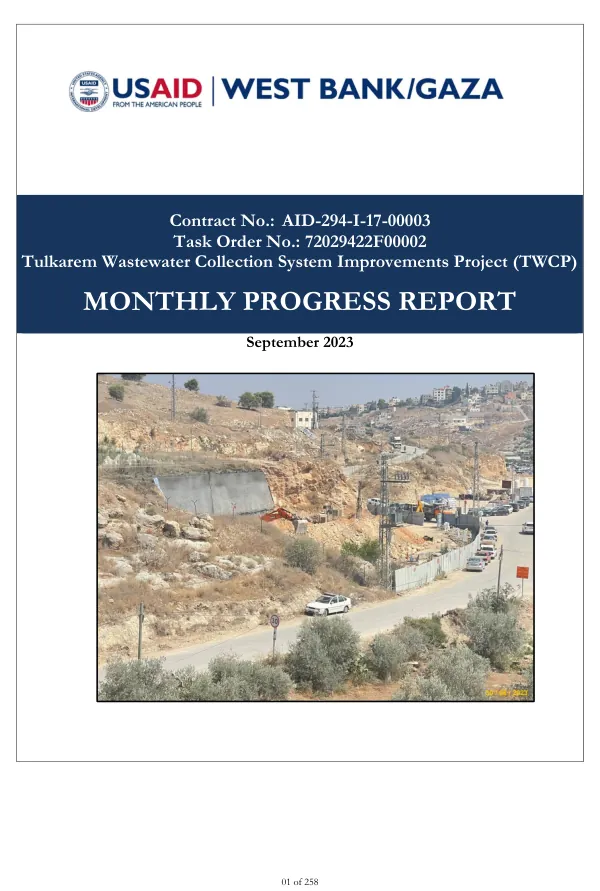
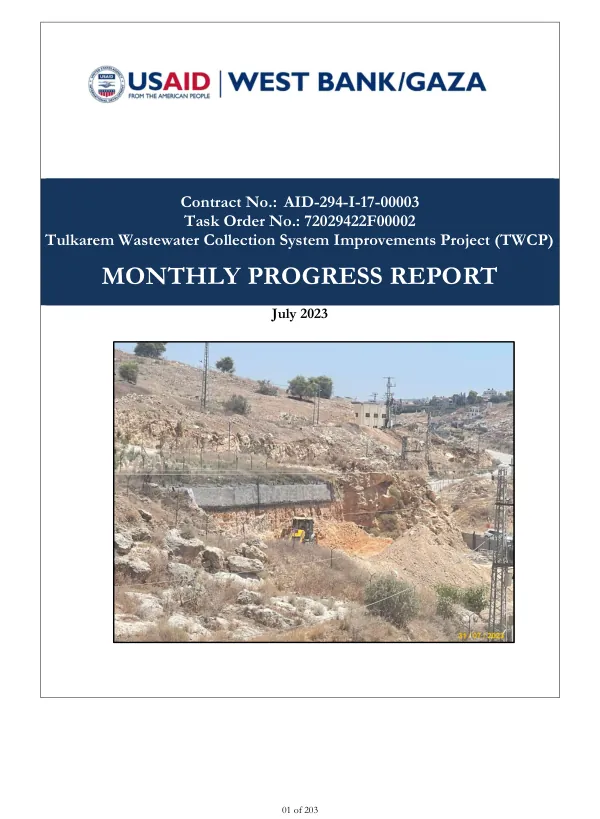
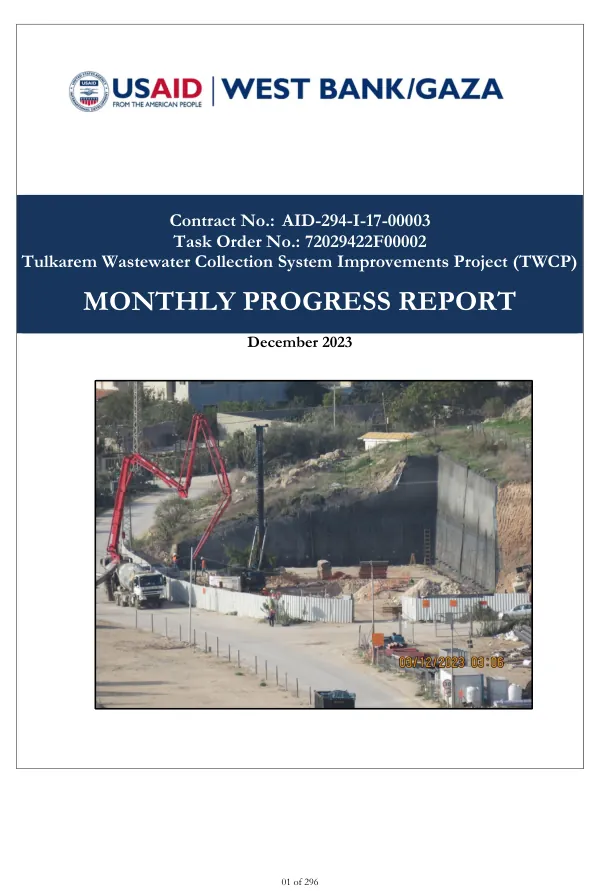
Monthly Progress Report No. 14
The Tulkarem Wastewater Collection System Improvements Project (TWCP) aims to address the critical issue of untreated wastewater in Tulkarem, a city in the northern West Bank with a population of over 70,000 people.
2023 · 296 pages
Sign in to readA free account is required to download.
Abstract
The project is part of the USAID's efforts to improve Palestinians' access to basic infrastructure and services, thereby contributing to the Palestinian economy. The TWCP involves the rehabilitation and construction of the Irtah Pump Station (IPS), which was designed to transport Tulkarem's wastewater to oxidation ponds prior to treatment. However, the IPS has been non-operational, resulting in untreated wastewater flowing into open wadis and reliance on cesspits in unserved communities. This poses significant health and environmental risks to the local population. The project's objectives include improving the collection and treatment of wastewater in Tulkarem, reducing the risk of waterborne diseases, and enhancing the overall quality of life for the city's residents. To achieve these objectives, the project will implement a range of interventions, including the rehabilitation of the IPS, the construction of new wastewater collection infrastructure, and the installation of treatment facilities. The TWCP is being implemented by The Morganti Group, Inc. (TMGI) under a Task Order (TO) with the USAID. The project's scope includes the rehabilitation of the IPS, the construction of new wastewater collection infrastructure, and the installation of treatment facilities. The project's timeline is expected to span several months, with key milestones and deliverables identified throughout the project cycle. The project's safety protocols are being implemented in accordance with the Occupational Safety and Health Act (OSHA) and other relevant regulations. The project team is also committed to environmental compliance, with a focus on minimizing the project's environmental impact and ensuring that all activities are carried out in accordance with the Environmental Mitigation and Monitoring Plan (EMMP). Community outreach and engagement are critical components of the TWCP. The project team is working closely with local stakeholders, including community leaders and residents, to ensure that the project's objectives are aligned with the needs and priorities of the local population. The project's Gender Action Plan is also being implemented to ensure that the project's benefits are equitably distributed among all members of the community, with a particular focus on women and vulnerable populations. The project's progress is being monitored and reported on a regular basis, with key indicators and metrics used to track the project's performance against its objectives. The project team is also working closely with the USAID and other stakeholders to ensure that the project's deliverables are met and that the project's benefits are sustained over the long term.