USAID DEC
Monthly Report Template for COMPETE Grantees
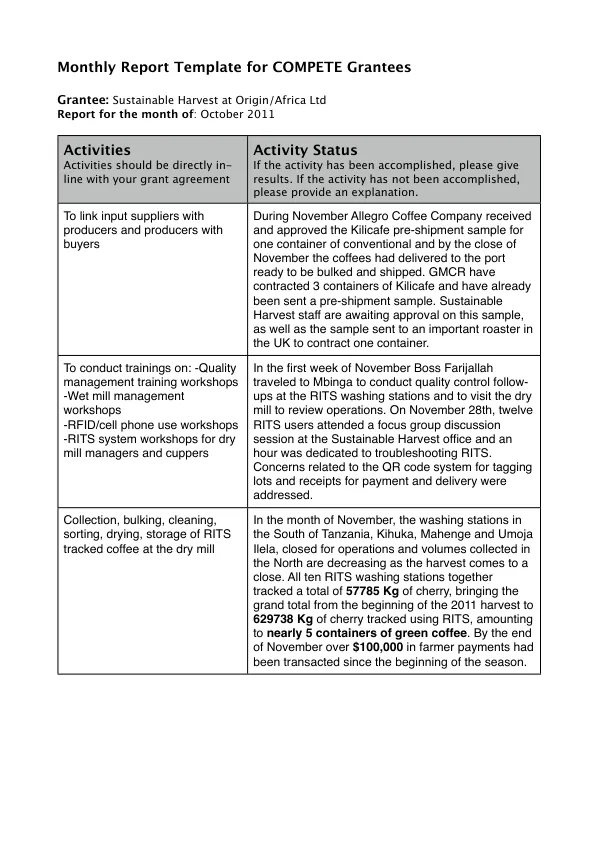
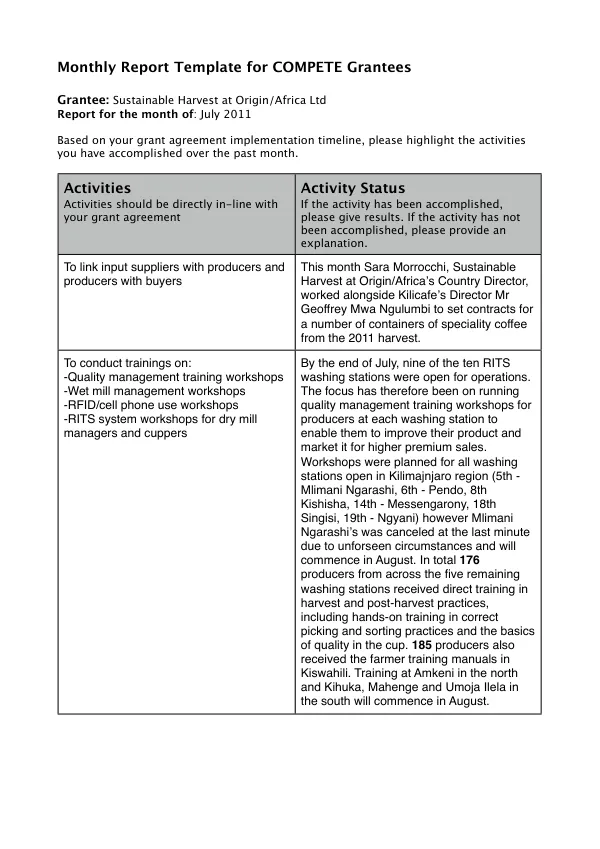
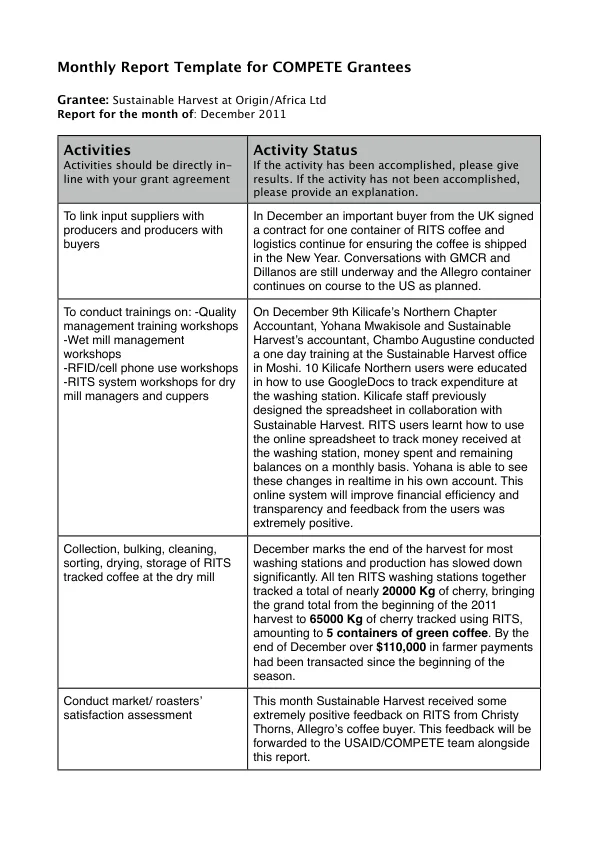
Sustainable Harvest at Origin/Africa Ltd implemented various activities in May 2012.
2012 · 2 pages
Sign in to readA free account is required to download.
Abstract
The collection, bulking, cleaning, storage, and drying of RITS tracked coffee at the dry mill were scheduled to begin on June 4th, following the final payments. This marked the official start of operations for 2012, during which time coffee would be tracked in RITS. A 5-day training on RITS in Excel was conducted from May 7th to 11th. A total of 27 users from 14 groups attended the training, with the exception of Mlimani Ngarashi users, who were unable to attend due to pressing duties at the washing station. The training covered the use of Excel, including the use of spreadsheets and formulas, as well as the seven sheets of the RITS workbook. The groups also learned four different methods for sharing their data with Kilicafe leadership, including DropBox, email, GoogleDocs, and flash disk. During the training, Carly Griggs and Chambo Augustine traveled to Mbinga to meet with RITS users and troubleshoot issues faced. The final RITS workbook with all the farmers' names downloaded from the previous RITS were shared, ready for use when the washing stations opened for operations. Additionally, Carly Griggs ran a one-day troubleshooting workshop for the Northern RITS users on May 31st. Eighteen users from across the 12 Northern Kilicafe groups attended, including the chairman of Kilicafe and a representative from Mlimani Ngarashi. Monitoring and evaluation of the project continued in May. By the end of the month, 474 producers from across 7 of the 10 washing stations using RITS in 2011 were surveyed. Data was not collected from Umoja Ilela, Ngyani, and Mlimani Ngarashi due to various reasons. The collected data was analyzed along with data from 2010, and a thorough monitoring and evaluation report will be included in the End of Project Report. The RITS system consists of several components, including the farmer sheet, reception order sheet, and payment receipt sheet. These sheets are used to track and record data related to the coffee production process. The data collected through these sheets is used to monitor and evaluate the project's progress. The training and monitoring activities conducted in May aimed to improve the efficiency and effectiveness of the RITS system. The training provided to the RITS users aimed to improve their understanding of the system and its various components. The monitoring and evaluation activities aimed to assess the project's progress and identify areas for improvement. The project's focus on monitoring and evaluation is crucial for ensuring that the project's objectives are met. The data collected through the RITS system will be used to evaluate the project's impact and identify areas for improvement.