CARE
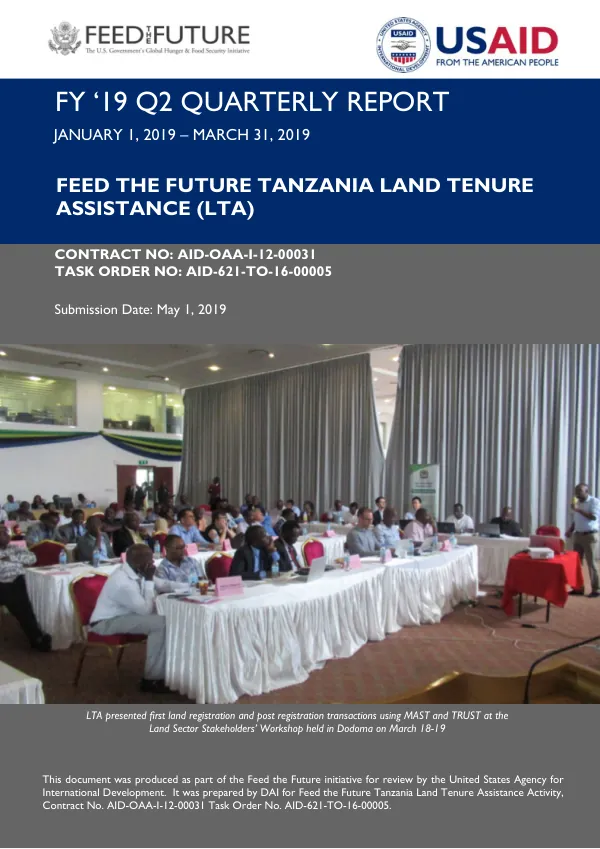
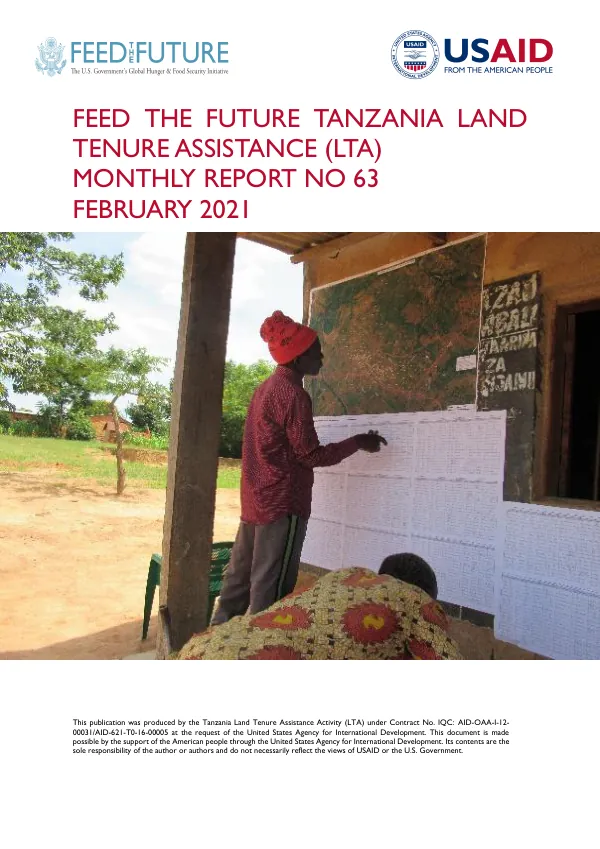
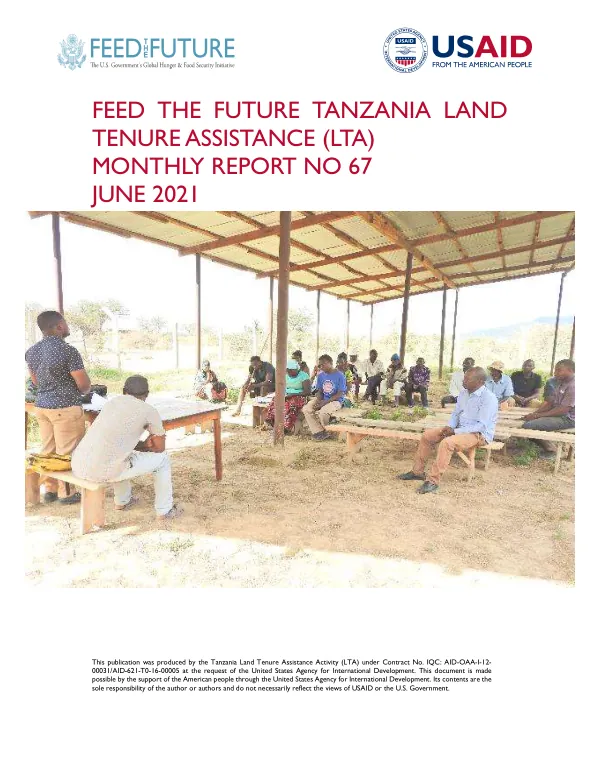
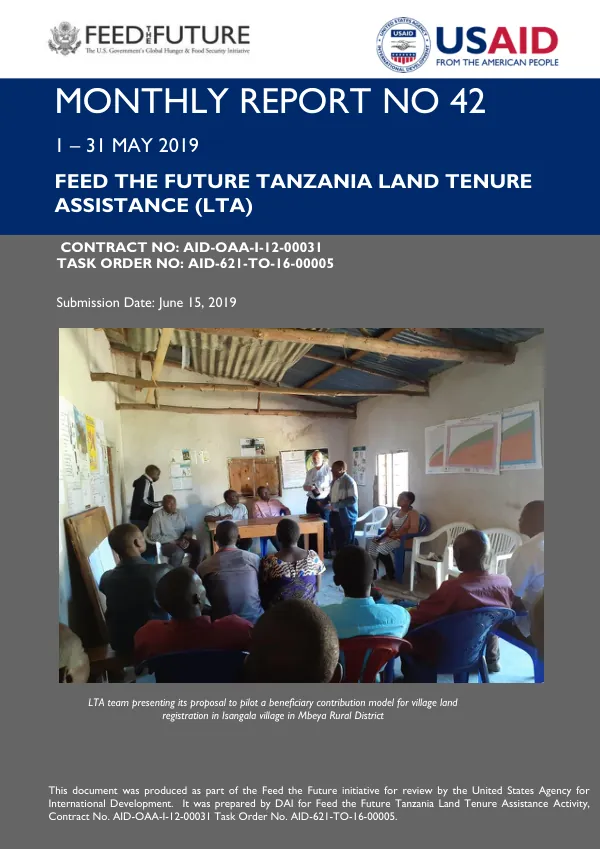
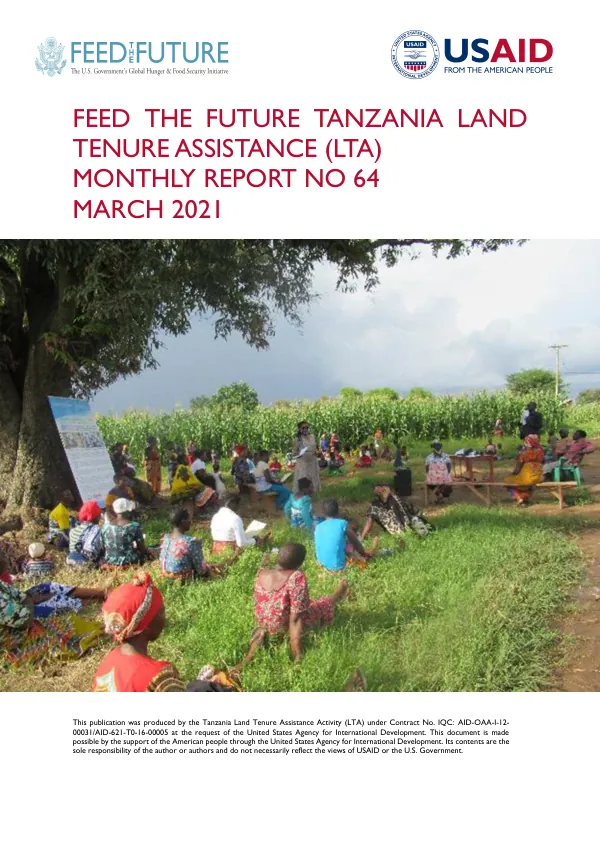
Feed the Future Tanzania Land Tenure Assistance (LTA) Monthly Report No. 64
The Feed the Future Land Tenure Assistance (LTA) activity aimed to clarify land tenure issues in the Southern Agricultural Growth Corridor of Tanzania (SAGCOT).
2021 · 21 pages
Sign in to readA free account is required to download.
Abstract
The activity was part of the Feed the Future (FTF) initiative, which sought to develop land tenure programming to support USAID's investments in the region. The LTA activity focused on strengthening village land use planning and registration, as well as building the capacity of village land governance institutions. In the reporting month, LTA made significant progress in implementing village land use plans and systematic village land adjudication and registration. The activity assisted the District Land Office (DLO) of Iringa District in printing Village Land Use Plans (VLUP) for 26 villages. The DLO subsequently submitted the VLUPs to the National Land Use Commission in Dodoma for gazetting. LTA also completed the demarcation and adjudication of land parcels in five villages in Iringa District. The activity completed the public display of the results of adjudication and demarcation for another set of five villages in Iringa. Following the public display, LTA completed textual and data cleaning for three villages to reflect the outcomes of the public display and submitted the list of claims to the Iringa Authorized Land Officer for review and approval. LTA organized the issuance of Certificates of Customary Right of Occupancy (CCRO) in two villages in Iringa District and delivered 48 CCROs to the Village Land Registries of these villages. The activity issued a total of 104 CCROs to the residents of these villages. LTA continued to strengthen the capacity of village land governance institutions with respect to land administration and village land use plan enforcement. The activity conducted four council trainings in Msuluti and Ibumila in Iringa and Winome and Mawambala in Kilolo. The trainings covered various topics, including the principles of land laws, village land use planning, introduction of village land registration using MAST, and dispute resolution. In the reporting period, LTA continued to raise awareness among village residents with respect to land rights. The activity conducted four assembly trainings in Msuluti and Ibumali villages in Iringa and Winome and Mawambala villages in Kilolo. The trainings focused on the enforcement of village land use planning, land rights of vulnerable groups, introduction of village land registration process, beneficiary contribution model, and dispute resolution process. LTA also laid the groundwork for the sustainability of its activity through a financially and organizationally viable successor non-governmental organization (NGO). The activity explored funding opportunities for the LTA-NGO and set the stage for the NGO to start implementing village land registration activities as an independent entity. LTA introduced the LTA-NGO to several partners, including GIZ, DANIDA, the Participatory Plantation Forest Program (PPFP), and CARE/WWF alliance. As part of the ongoing effort to operationalize the LTA-NGO, LTA extended the introduction of the beneficiary contribution model to other districts. The activity held meetings with the Iringa Region Assistant Land Commissioner and the District Executive Director and District Land Officer for the Kilolo District to discuss the possibility of initiating village land registration activities based on the beneficiary contribution model. The District Land Office accepted the project initiative and expressed willingness to collaborate with LTA in implementing systematic village land registration activities. The DLO also presented a list of five villages, including Isuka, Ukumbi, Masalale, Mawambala, and Winome, whose residents have been requesting to have their lands registered. LTA, in collaboration with the DLO and the DED, introduced the Village Land Registration process through the beneficiary contribution model to the village councils and village councils of Mawambala and Winome villages. The Feed the Future (FTF) initiative invested in several agricultural projects in the Southern Agricultural Growth Corridor of Tanzania (SAGCOT) and sought to develop land tenure programming to support USAID's existing and future investments in the region. The LTA activity aimed to clarify land tenure issues in the region and strengthen village land use planning and registration. LTA organized