DIMAGI, INC.
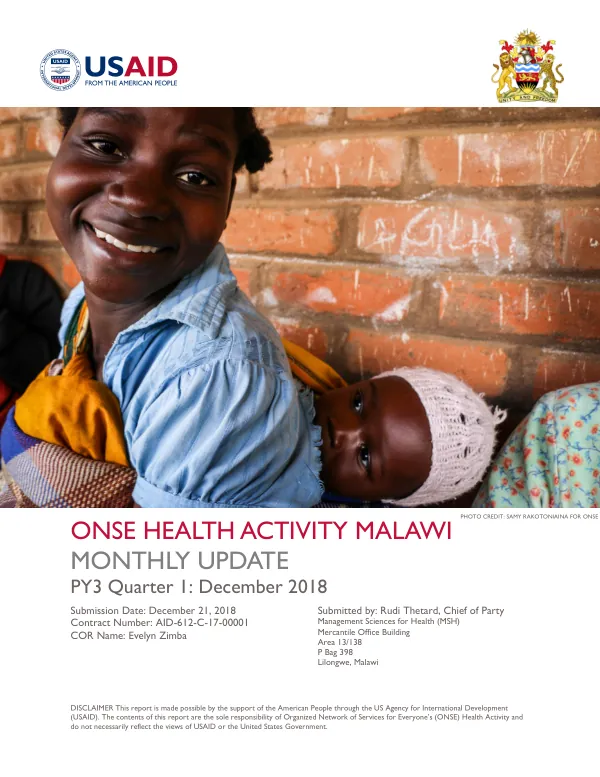
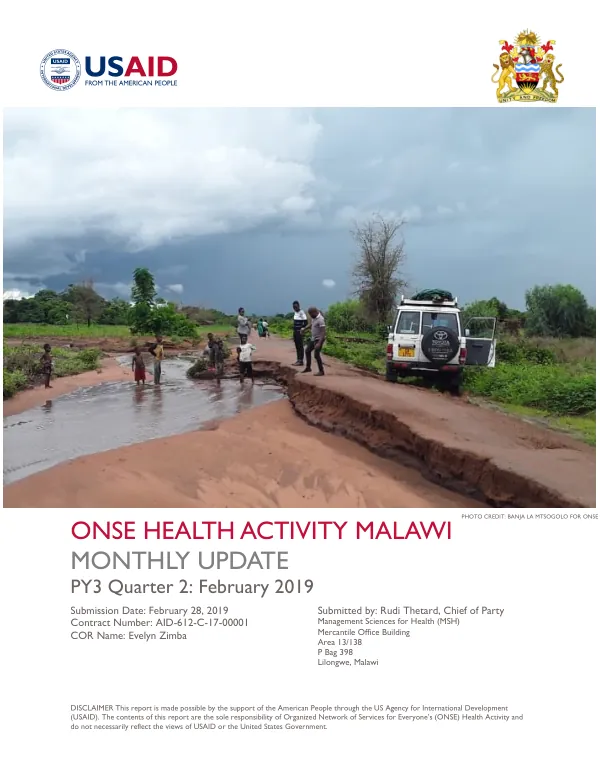
Monthly Update: ONSE Health Activity Malawi, PY3 Quarter 2: February 2019
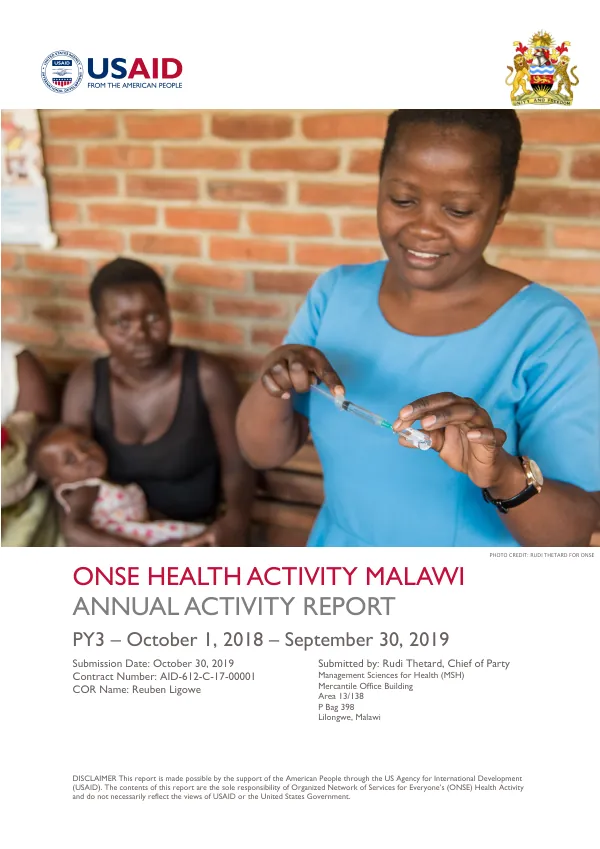
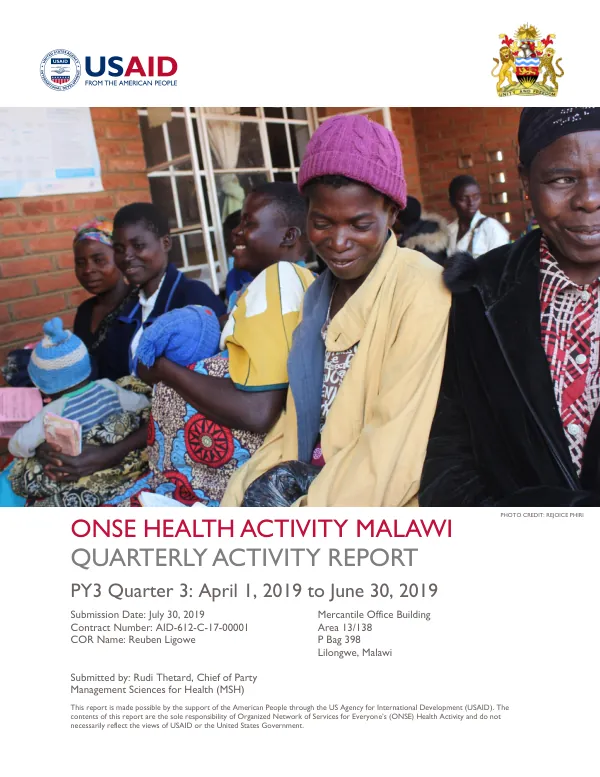
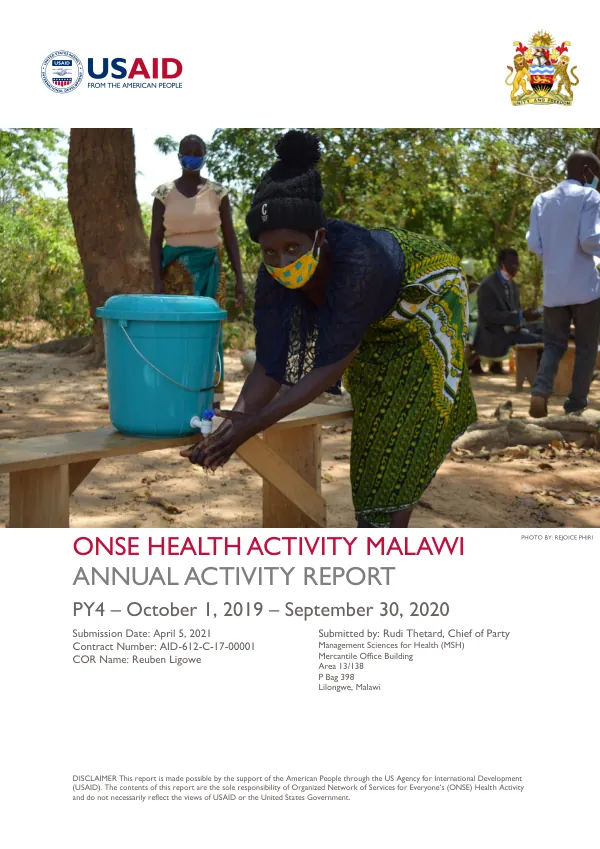
The Organized Network of Services for Everyone's (ONSE) Health Activity in Malawi is a USAID-funded program aimed at improving maternal and newborn health.
2019 · 37 pages
Sign in to readA free account is required to download.
Abstract
The program is implemented by Management Sciences for Health (MSH) and has a contract number of AID-612-C-17-00001. The program's geographic coverage includes 16 districts in Malawi, with a focus on improving quality of care, clinical services, and health systems strengthening. Renovation of health facilities and equipment provision is a key component of the program. In February, ONSE and RESOLVE Capacity completed a final inspection of defects detected at sites in Chitipa, Karonga, Kasungu, Lilongwe, Mchinji, Nkhatabay, Nkhotakota, and Salima. The contractor is attending to the defects detected before a final acceptance of the building by ONSE in March. Quality of care (QoC) is another critical area of focus for the program. ONSE supported the finalization of the Quality Improvement (QI) training manual through engagement with the national task force. The manual was presented and approved by the Quality Management TWG and has now been mandated for use for QI training in ONSE-supported districts. In Nkhotakota, ONSE supported a Quality Improvement Support Team (QIST) training at the district hospital for 16 members on the revised criteria. Integrated Family Health Outreach Clinics (IFHOCS) are also an essential component of the program. In February, ONSE supported 86 IFHOCS, which reached a total of 31,109 beneficiaries across the 16 districts. The IFHOCS provided a range of services, including maternal and newborn health care, family planning, and malaria prevention. Maternal and newborn health (MNH) is a key area of focus for the program. In Balaka, Dowa, Machinga, Mulanje, and Nkhotakota, ONSE supported Basic Emergency Obstetric and Neonatal Care (BEmONC) mentorship for 92 providers from 17 facilities. The mentorship aimed at enhancing provider skills in the provision of lifesaving MNH interventions in targeted areas identified during supportive supervision. In Balaka, all facilities were encouraged to monitor blood pressure for mothers to identify pregnancy-induced hypertension for the administration of anticonvulsants. In Mulanje, providers were encouraged to document all Helping Babies Breathe (HBB) cases in the HBB register. At Alinafe in Nkhotakota, vacuum extractions were not being performed, but following the provision of KIWI vacuum extractors from ONSE and intensified mentorship, the facility has started performing vaginal assisted deliveries. The program also focuses on health systems strengthening, including the renovation of health facilities and equipment provision, quality of care improvement, and integrated family health outreach clinics. The program's geographic coverage includes 16 districts in Malawi, with a focus on improving maternal and newborn health outcomes. In terms of implementation, the program has made significant progress in renovating health facilities and providing equipment. The program has also supported the finalization of the Quality Improvement (QI) training manual and has conducted BEmONC mentorship for 92 providers from 17 facilities. The program has also supported the establishment of Integrated Family Health Outreach Clinics (IFHOCS), which have reached a total of 31,109 beneficiaries across the 16 districts. The program's geographic focus is on 16 districts in Malawi, with a focus on improving maternal and newborn health outcomes. The program's timeframes are from November 15, 2016, to November 15, 2021, with a reporting period of Project Year 3, Quarter 2: February 2019. The program's recommendations include continued support for the renovation of health facilities and equipment provision, quality of care improvement, and integrated family health outreach clinics.
Related documents