DIMAGI, INC.
Quarterly Activity Report PY5Q1: January 29, 2021
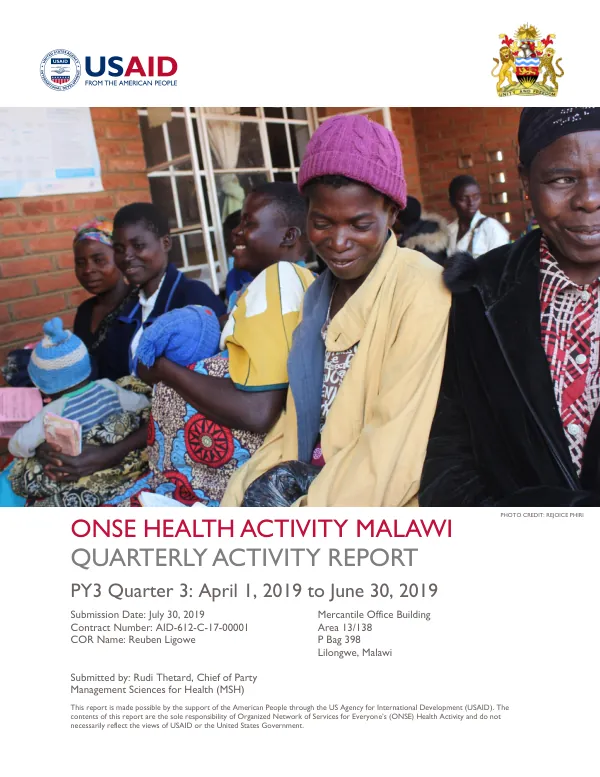
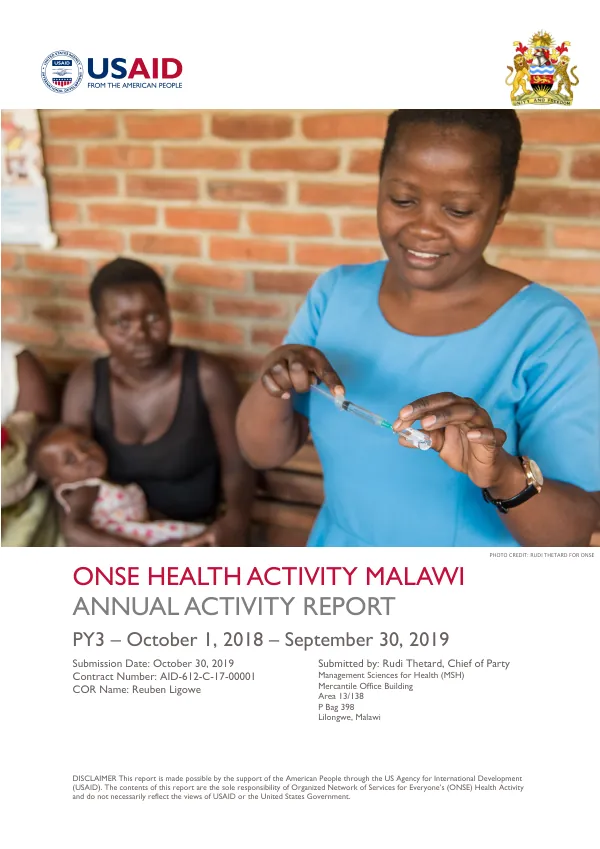
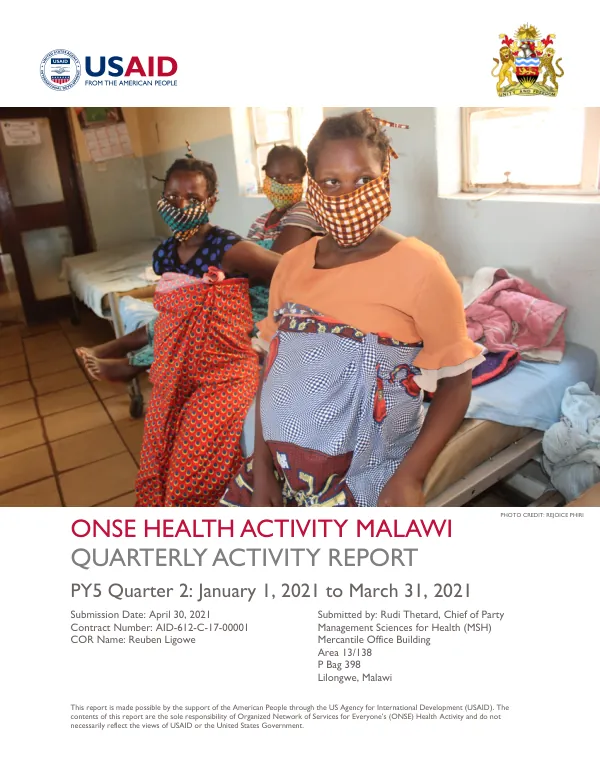
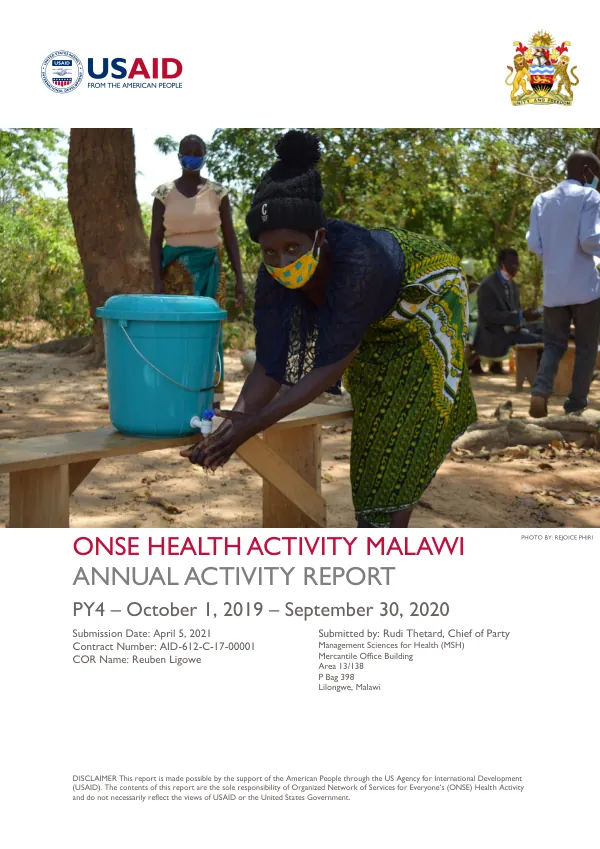
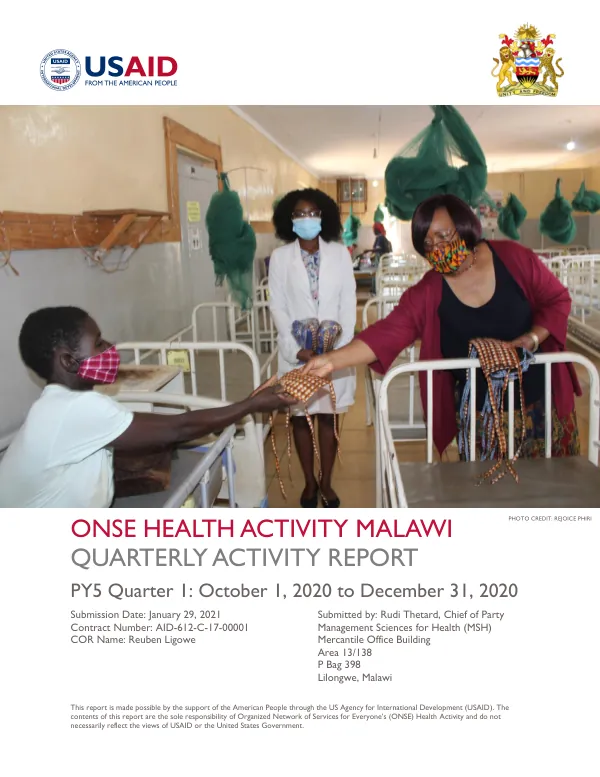
The Organized Network of Services for Everyone's (ONSE) Health Activity in Malawi is a five-year program implemented by Management Sciences for Health (MSH) with funding from the US Agency for International Development (USAID).
2021 · 138 pages
Sign in to readA free account is required to download.
Abstract
The program aims to improve the health and well-being of Malawians, particularly in the areas of maternal, newborn, and child health. The ONSE Health Activity focuses on strengthening the health system in Malawi, with a particular emphasis on improving the quality of care at the community level. The program works closely with the Malawi Ministry of Health and Population, as well as other stakeholders, to implement a range of interventions aimed at improving health outcomes. One of the key areas of focus for the ONSE Health Activity is the provision of emergency obstetric and newborn care (EmONC). The program works to improve the availability and quality of EmONC services in Malawi, with a particular emphasis on strengthening the capacity of health facilities to provide these services. This includes the provision of training and equipment to health workers, as well as the establishment of emergency obstetric and newborn care units in health facilities. The ONSE Health Activity also places a strong emphasis on community engagement and demand creation. The program works to engage communities in the planning and implementation of health services, and to create demand for these services through a range of interventions, including social and behavior change communication (SBCC) activities. In terms of specific achievements, the ONSE Health Activity has made significant progress in improving health outcomes in Malawi. For example, the program has reported a 27% increase in the number of women receiving antenatal care, and a 25% increase in the number of women receiving postnatal care. The program has also reported a 30% increase in the number of children under the age of five receiving vaccinations. The ONSE Health Activity has also made significant progress in strengthening the health system in Malawi. For example, the program has worked to improve the capacity of health facilities to provide EmONC services, and has established a network of health facilities that provide these services. The program has also worked to improve the availability and quality of health supplies, including medicines and equipment. In terms of implementation challenges, the ONSE Health Activity has faced a number of challenges, including the COVID-19 pandemic, which has had a significant impact on the program's ability to implement its activities. The program has also faced challenges related to the availability and quality of health supplies, as well as the capacity of health workers to provide EmONC services. Despite these challenges, the ONSE Health Activity has made significant progress in improving health outcomes in Malawi, and has established a strong foundation for future success. The program's focus on community engagement and demand creation, as well as its emphasis on strengthening the health system, has been particularly effective in improving health outcomes. The ONSE Health Activity has also established a number of partnerships with other organizations, including the Malawi Ministry of Health and Population, as well as other stakeholders. These partnerships have been critical to the program's success, and have helped to ensure that the program's activities are aligned with the needs and priorities of the Malawian government. In terms of future plans, the ONSE Health Activity plans to continue its focus on improving health outcomes in Malawi, particularly in the areas of maternal, newborn, and child health. The program also plans to continue its emphasis on community engagement and demand creation, as well as its focus on strengthening the health system. The program's ultimate goal is to improve the health and well-being of Malawians, particularly in the most vulnerable and disadvantaged communities.
Related documents