USAID DEC
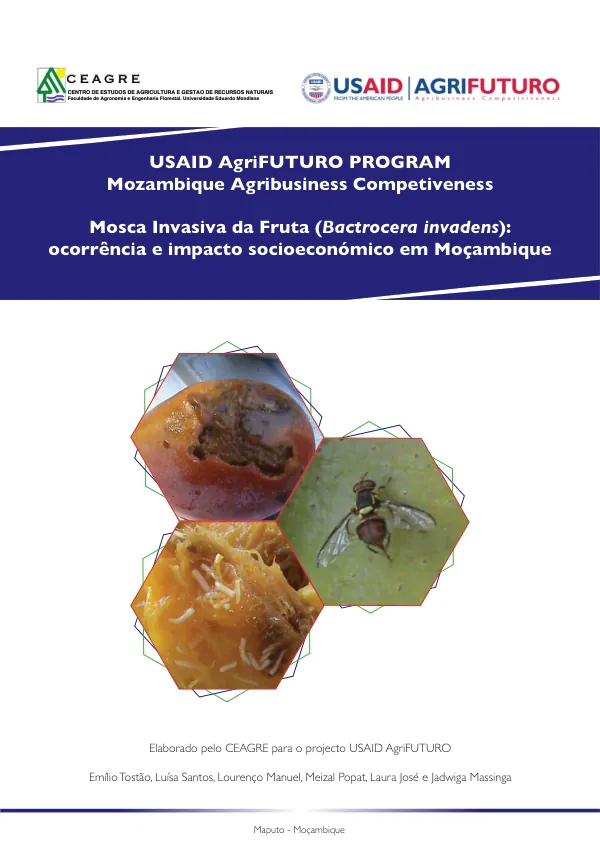
Mosca Invasiva da Fruta (Bactrocera invadens): ocorrência e impacto socioeconómico em Moçambique
Sign inABT ASSOCIATES
Mosca Invasiva da Fruta (Bactrocera invadens): ocorrência e impacto socioeconómico em Moçambique
The agricultural sector in Mozambique is threatened by the invasive fruit fly, Bactrocera invadens.
2012 · 64 pages
Sign in to readA free account is required to download.
Abstract
This pest is a significant concern for the country's fruit industry, which is a vital contributor to the national economy. The fruit fly is native to Africa and has been detected in several countries, including Mozambique. The invasive fruit fly is a major threat to the fruit industry in Mozambique, causing significant economic losses. The pest attacks a wide range of fruit species, including mangoes and bananas, which are major export crops. The fruit fly's presence has led to a decline in fruit production, resulting in losses for farmers and the economy as a whole. The Mozambican government has implemented measures to control the spread of the invasive fruit fly, including the establishment of quarantine zones and the use of traps. However, the effectiveness of these measures is limited, and the pest continues to spread. The government has also conducted surveys to assess the impact of the fruit fly on the fruit industry and to identify areas where control measures can be improved. The invasive fruit fly has had a significant impact on the fruit industry in Mozambique, resulting in losses for farmers, the economy, and the environment. The pest has also led to a decline in fruit production, resulting in food insecurity for local communities. The Mozambican government must take urgent action to control the spread of the invasive fruit fly and to protect the country's fruit industry. The study aimed to assess the impact of the invasive fruit fly on the fruit industry in Mozambique and to identify areas where control measures can be improved. The research involved a survey of farmers in the affected areas, as well as an analysis of the economic impact of the pest on the fruit industry. The study found that the invasive fruit fly has had a significant impact on the fruit industry in Mozambique, resulting in losses for farmers, the economy, and the environment. The study identified several key areas where control measures can be improved, including the establishment of more effective quarantine zones and the use of more targeted control methods. The study also recommended that the Mozambican government increase funding for control measures and provide support to farmers affected by the invasive fruit fly. The study's findings highlight the need for urgent action to control the spread of the invasive fruit fly and to protect the country's fruit industry. The invasive fruit fly has been detected in several provinces in Mozambique, including Cabo Delgado, Niassa, and Nampula. The pest has been found in a range of fruit species, including mangoes, bananas, and citrus fruits. The study found that the invasive fruit fly has had a significant impact on the fruit industry in Mozambique, resulting in losses for farmers, the economy, and the environment. The study's findings have significant implications for the Mozambican government and the fruit industry. The government must take urgent action to control the spread of the invasive fruit fly and to protect the country's fruit industry. This may involve increasing funding for control measures, providing support to farmers affected by the pest, and implementing more effective quarantine zones. The study's findings also highlight the need for a coordinated approach to controlling the spread of the invasive fruit fly, involving multiple stakeholders, including farmers, government agencies, and international organizations.
Related documents