MANAGEMENT SYSTEMS INTERNATIONAL, INC. (MSI)
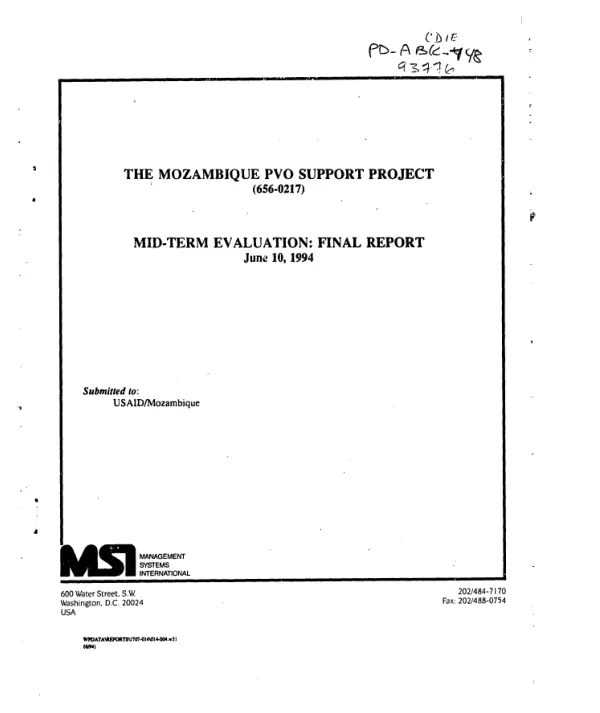
Mozambique PVO support project (656-0217) -- mid-term evaluation : final report
Evaluates a project to support PVOs in assisting the growing numbers of the poor in Mozambique, particularly those displaced by the insurgency of the late 1980s and early 1990s.
1994
Sign in to readA free account is required to download.
Abstract
Mid-term evaluation covers the period 6/90-6/94. The project has to some extent achieved its objectives of improving the food security and well-being of those most seriously affected by the insurgency, reducing vulnerability to absolute poverty within targeted population groups, and facilitating the transition from emergency relief to rehabilitation. However, the degree of attainment of these objectives cannot be determined since output targets were not stated precisely and quantitatively in many Cooperative Agreements; nor has the project's monitoring system produced accurate and cumulative statements of actual outputs despite the frequent reports demanded of PVO recipients. What can be said is that the project had significant impact in alleviating and averting widespread suffering. Only within the last year, as peace has begun to return, has the project been able to begin addressing the underlying causes of poverty, and thus begin the transition from a purely relief program to a longer-term more developmental approach. The PVO grantees have performed competently and professionally in managing and executing grant activities, although costs seem relatively high. Poor transportation infrastructure, and dangers associated with mined roads, raised costs considerably and were a major factor in the delays associated with grant start-up and implementation. Another reason for the high cost is the use of a large number of expatriates, which seems to be the norm for Mozambique. There are simply too few Mozambicans with the skills and expertise required to manage large scale relief and rehabilitation efforts. In addition, working with the poor who are socially marginalized and geographically isolated has always been an expensive undertaking. The project management team has been severely understaffed and undersupported despite the fact that adequate resources have existed to address this fundamental problem. The grant development and approval process has overridden all other project management responsibilities. Nonetheless, the team has accomplished a herculean task in keeping the project on track while obligating some $60 million in project funds, and it has been praised by PVOs and USAID/Mozambique alike for creating an open, supportive, and professional environment in a situation of great stress. The remainder of the project should be looked on as a transition to a follow-on project and as an opportunity to re-institute "best practices" within project and PVO management. Lessons learned are as follows. (1) Project management is highly labor-intensive in PVO projects even when providing grants to "grant worthy" PVOs. This is even more pronounced in development (as distinct from relief and rehabilitation) activities, in which capacity building becomes a major objective. (2) While current thought within donor circles posits a "relief-to-development" continuum, there seems to be no way to distinguish, either conceptually or practically, between relief and rehabilitation on one hand and rehabilitation and development on the other hand. A distinction can be made between relief and development, however, and projects should promote one or the other; if not, experience has shown that development objectives are usually subjugated to relief imperatives. (3) While issues of sustainability and participation are essential to development activities, relief and rehabilitation programs should not be conditioned by the same standards.