USAID. MISSION TO ZIMBABWE
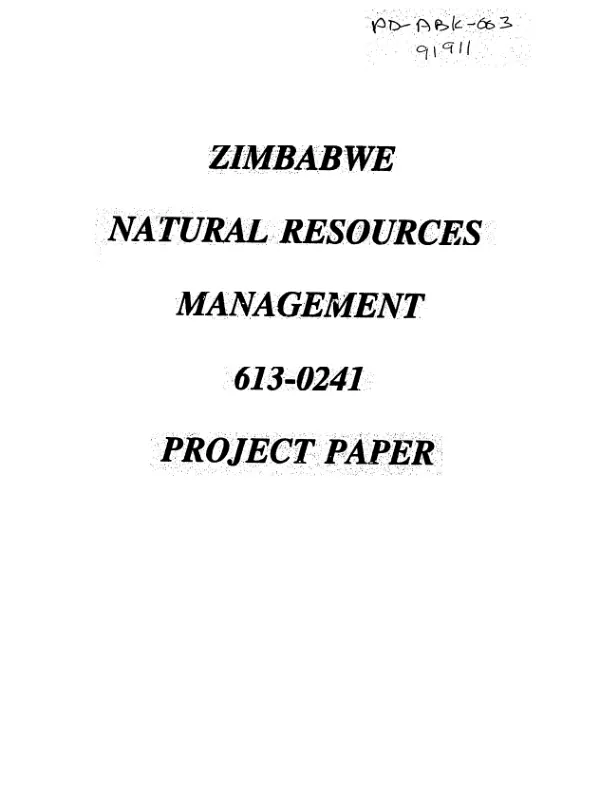
Natural resources management
Project, bilateral follow-on to 690025113, to develop community-based programs in sustainable natural resource management on communal lands in Zimbabwe, particularly those with commercially exploitable wildlife populations.
1994
Sign in to readA free account is required to download.
Abstract
The project, to be implemented by an institutional contractor through subgrants to members of the CAMPFIRE Consultative Group (CCG), will include four components: community-based resource management and utilization; planning and applied research; wildlife and natural resource conservation; and regional communications and information exchange. The first component will strengthen the capacity of the CAMPFIRE (Communal Area Management Program for Indigenous Resources) Association, CCG"s lead organization, to provide financial, technical, and training support to community-based, income-generating natural resource management programs (e.g., establishment of game management areas) proposed by CCG"s member Rural District Councils (RDCs), Ward Development Committees (WADCOs), and Village Development Committees (VIDCOs). Zimbabwe Trust and its affiliated organizations ART and ACTION (which are also CCG members) will support these local efforts with a wide-ranging program of training and education in natural resource management, including, inter alia, training for local institutions in planning and implementing game management projects, distribution of ACTION magazines in schools, and inclusion of environmental curricula in primary, secondary, and tertiary schools. Planning and applied research efforts will be undertaken to establish the basis for expanding CAMPFIRE activities into new areas, and will include: (1) baseline and longitudinal social, economic, environmental, and ecological studies; (2) TA and technical assessments by the Centre for Applied Social Sciences (CASS) and other CCG members of initiatives proposed by local communities; (3) professional training in natural resource management by CASS and the World Wildlife Fund; and (4) dissemination of research results through seminars, workshops, and publications. Wildlife and natural resource conservation activities will include the following. (1) The Department of National Parks and Wildlife Management (DNPWLM) will continue its ecological monitoring of wildlife populations and habitats, though with diminished emphasis on elephant populations. Activities may include aerial censuses; monitoring of changes in land use, deforestation, erosion, etc. via remote sensing; land use and biodiversity research; and pilot projects to reduce conflicts between farmers and wildlife managers. (2) Direct assistance will be provided to RDCs, WADCOs, and VIDCOs for wildlife population and habitat management and protection efforts, e.g., managing safaris, restocking depleted wildlife areas, reducing poaching, protecting endangered and threatened species, training game scouts. (3) The project will support efforts of the DNPWLM, the Ministry of Local Government, Rural and Urban Development (MLGRUD), Africa Resources Trust, and other CCG members to increase awareness of CAMPFIRE"s efforts to develop wildlife management policies under a sustainable use paradigm. Regional communications and information exchange activities will include production and dissemination of promotional literature and public information documents at a variety of levels, sponsoring of and attendance at national and international workshops and conferences, and reciprocal visits between and among CAMPFIRE associates.
Related documents