FEDERAL MINISTRY OF HEALTH
Nigeria 2019 Verbal and Social Autopsy Study: Key Findings and Policy Implications
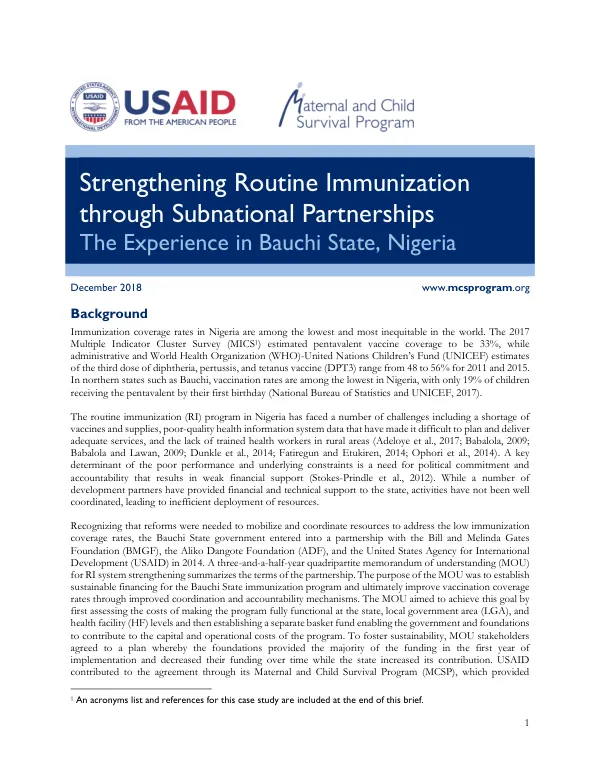
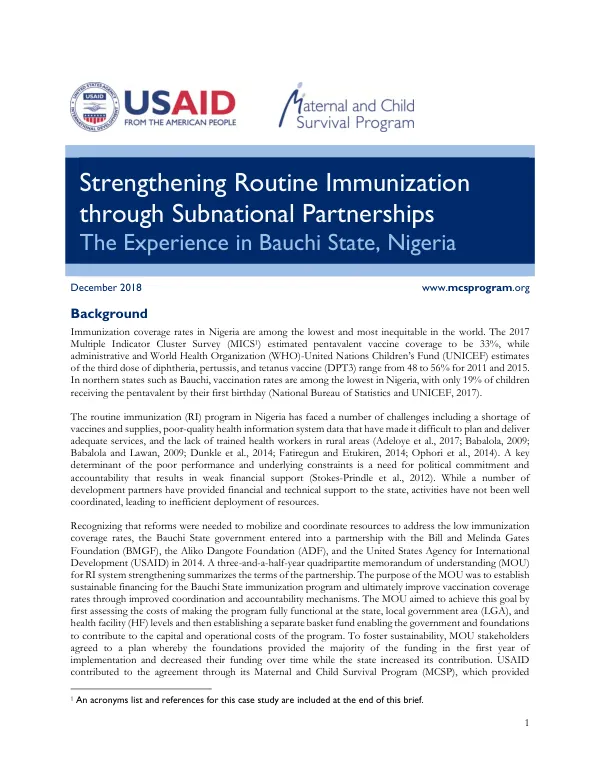
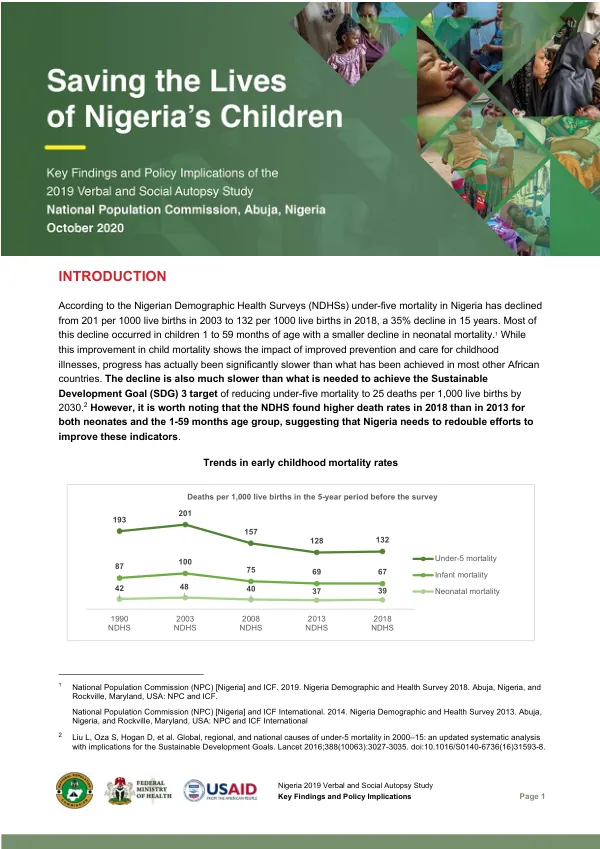
The 2019 Verbal and Social Autopsy Study in Nigeria found that under-five mortality rates have declined from 201 per 1000 live births in 2003 to 132 per 1000 live births in 2018, a 35% decline in 15 years.
2019 · 10 pages
Sign in to readA free account is required to download.
Abstract
However, this progress is slower than in most other African countries, and Nigeria still has the world's highest under-five mortality rate, with 858,000 deaths per year. The study used a mixed-methods approach to estimate the cause distributions of under-five deaths and explore social and contextual factors contributing to child deaths in Nigeria. The study found that severe bacterial infections, such as sepsis, pneumonia, and meningitis, accounted for 44% of neonatal deaths, while intrapartum injury was the second major cause, accounting for 27% of neonatal deaths. Pre-term birth was an important risk factor, attributed to 30% of Nigeria's neonatal deaths. In children aged 1-59 months, malaria, diarrhea, and pneumonia were the top three causes of deaths, similar to global models of child mortality. The study also found that household factors, such as poverty, poor living conditions, and lack of education, contributed to preventable deaths in the 1-59 month age range. Antenatal care was received in 73% of newborn deaths, but high-quality services were still far from universal. Essential newborn care practices, such as clean cord care and immediate breastfeeding, were lacking in both the VASA and the NDHS and contributed to many neonatal deaths. Routine preventive services in Nigeria have lagged behind other countries, with only 31% of Nigerian children having all basic vaccinations, 45% receiving Vitamin A, and half using treated bed-nets in the 2018 NDHS. The study found that complications in pregnancy, labour, and delivery were much higher for stillbirths and the earliest neonatal deaths than for mothers of children who died later. Home management of sick newborns was also a concern, with 74% of newborns who got sick at home not seeking formal health care for the fatal illness. The study's findings highlight the need for improved healthcare services, particularly in rural areas, and the importance of addressing social and economic determinants of health, such as poverty and lack of education. The study's results also emphasize the need for high-quality antenatal care, essential newborn care practices, and routine preventive services to reduce under-five mortality in Nigeria.