HUAZHONG AGRICULTURAL UNIVERSITY
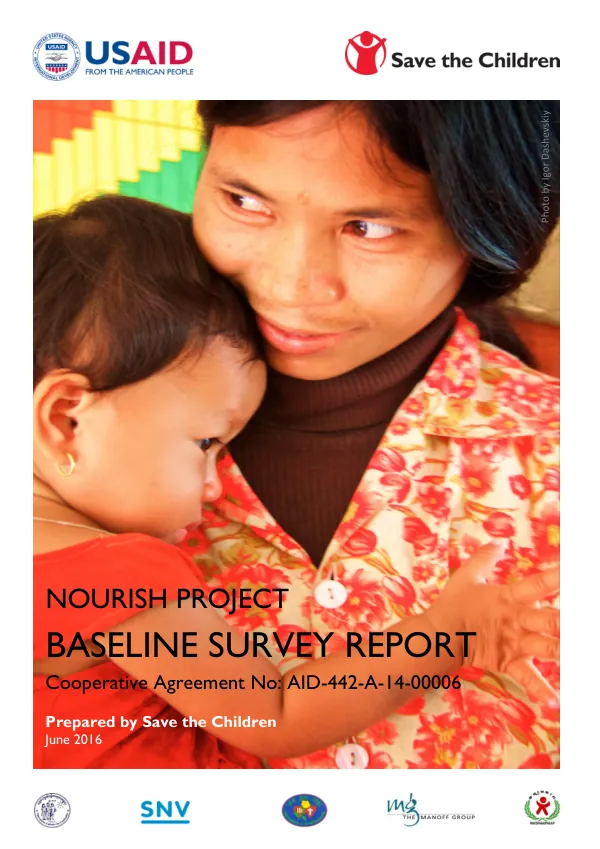
NOURISH Project Baseline Survey Report
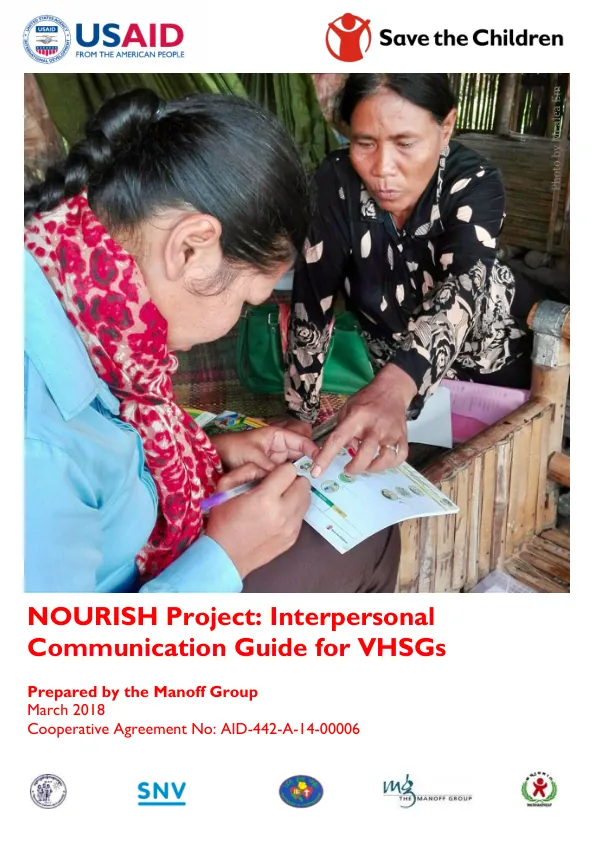
The NOURISH Project is a collaborative effort led by Save the Children, implemented in Cambodia in partnership with five local and international partners.
2016 · 91 pages
Sign in to readA free account is required to download.
Abstract
The project aims to reduce the proportion of children in Cambodia who are stunted and to break the intergenerational malnutrition cycle. The project focuses on the causal factors of chronic malnutrition specific to Cambodia, including lack of access to diverse and quality food, inadequate feeding and care practices, and unsanitary environments. The baseline survey was conducted in November 2015, capturing data on the nutritional status of women and children and behaviors related to the three pillars of the project's approach to integrated nutrition: health, water, sanitation and hygiene (WASH), and agriculture. The survey used a multi-stage cluster methodology, sampling 90 villages across the NOURISH Project target area. The sample size was calculated for 95% confidence intervals on key variables, with a total of 1,347 women participating in the survey. The survey results indicate that the prevalence of anemia among non-pregnant women of reproductive age and pregnant women is 41.5% and 52.4%, respectively. The prevalence of anemia among children 6-59 months is 59.4%, while the prevalence of stunted children under 5 years of age is 34.3%. The prevalence of underweight children under 5 years of age is 16.9%, and the prevalence of wasted children under 5 years of age is 8.5%. The prevalence of underweight women is 14.8%. The survey also measured the practice of key nutrition behaviors and timely realization of child development milestones. The mean number of food groups consumed by women is 4.67, and the prevalence of exclusive breastfeeding of children under 6 months is 77.8%. The prevalence of children 6-23 months receiving a minimum acceptable diet is 25.5%, and the percentage of parents/caregivers of children 0-23 months providing age-appropriate stimulation of children according to child care and development standards is 62.6%. In terms of water and hygiene behaviors, the survey found that 37.0% of households in the target area use an improved latrine, while 43.4% practice correct use of recommended household water treatment technologies. The percentage of households with soap and water at a hand washing station used by family members is 63.3%, and the percentage of caregivers of children under 2 years disposing of infant stool appropriately is 57.1%. The NOURISH Project baseline survey was led by Math Srales, Monitoring and Evaluation Specialist of NOURISH/Save the Children, with support from Lisa Sherburne, NOURISH/Save the Children Community Nutrition Advisor. The survey team extends its appreciation to all those who were involved in the survey, including the Royal University of Agriculture (RUA) contracted by Save the Children to conduct the baseline survey, led by Dr. Men Sarom, Director of Research for RUA. The survey results will be compared to an endline survey conducted toward the end of the project to assess NOURISH outcomes and impact. The project aims to accelerate stunting reduction by focusing directly on the causal factors of chronic malnutrition specific to Cambodia, and the baseline survey provides a critical baseline for measuring progress and evaluating the effectiveness of the project's interventions.