USAID DEC
Improving household level water, sanitation and hygiene practices as part of an integrated nutrition program in Nepal
Sign inHELLEN KELLER INTERNATIONAL
Improving household level water, sanitation and hygiene practices as part of an integrated nutrition program in Nepal
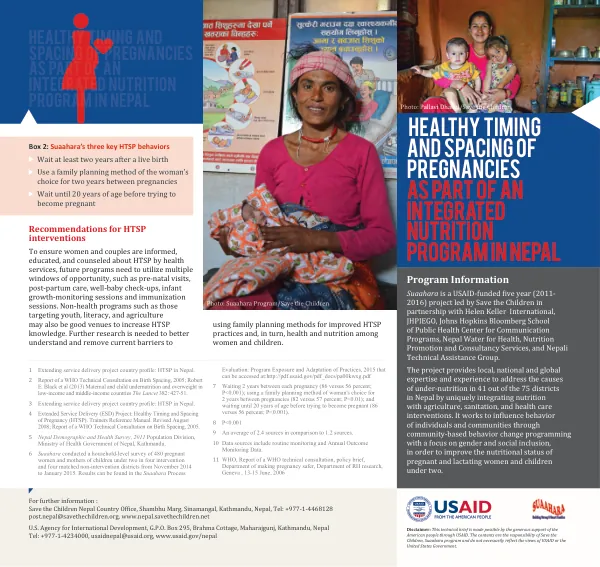
The Suaahara project is a five-year initiative led by Save the Children in partnership with various organizations, including USAID, to address under-nutrition in Nepal.
2016 · 2 pages
Sign in to readA free account is required to download.
Abstract
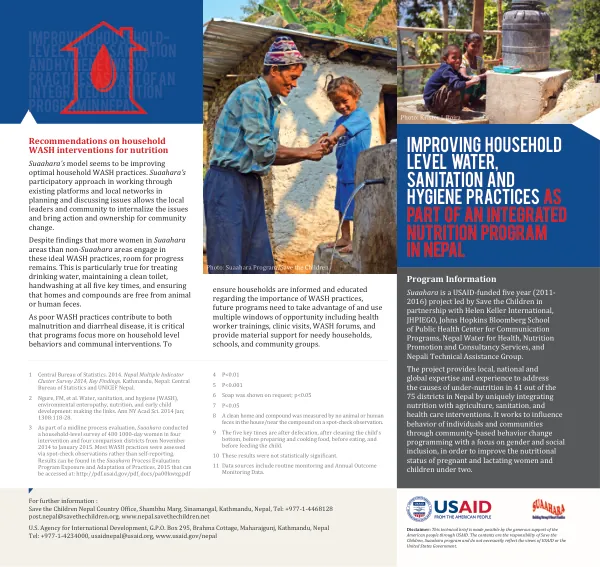
The project focuses on integrating nutrition with agriculture, sanitation, and health care interventions in 41 districts of Nepal. Suaahara aims to improve the nutritional status of pregnant and lactating women and children under two by influencing behavior through community-based behavior change programming, with a focus on gender and social inclusion. The project's approach involves working through existing platforms and local networks to plan and discuss issues, allowing local leaders and communities to internalize the problems and take ownership of community change. Suaahara's participatory approach has led to improvements in optimal household WASH practices, with women in Suaahara areas more likely to engage in ideal WASH practices compared to non-Suaahara areas. Key WASH behaviors that have shown significant improvements among Suaahara women include covered drinking water, clean toilets, soap in the household, handwashing stations with water and soap/ash, and clean homes and compounds. However, there is still room for progress in some areas, such as treating drinking water, maintaining clean toilets, handwashing at all five key times, and ensuring homes and compounds are free from animal or human feces. Suaahara's WASH interventions focus on promoting optimal WASH behaviors and providing support to pregnant women and women with children under two to practice these behaviors. The project's key WASH intervention activities include supporting the Open Defecation Free initiative, building the capacity of health workers and volunteers on WASH, increasing demand for WASH behaviors and services, and providing materials to disadvantaged groups. Suaahara's WASH interventions have been successful in promoting optimal WASH behaviors and improving the nutritional status of pregnant and lactating women and children under two. The project's approach of working through existing platforms and local networks has allowed for local ownership and sustainability of WASH behaviors. The project's achievements in WASH behaviors among women in Suaahara areas are a testament to the effectiveness of the project's approach and interventions. The project's data sources include routine monitoring and Annual Outcome Monitoring Data, which provide valuable insights into the project's achievements and areas for further improvement. The project's WASH for Nutrition Fact Sheet provides further information on the project's achievements and results.