USAID. BUR. FOR SCIENCE AND TECHNOLOGY. OFC. OF NUTRITION
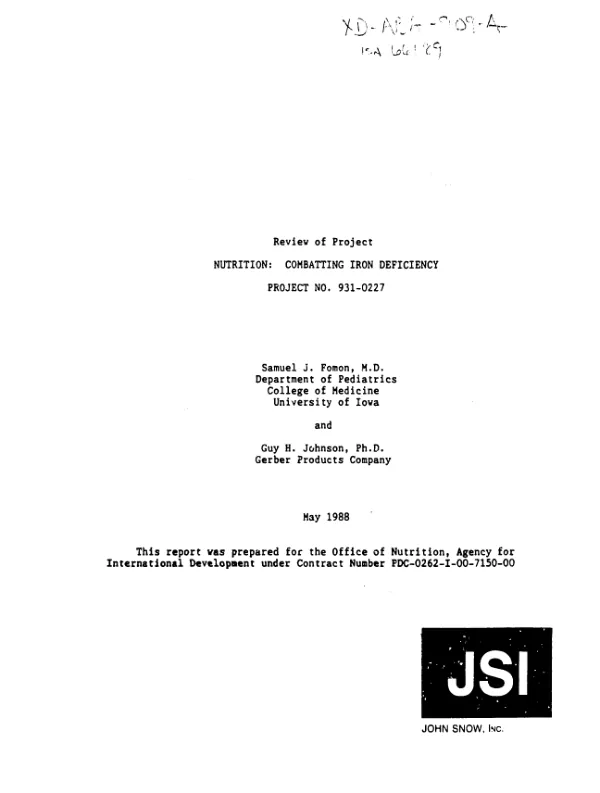
Nutrition : combatting iron deficiency
Summarizes interim evaluation (XD-ABA-909-A) of a project to combat iron deficiency anemia by providing TA to host country institutions and Missions through the Nutrition Foundation and Kansas University Medical Center (KUMC).
1990
Sign in to readA free account is required to download.
Abstract
The evaluation covered the period through 5/88. The project has facilitated communication among academia, industry, and donor agencies. Interaction with the private sector has been exceptional, with the KUMC collaborating with industrial sources in developing and testing various forms of iron products. In addition, the project has developed methods of assessing iron status that are significantly more accurate and less costly than traditional methods. New methods for supplementing and fortifying food and food products with biologically available iron have also been developed and await field testing. On the negative side, there is little evidence of a major policy impact. It appears that nutritional anemias are not considered a high priority health issue, and very little of the available research, training, technical reports, and TA are being used by host countries. KUMC research findings have been published in scientific literature and presented at major professional meetings and conferences, but there is little evidence that this information is reaching Missions. The three A.I.D. regional bureau health advisors seemed only vaguely aware of KUMC activities other than training. It is recommended that the project be continued, but with much more aggressive intervention in the field. The major lesson learned is that A.I.D cannot always rely on other donors or host governments to pick up and operationalize the good products of the Agency"s efforts. A.I.D. needs to follow through itself if it is to realize the application of its efforts and get credit for its works.