USAID. BUR. FOR SCIENCE AND TECHNOLOGY. OFC. OF NUTRITION
Nutrition : vitamin A deficiency program support
Summarizes the final evaluation (XD-ABA-953-A) of a project to assist developing countries in the prevention and control of Vitamin A deficiency.
1990
Sign in to readA free account is required to download.
Abstract
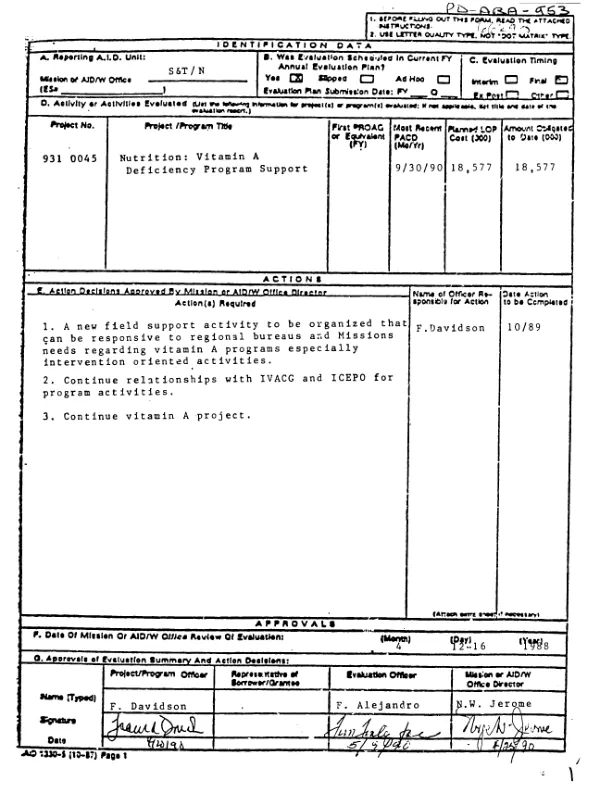
External evaluation covered the period 1984-88. Meeting all of their objectives, the project"s two operational arms were extremely effective. The International Vitamin A Consultative Group (IVACG) catalyzed information exchange and gained recognition as an authority on Vitamin A by UN and other agencies. The International Center for Epidemiologic and Preventive Ophthalmology (ICEPO) at Johns Hopkins University also developed a worldwide reputation for excellence, especially in xerophthalmia research and the design of survey and intervention strategies. Substantial increases in funding enabled the project to extend its geographical outreach and to enlarge its collaborative activities with other institutions. However, the funding period and administrative procedures were not always compatible with the planning and operational requirements of specific project activities and host country needs. The project should be extended 5 years, and adequate funding provided. However, the efficacy of existing social marketing and fruit/vegetable interventions should be assessed before a significant amount of funds are allocated to new activities in these areas. In addition, replicate studies of the purported relationship between Vitamin A status and morbidity and mortality should be conducted in different countries by different groups of investigators.
Connected topics
Related documents