USAID DEC
Occupational exposures and utilisation of HIV post-exposure prophylaxis amongst health workers of three hospitals in Tanzania’s Lake Zone
Sign inWORLD HEALTH ORGANIZATION
Occupational exposures and utilisation of HIV post-exposure prophylaxis amongst health workers of three hospitals in Tanzania’s Lake Zone
Occupational exposures and utilisation of HIV post-exposure prophylaxis amongst health workers of three hospitals in Tanzania's Lake Zone began with a high risk of HIV infection due to occupational injuries.
2015 · 8 pages
Sign in to readA free account is required to download.
Abstract
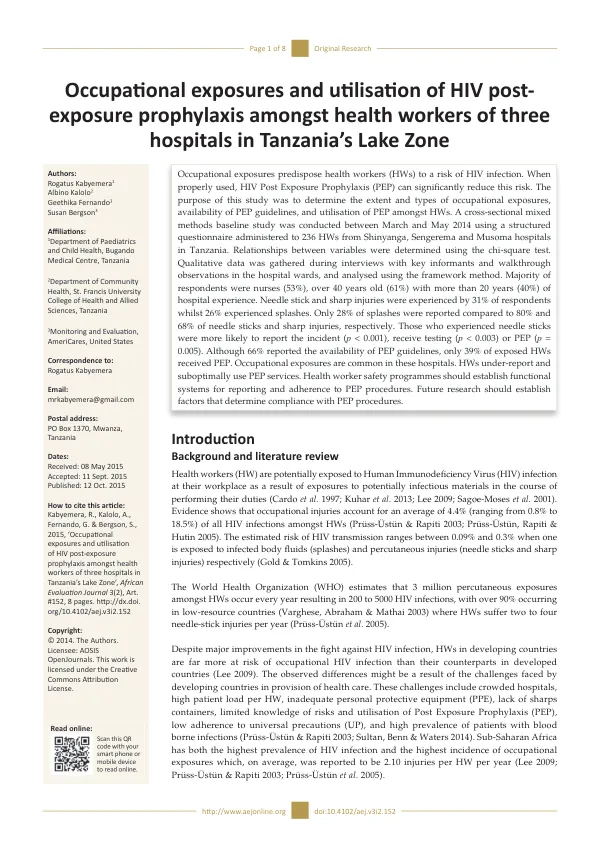
Health workers (HWs) are exposed to potentially infectious materials in the course of performing their duties, resulting in an estimated 4.4% of all HIV infections amongst HWs. The risk of HIV transmission ranges between 0.09% and 0.3% when exposed to infected body fluids and percutaneous injuries, respectively. A cross-sectional mixed methods baseline study was conducted between March and May 2014 using a structured questionnaire administered to 236 HWs from Shinyanga, Sengerema, and Musoma hospitals in Tanzania. The study aimed to determine the extent and types of occupational exposures, availability of PEP guidelines, and utilisation of PEP amongst HWs. The majority of respondents were nurses, over 40 years old, with more than 20 years of hospital experience. Needle stick and sharp injuries were experienced by 31% of respondents, while 26% experienced splashes. Only 28% of splashes were reported compared to 80% and 68% of needle sticks and sharp injuries, respectively. Those who experienced needle sticks were more likely to report the incident, receive testing, or PEP. Although 66% reported the availability of PEP guidelines, only 39% of exposed HWs received PEP. Occupational exposures are common in these hospitals, and HWs under-report and suboptimally use PEP services. Health worker safety programmes should establish functional systems for reporting and adherence to PEP procedures. Future research should establish factors that determine compliance with PEP procedures. The study was conducted in Shinyanga Regional Referral Hospital, Sengerema Designated District Hospital, and Musoma Regional Referral Hospital in Tanzania's lake zone. The hospitals have varying bed capacities, staffing levels, and budgets. Shinyanga Regional Referral Hospital has a 304-bed capacity, 338 HWs, and an annual budget of approximately 6,182,424 US dollars. Sengerema Designated District Hospital has a 301-bed capacity, 275 HWs, and a budget of approximately 1,793,360 US dollars. Musoma Regional Referral Hospital has a 300-bed capacity, 366 HWs, and a budget of approximately 2,606,060 US dollars. The study employed a cross-sectional concurrent mixed methods design, which involves collecting data at one specific point in time and using both quantitative and qualitative methods. The structured questionnaire administered to 236 HWs provided quantitative data, while interviews with key informants and walkthrough observations in the hospital wards provided qualitative data. The chi-square test was used to determine relationships between variables, and the framework method was used to analyse qualitative data. The study aimed to establish baseline indicators and possible counterfactuals for the Health Worker Safety programme, which aims to reduce occupational exposures, improve reporting of occupational injuries, and PEP use amongst HWs in the three beneficiary hospitals.