FOOD AND AGRICULTURE ORGANIZATION OF THE UNITED NATIONS IN GEORGIA
Opportunities For Agri-Food Chains To Become Energy-Smart
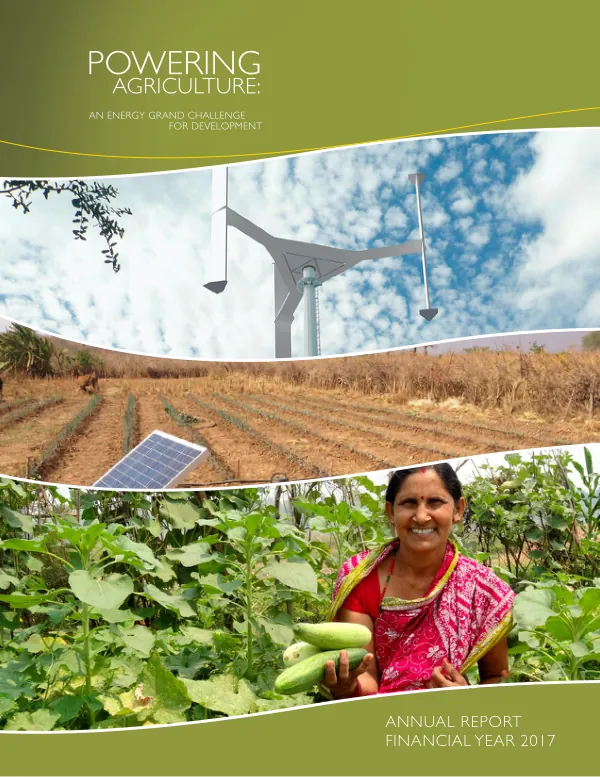
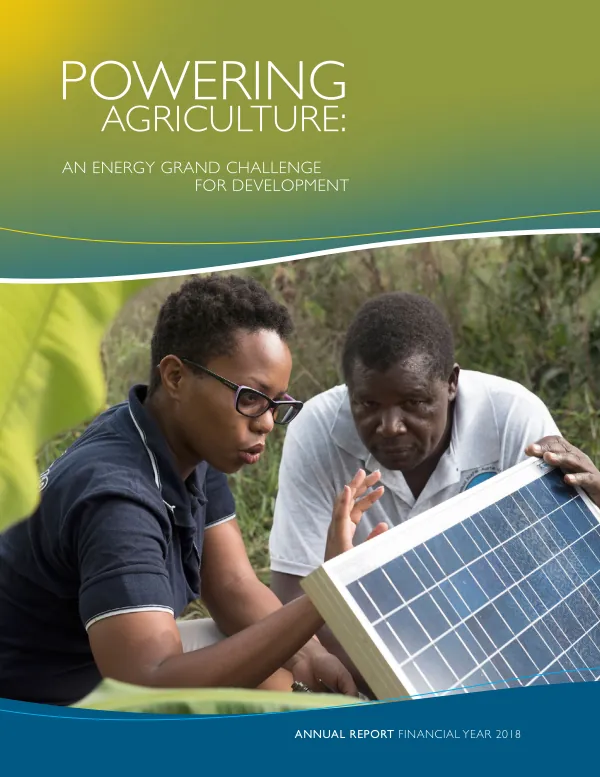
The Powering Agriculture: An Energy Grand Challenge for Development (PAEGC) initiative was established in 2012 by the United States Agency for International Development (USAID), the Government of Sweden (SIDA), the Government of Germany (BMZ), Duke Energy Corporation, and the United States Overseas Private Investment Corporation (OPIC).
2015 · 212 pages
Sign in to readA free account is required to download.
Abstract
The objective of PAEGC is to support new and sustainable approaches to accelerate the development and deployment of clean energy solutions for increasing agriculture productivity and/or value for farmers and agribusinesses in developing countries and emerging regions that lack access to reliable, affordable clean energy. PAEGC utilizes the financial and technical resources of its Founding Partners to support its innovator cohort's implementation of clean energy technologies and business models that enhance agricultural yields/productivity, decrease post-harvest loss, improve farmer and agribusiness income generating opportunities and revenues, and increase energy efficiency and associated savings within the operations of farms and agribusinesses. The initiative aims to stimulate low-carbon economic growth within the agriculture sector of developing countries and emerging regions. The agri-food chain is a critical component of the global economy, and energy plays a vital role in its functioning. Energy is required for various stages of the value chain, including agricultural production, processing, transportation, and storage. The energy input trends in the agri-food chain are characterized by increasing demand for energy, particularly in developing countries. Energy is also lost during food production, processing, and transportation, resulting in significant economic losses. The value chain approach is a useful framework for understanding the energy dynamics in the agri-food chain. This approach involves analyzing the energy inputs and outputs at each stage of the value chain, from agricultural production to final consumption. The energy demand and supply technologies in the agri-food chain are diverse and include renewable energy sources such as solar, wind, and bioenergy. Behavior and demand side management are also critical components of the agri-food chain, as they can significantly impact energy consumption and efficiency. Conservation agriculture, water pumping and irrigation, heating, cooling and cold storage, tractors and machinery, fertilizers and agri-chemicals, transport and distribution of goods, processing and packaging, and use of information technology are some of the key areas where energy efficiency and low-carbon options can be implemented in the agri-food chain. Renewable energy supply options for and from the agri-food chain include renewable energy technologies, bioenergy, wind power, solar photovoltaics, small and mini-hydro power, and current use of renewable energy in the agri-food chain. The economic assessment of these options is critical for determining their feasibility and potential impact on the agri-food chain. The PAEGC initiative provides a platform for innovators and stakeholders to collaborate and develop clean energy solutions for the agri-food chain. The initiative's focus on low-carbon economic growth and energy efficiency can help reduce greenhouse gas emissions and improve the livelihoods of farmers and agribusinesses in developing countries and emerging regions.