USAID DEC
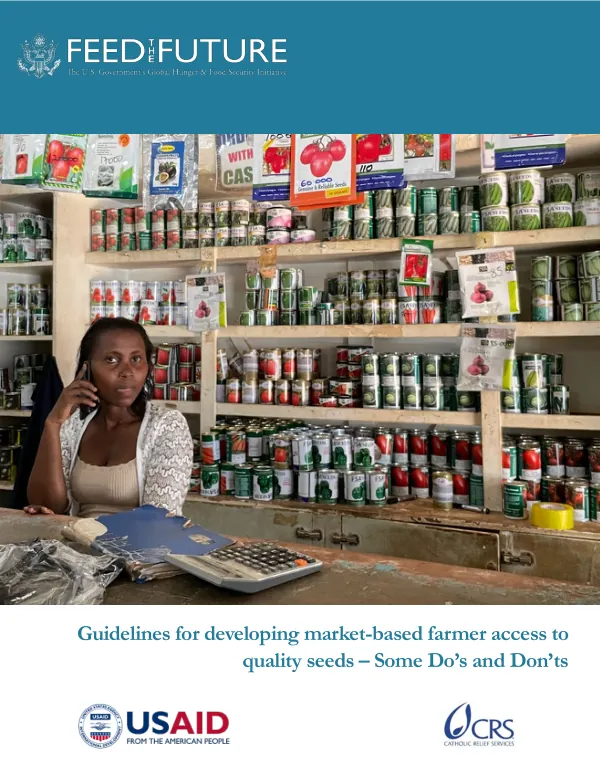
Guidelines for developing sustainable farmer access to quality seeds. Some Do’s and Don’ts.
Sign inCATHOLIC RELIEF SERVICES ORGANIZATION
Guidelines for developing sustainable farmer access to quality seeds. Some Do’s and Don’ts.
Seed systems play a crucial role in ensuring that smallholder farmers have access to quality seeds of improved varieties.
2023 · 43 pages
Sign in to readA free account is required to download.
Abstract
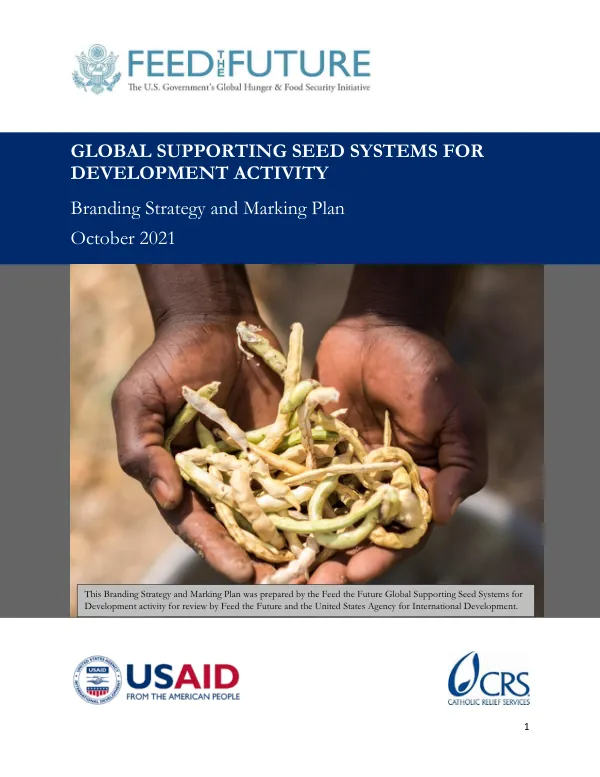
A seed system is the network of stakeholders involved in providing, managing, replacing, and distributing the seed of a particular crop into a target area. In the humanitarian and development space, seed systems are typically divided into four types: formal, semi-formal, informal, and emergency seed systems. Formal seed systems are characterized by a well-organized and structured network of stakeholders, including seed companies, input suppliers, and extension services. These systems often have a strong regulatory framework and provide high-quality seeds to farmers. Semi-formal seed systems, on the other hand, are less organized and may involve a mix of private and public sector stakeholders. Informal seed systems are often community-based and rely on traditional knowledge and practices to distribute seeds. Emergency seed systems are designed to respond to crisis situations and provide seeds to farmers in need. In order to strengthen seed systems, it is essential to understand the market dynamics and the needs of smallholder farmers. Market systems development approaches seek to strengthen humanitarian, resilience, and development projects by improving the functioning of market systems. This can be achieved by identifying and addressing the problems that seed interventions are trying to solve, such as limited access to quality seeds, high prices, and low yields. Most farmers access their seeds through informal channels, such as local markets and community-based seed systems. However, these channels often lack the quality and consistency of formal seed systems. Farmers typically buy low-quality seeds, which can lead to low yields and reduced crop productivity. To address this issue, seed interventions can focus on improving farmer access to quality seeds through market-based interventions. Market-based interventions can take various forms, including improving farmer access to seed in emergency interventions, improving farmer access to seed in nexus/resilience projects, and improving farmer access to seed in development projects. In emergency interventions, modalities such as seed vouchers, seed fairs, and private service providers can be used to improve farmer access to seed. In nexus/resilience projects, modalities such as financing methods to link farmers to input suppliers and financial options to improve farmer access to seed can be used. In development projects, modalities such as market-based interventions to upgrade value chains and de-risking the establishment or upgrading of new business outlets for quality seed can be used. Financial options to improve farmer access to seed include microfinance institutions, saving and credit cooperative organizations, and private service providers. These options can provide farmers with access to credit, insurance, and other financial services that can help them purchase quality seeds. In addition, seed voucher and fairs programs can be used to provide farmers with access to quality seeds at a lower cost. In conclusion, strengthening seed systems requires a market-based approach that focuses on improving smallholder farmers' access to quality seeds of improved varieties. By understanding the market dynamics and the needs of smallholder farmers, seed interventions can be designed to address the problems that seed activities are trying to solve. Market-based interventions can take various forms, including improving farmer access to seed in emergency interventions, improving farmer access to seed in nexus/resilience projects, and improving farmer access to seed in development projects. Financial options such as microfinance institutions, saving and credit cooperative organizations, and private service providers can also be used to improve farmer access to seed. The Feed the Future Global Supporting Seed Systems for Development activity (S34D) is a key initiative that aims to strengthen seed systems in developing countries. S34D is led by Catholic Relief Services (CRS) and is funded by the Feed the Future Initiative through the Bureau for Resilience and Food Security (RFS) and USAID through the Bureau for Humanitarian Assistance. The activity focuses on providing market-based thinking and options for improving smallholder farmers' access to quality seed of improved varieties. In order to achieve its goals, S34D has developed a set of guidelines for developing market-based farmer access to quality seeds. These guidelines provide practitioners working in humanitarian, resilience, and development projects with market-based thinking and options for improving smallholder farmers' access to quality seed of improved varieties. The guidelines focus on a "do no harm" approach within the seed market system and aim to provide a comprehensive understanding of the seed system and the needs of smallholder farmers. The guidelines are divided into four parts: Part 1 focuses on strengthening seed systems using a market systems approach; Part 2 discusses the types of seed systems and how they interact; Part 3 provides project interventions to support sustainable seed supplies to farmers; and Part 4 concludes with key findings and recommendations. The guidelines also include a list of acronyms, a table of contents, and a set of references for further reading. Overall, the guidelines for developing market-based farmer access to quality seeds provide a valuable resource for practitioners working in humanitarian, resilience, and development projects. By providing market-based thinking and options for improving smallholder farmers' access to quality seed of improved varieties, the guidelines aim to strengthen seed systems and improve crop productivity in developing countries.