INTERNATIONAL HEALTH AND DEVELOPMENT ASSOCIATES
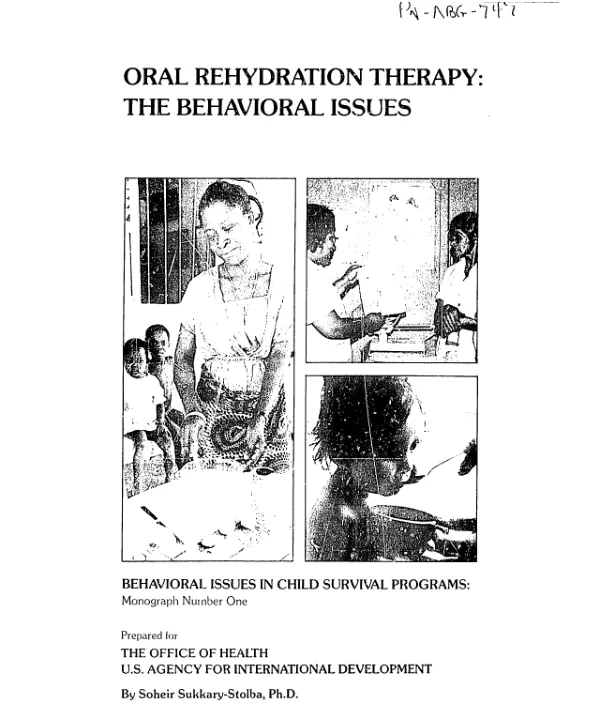
Oral rehydration therapy : the behavioral issues
Oral rehydration therapy (ORT) provides a simple means to cut dramatically the more than 5 million infant and child deaths caused annually by diarrhea.
Sukkary-Stolba, Soheir · 1990
Sign in to readA free account is required to download.
Abstract
Teaching caretakers the proper use of ORT is often made difficult, however, by cultural, environmental and socioeconomic factors. This monograph, the first in a series on behavioral issues in child survival interventions, reviews the qualitative literature about the use of ORT in different cultures. Major conclusions are as follows. (1) ORT projects should take account of local beliefs and behaviors which relate to diarrhea and the acceptability of oral rehydration salts (ORS) to combat it. (2) ORT training and media messages should identify feeding practices and behaviors and the cultural principles underlying them. (3) Caretakers other than mothers should be identified and included in the target group of ORT projects. (4) Extensive and sustained education is necessary to teach mothers to use ORT effectively. Clear, careful, consistent instructions are essential. (5) The amount of rehydration ingredients in each ORS packet should conform to a common household container. (6) Support from the professional medical community -- and often from traditional health practitioners -- is vital to the success of ORT projects. (7) Community leaders and health workers and family members should supplement often harried clinic staff as ORS distributors. (8) To be effective, ORT information campaigns should employ several media -- radio, TV, printed matter, face to face contact, etc. (9) Continued research on the reasons why mothers do not use ORT. (10) Sustainable ORT projects require a long-term commitment. Monograph Two in the series (PN-ABG-748) presents a comprehensive bibliography on behavioral factors related to ORT.