JAPANESE AGENCY FOR INTERNATIONAL COOPERATION
OVERVIEW
The Emergency Road Repair Project in Kabul was initiated in response to the city's harsh winter, which severely damaged its already deteriorated streets.
2014 · 1 pages
Sign in to readA free account is required to download.
Abstract
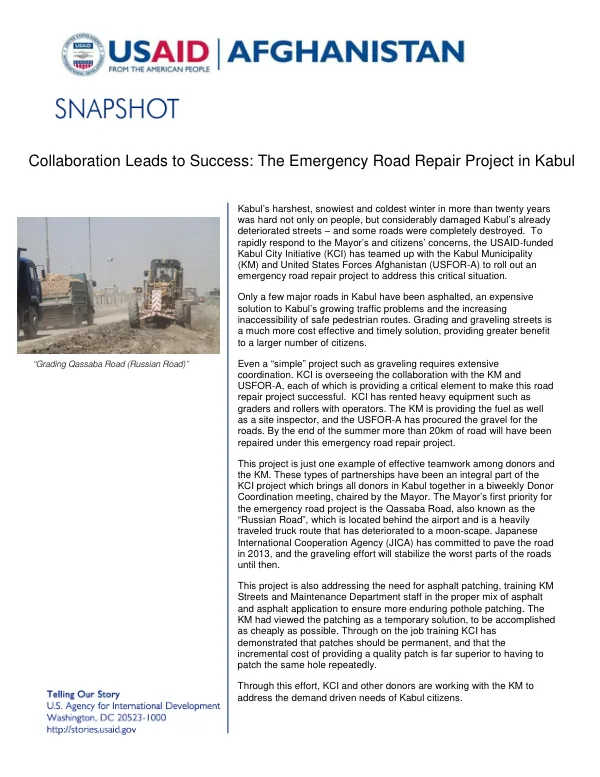
The project was a collaborative effort between the USAID's Kabul City Initiative (KCI), the Kabul Municipality (KM), and the United States Forces Afghanistan (USFOR-A). The primary objective was to rapidly address the critical situation and provide a cost-effective solution to the city's growing traffic problems and increasing inaccessibility of safe pedestrian routes. The project focused on grading and graveling streets, which was deemed a more cost-effective and timely solution compared to asphalt. This approach provided greater benefits to a larger number of citizens. The collaboration involved KCI overseeing the project, with the KM providing fuel and a site inspector, and USFOR-A procuring the gravel. The project required extensive coordination, as even a simple project like graveling necessitated careful planning and execution. The project's success was contingent on the effective teamwork among donors and the KM. Regular biweekly Donor Coordination meetings, chaired by the Mayor, facilitated communication and ensured that all parties were working towards a common goal. The project's scope included repairing over 20 kilometers of road by the end of the summer. The Japanese International Cooperation Agency (JICA) had committed to paving the Russian Road, also known as the "Russian Road, in 2013, and the graveling effort would stabilize the worst parts of the road until then. The project also addressed the need for asphalt patching, with KCI providing training to the KM Streets and Maintenance Department staff on the proper mix of asphalt and application to ensure more enduring patching. The KM had previously viewed patching as a temporary solution, to be accomplished as cheaply as possible. Through on-the-job training, KCI demonstrated that patches should be permanent, and that the incremental cost of providing a quality patch was far superior to repeatedly patching the same hole. The Emergency Road Repair Project in Kabul was a testament to the effectiveness of collaboration between donors and the KM in addressing the demand-driven needs of the city's citizens. By working together, the parties involved were able to provide a cost-effective solution to the city's growing traffic problems and increasing inaccessibility of safe pedestrian routes.
Related documents