LAHORE UNIVERSITY OF MANAGEMENT SCIENCES
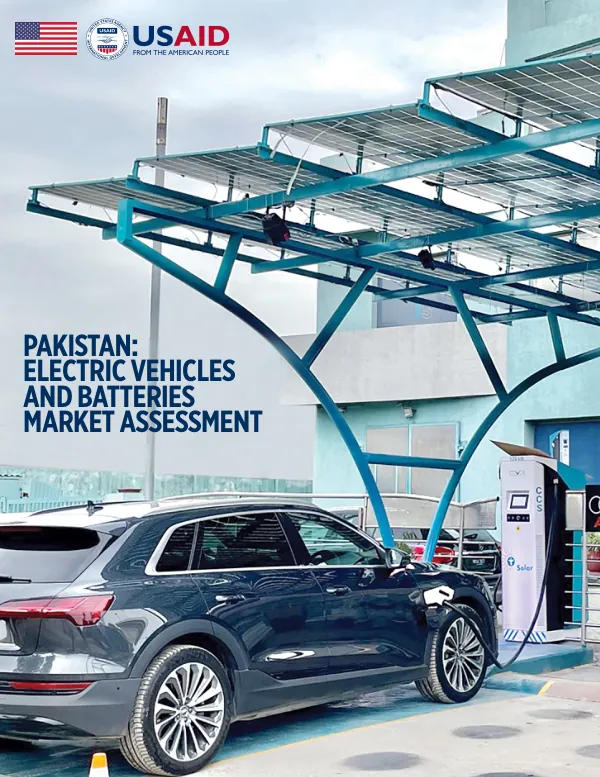
Pakistan: Electric Vehicles and Batteries Market Assessment
The country's transportation sector is dominated by internal combustion engine (ICE) vehicles, with a significant increase in annual vehicular sales over the past several years.
2021 · 51 pages
Sign in to readA free account is required to download.
Abstract
This has resulted in a notable rise in the gasoline import bill and has further aggravated air quality challenges associated with vehicular emissions. The Government of Pakistan (GoP) has set targets to increase the segment-wise annual sales of electric vehicles (EVs) ranging between 30-50% of the total annual vehicle sales. To encourage EV adoption and indigenous manufacturing, the GoP has announced a set of incentives and tax breaks. EV-specific parts like batteries, motors, motor control units, and others can be imported at 1% custom duty (CD) compared to the 25% CD for non-EV specific parts. All indigenously manufactured EVs can be sold at 1% general sales tax (GST) compared to the standard 17% GST. Duty-free import of machinery and hardware has been allowed to establish EV and EV-specific parts manufacturing facilities. The corporate income tax has been abolished for companies manufacturing EVs and EV-specific parts. The provincial governments have been directed to reduce the rates for registration of EVs and yearly token tax on these vehicles. In addition to the above-mentioned incentives and tax breaks, the GoP offers other facilities like prompt provisioning of electricity connections for charging stations and reduced electricity rates. These efforts by the GoP are supplemented by many international development cooperation agencies like USAID, World Bank, Asian Development Bank, United Nations Development Program, and others. These agencies assist in many technical areas, such as developing EV penetration scenarios, charging infrastructure deployment, financing, and standardization. Pakistan has sufficient electricity generation capacity to meet all EV charging requirements in the short to medium-term. In 2019, the country had 202 TWh of annual electricity generation capacity, whereas it utilized only 128 TWh. In 2025, due to many forthcoming electricity generation facilities, the country is expected to have 293 TWh of electricity generation capacity but is projected to utilize only 202 TWh. This leaves enough generation capacity to transition the transport sector to EVs without compromising the energy demands of other sectors. The battery market is a key component of EVs, and the EV penetration targets by the GoP will require 60-80 GWh of battery storage capacity. Additionally, Pakistan also has other sizable markets for stationary battery storage. Many consumers install uninterruptible power supply (UPS) systems to ensure reliable provisioning of electricity. Presently, the country has an estimated 2.8 million UPSs with approximately 6 GWh of battery storage capacity. Another significant storage need of the country is in the telecommunication sector, with a projected 17% annual increase in the number of telecommunication towers. The country's transportation sector is expected to undergo significant changes with the increasing adoption of EVs. The GoP has set targets to increase the segment-wise annual sales of EVs ranging between 30-50% of the total annual vehicle sales. To achieve this, the GoP has announced a set of incentives and tax breaks, including duty-free import of machinery and hardware, abolition of corporate income tax for companies manufacturing EVs and EV-specific parts, and reduced rates for registration of EVs and yearly token tax on these vehicles. The battery market is a key component of EVs, and the EV penetration targets by the GoP will require 60-80 GWh of battery storage capacity. Additionally, Pakistan also has other sizable markets for stationary battery storage, including UPS systems and telecommunication towers. The country's transportation sector is expected to undergo significant changes with the increasing adoption of EVs, and the GoP's incentives and tax breaks are expected to play a crucial role in achieving this goal.