USAID DEC
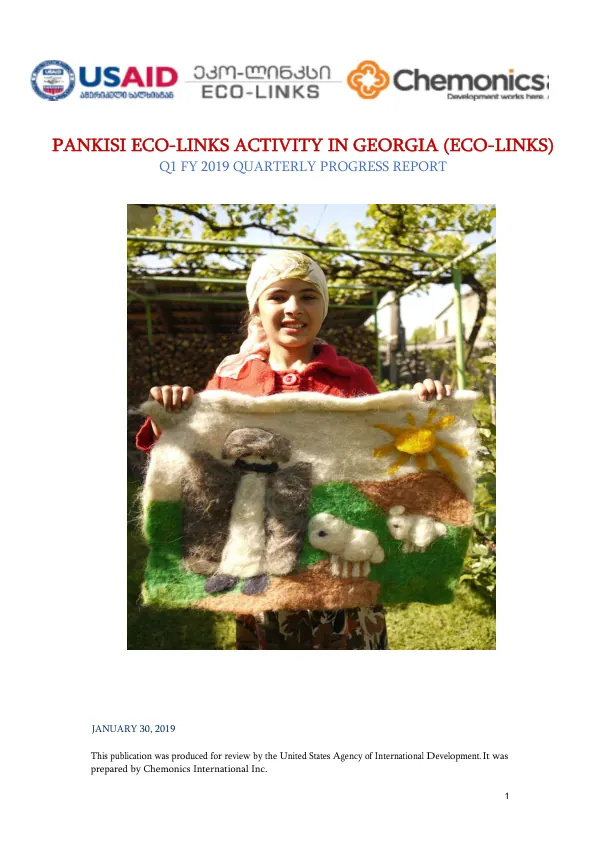
Pankisi Eco-Links Activity in Georgia (Eco-Links) Q1 FY 2019 Quarterly Progress Report
Sign inCHEMONICS
Pankisi Eco-Links Activity in Georgia (Eco-Links) Q1 FY 2019 Quarterly Progress Report
Pankisi Eco-Links Activity in Georgia is a three-year program initiated by the USAID to diminish the valley's cultural and economic isolation.
2019 · 11 pages
Sign in to readA free account is required to download.
Abstract
The program aims to bring people together within Pankisi and with other areas of Georgia through economic and social incentives. Eco-Links' implementation approach centers on forging linkages across age groups and religious affiliations within Pankisi and connecting Pankisi citizens to the rest of Georgia through social and economic opportunities. The program promotes economic and social linkages between Pankisi residents and the rest of Georgia through several activities. These include engaging community actors, particularly youth and women's groups, in inclusive, iterative, and collaborative problem-solving to drive positive change and participate in decision-making that affects their social and economic well-being. Additionally, the program links entrepreneurs within Pankisi to those based outside the valley, and connects Pankisi youth to non-Pankisi youth while enhancing their civic-mindedness, business skills, and employability. To ensure local ownership, Eco-Links works with and through local organizations such as the Council of Elders, Women's Council, and the recently-formed People's Assembly and Youth Council. The program builds their capacity to help address the needs of local communities and empowers all members of a community through a gender-balanced approach. Gender analysis and considerations are integrated throughout the activities. The Pankisi Eco-Links project started in October 2018, with a preparatory month dedicated to information dissemination about the project launching in Pankisi. The project management unit hired a local consultant, Indira Amiranashvili, as the startup team leader. She led the work planning process with the newly recruited Eco-Links team and staff co-located with Zrda. The team facilitated work sessions on November 8, 2018. The program has made significant progress in its first quarter, with the Grants, Capacity Build, and M&E (GCM) Manager Nino Gvishiani-Janjgardi and community mobilizer Elene Shashiahvili appointed to their positions in December 2018. The program has also engaged community actors, particularly youth and women's groups, in inclusive, iterative, and collaborative problem-solving to drive positive change and participate in decision-making that affects their social and economic well-being. Eco-Links has also linked entrepreneurs within Pankisi to those based outside the valley, and connected Pankisi youth to non-Pankisi youth while enhancing their civic-mindedness, business skills, and employability. The program has built the capacity of local organizations, such as the Council of Elders, Women's Council, and the People's Assembly and Youth Council, to help address the needs of local communities. The Pankisi Eco-Links program aims to empower all members of a community through a gender-balanced approach and integrate gender analysis and considerations throughout the activities. The program has made significant progress in its first quarter, with a strong focus on community engagement, capacity building, and economic linkages between Pankisi residents and the rest of Georgia. The program has also established a strong foundation for its future activities, with a clear understanding of the needs and priorities of the local communities. Eco-Links will continue to work with and through local organizations to ensure local ownership and build their capacity to address the needs of local communities. The program will also continue to empower all members of a community through a gender-balanced approach and integrate gender analysis and considerations throughout the activities. The Pankisi Eco-Links program has made significant progress in its first quarter, with a strong focus on community engagement, capacity building, and economic linkages between Pankisi residents and the rest of Georgia. The program has established a strong foundation for its future activities, with a clear understanding of the needs and priorities of the local communities.
Related documents