USAID. BUR. FOR ASIA AND NEAR EAST. SOUTH PACIFIC REGIONAL DEVELOPMENT OFC.
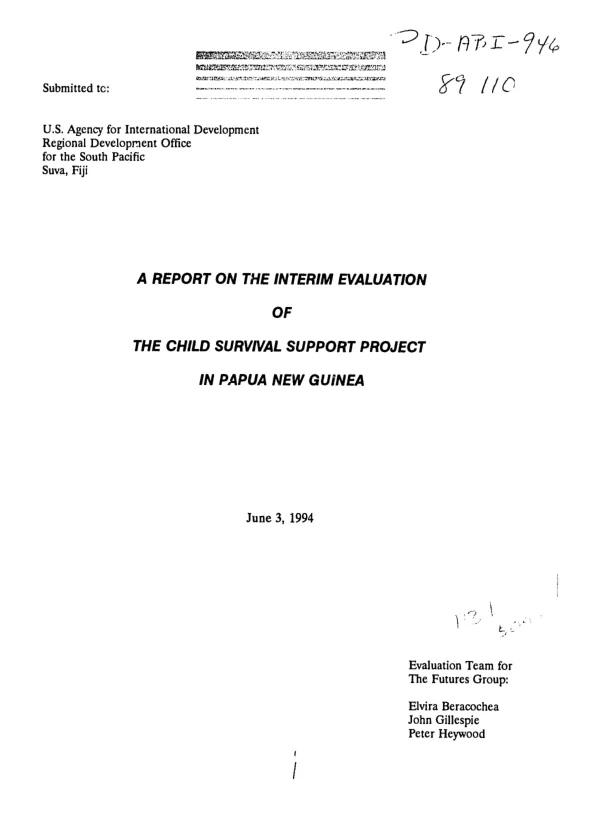
Papua New Guinea : child survival support project
Summarizes mid-term evaluation (PD-ABI-946) of a project to improve the delivery of maternal/child health care in rural Papua New Guinea.
1994
Sign in to readA free account is required to download.
Abstract
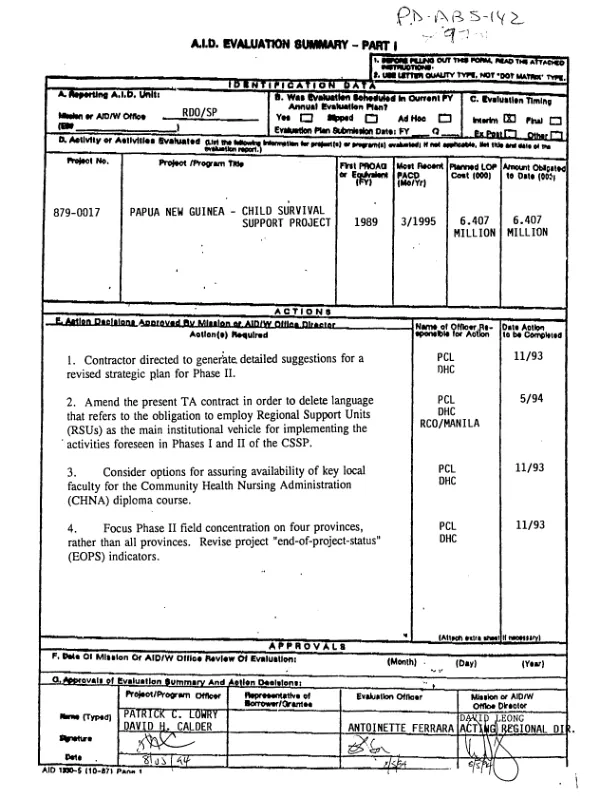
The project has been implemented by the Government of Papua New Guinea"s (GPNG) Department of Health (DOH). The evaluation covered the period 1989-6/94. The project has made progress despite a financial crisis in the GPNG related to falling mining revenues; an extremely high level of decentralization of authority within the GPNG; significant changes in high-level DOH staff; and deterioration of the security situation in rural areas and a consequent cutback in outreach activities by health staff. As a result, many project design assumptions are no longer valid. For example, the development of Regional Support Units (RSUs), originally seen as the main institutional vehicle for implementing project activities, is no longer viable given the instability in GPNG"s internal decentralization-centralization relationships with the provinces and the GPNG"s decision no longer to emphasize RSUs and management and technical centers. The project will have to find other institutional means of achieving its goals during Phase II. In addition, an emphasis on process rather than outcome/impact indicators would be more realistic, given the situation in the PNG. Technical support to the provision of rural health services has been commendable. The project has produced an impressive array of technical documents, curricula, and audiovisual material related to child survival. Also, a substantial body of research work either has been completed or is underway, although there have been some delays in establishing research agendas, reviewing and approving proposals, and in implementing research activities. More attention could be directed to research training. The Community Health Nursing Administration (CHNA) diploma course is underway, although finding qualified faculty to teach the course has been difficult. The GPNG"s intention to recentralize health services provides an opportunity to refocus efforts to improve health service delivery in rural areas, e.g., via larger budgets for rural patrols, improved management and supervision, better logistics and more supplies, improved immunization services and case management, in-service training, especially at service delivery levels, and efforts to increase childbirth safety. It is also recommended that the project focus its efforts on four provinces, as resources are insufficient to cover the entire country. In light of the decision to close the USAID Mission, the original PACD of 8/97 has been changed to 3/95. Despite this early closure, the modifications planned for Phase II were consistent with the evaluation recommendations.
Related documents