USAID DEC
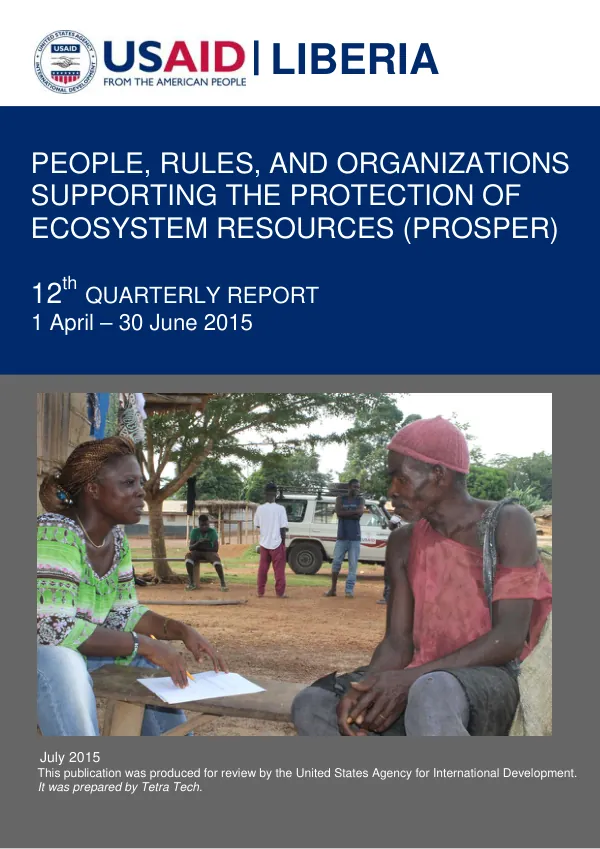
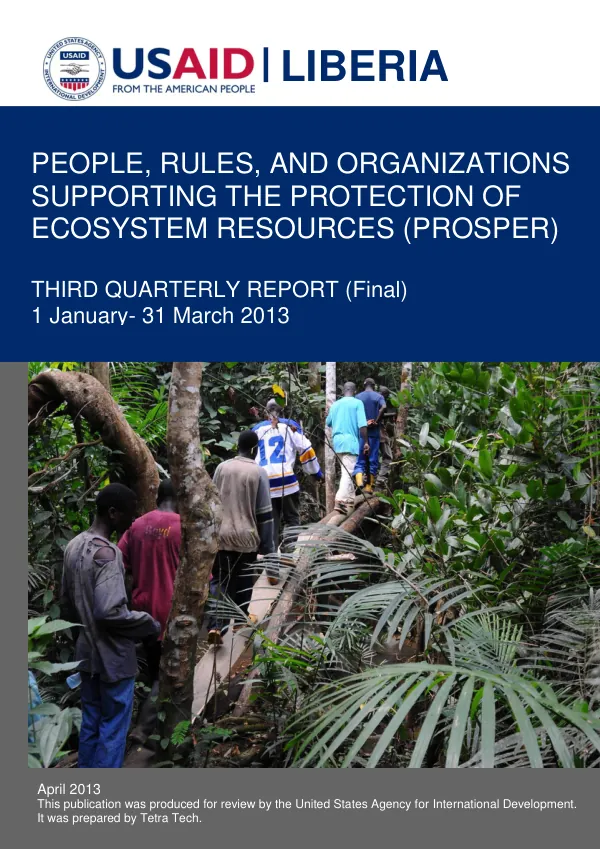
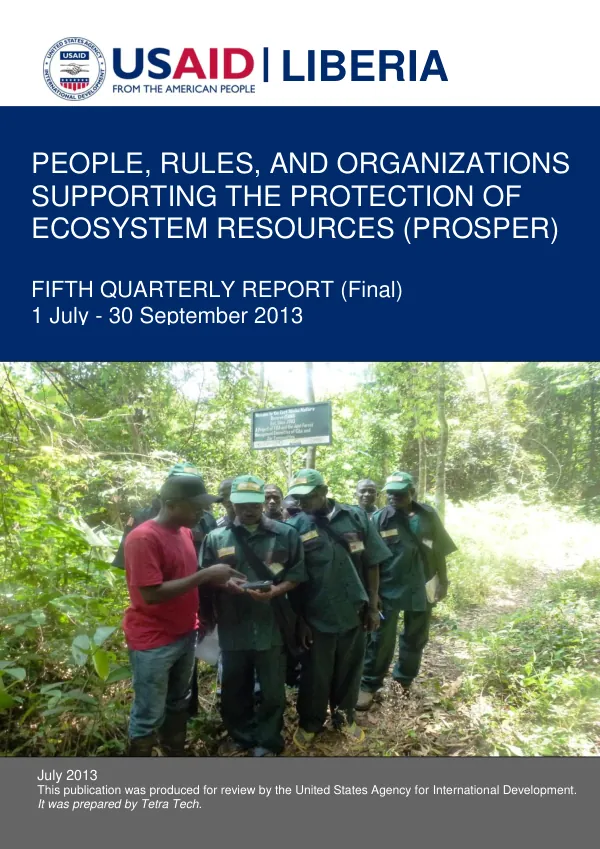
People, Rules and Organizations Supporting the Protection of Ecosystem Resources (PROSPER)
Sign inCONSERVATION INTERNATIONAL FOUNDATION
People, Rules and Organizations Supporting the Protection of Ecosystem Resources (PROSPER)
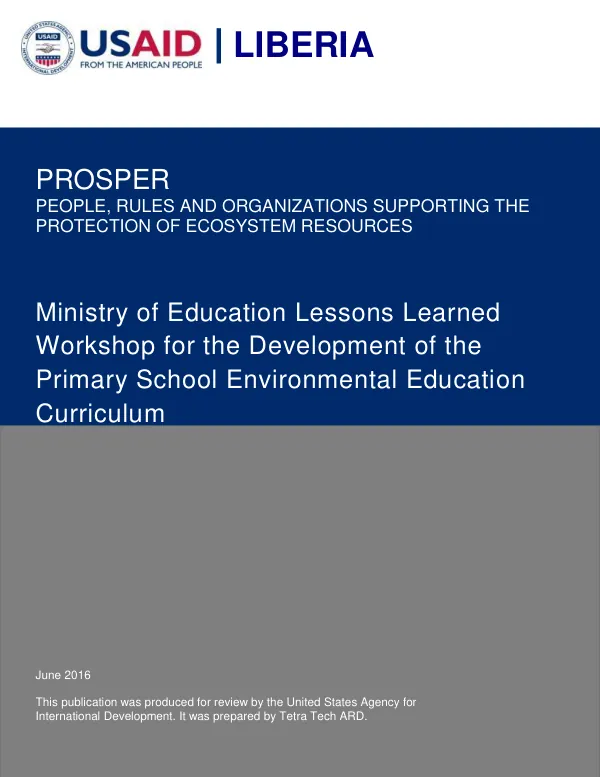
The Ministry of Education Lessons Learned Workshop for the Development of the Primary School Environmental Education Curriculum was held on June 7, 2016, in Liberia.
2016 · 27 pages
Sign in to readA free account is required to download.
Abstract
The workshop aimed to reflect on skills and experiences and document best practices from the process of developing the environmental education curriculum. The workshop gathered relevant stakeholders, including the Ministry of Education, PROSPER, and local facilitators, to review best practices in curriculum development and examine the process used by the Ministry of Education in partnership with PROSPER to develop the lesson plans. The curriculum development process involved multiple stakeholders, including the Ministry of Education, Environmental Protection Agency, Forestry Development Authority, and civil society organizations. PROSPER developed seventy-two lesson plans for grades 1 through 6, covering the four main subject areas – Science, Social Studies, English, and Mathematics. The lesson plans included detailed lesson descriptions, lists of resources, learning objectives, key concepts, and methodologies for evaluating students' understanding. The FAO's Curriculum Development Guide was used to develop a framework of best practices for the analysis of PROSPER's curriculum development process. The guide provides a comprehensive structure to the curriculum development process based on four guiding principles: students as the focus of the curriculum development process, curriculum materials developed by teams of experts and learners, a systematic approach using best practices, and practices adapted and changed to fit specific circumstances, audiences, and environments. The curriculum development model used by PROSPER consists of four phases: Planning Phase, Content and Teaching Methods Phase, Implementation Phase, and Evaluation and Reporting Phase. The Planning Phase involves identifying the issue, problem, or need for a curriculum, selecting the curriculum development team, and completing a needs assessment. The Content and Teaching Methods Phase involves creating clear outcomes, selecting specific content, and designing activities to help learners achieve intended outcomes. The Implementation Phase involves overseeing the production of the curriculum and its accompanying materials, testing those materials, making revisions based on feedback, recruiting and training teachers, and implementing the curriculum with sufficient planning to ensure its success. The Evaluation and Reporting Phase involves both formative and summative evaluations, with formative evaluations used throughout the process to ensure the quality and effectiveness of the curriculum development process. The workshop outcomes were accomplished, with participants fully engaged throughout the day. The workshop provided an opportunity for stakeholders to reflect on skills and experiences and document best practices from the process of developing the environmental education curriculum. The lessons learned from this process will inform future curriculum development activities and improve the quality and effectiveness of environmental education in Liberia.
Related documents