ENCOMPASS, LLC
Peruvian Youth Participation and Civic Engagement Assessment
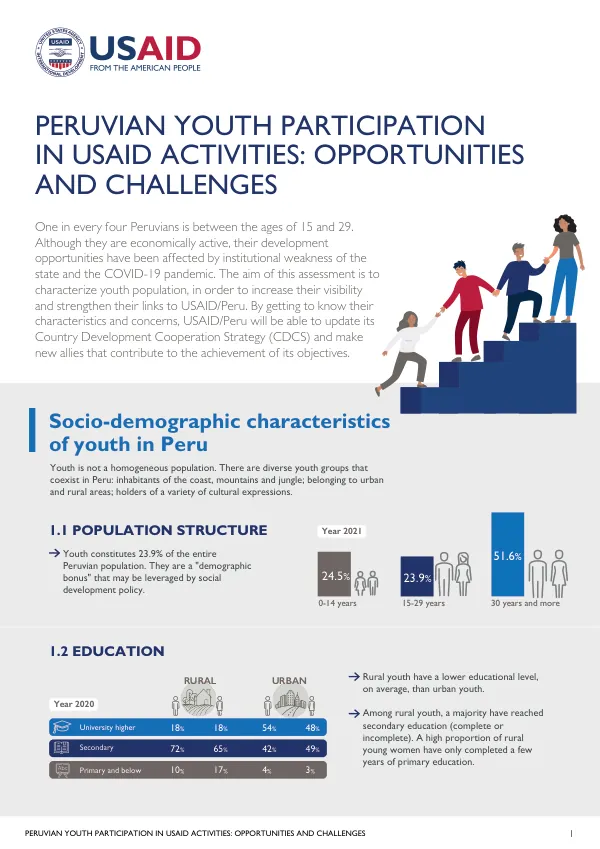
Peruvian youth participation and civic engagement are critical issues that require attention from the public agenda.
2022 · 2 pages
Sign in to readA free account is required to download.
Abstract
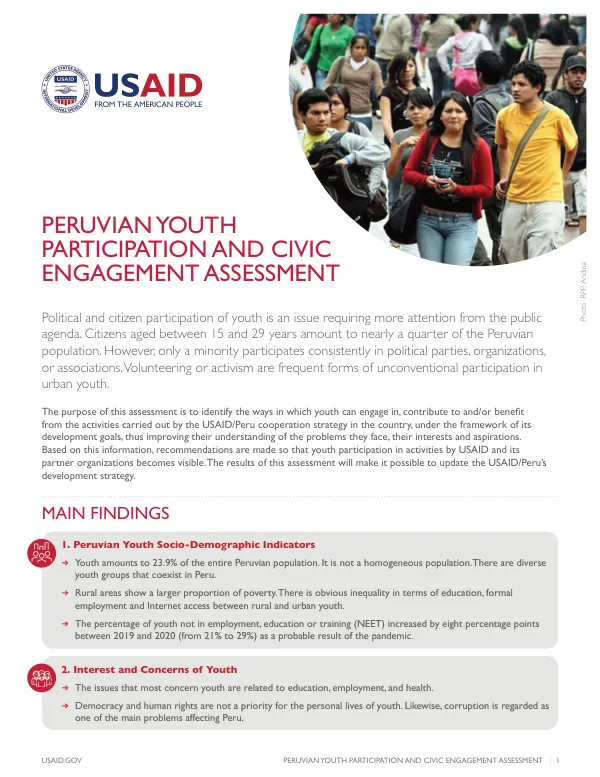
Citizens aged 15 to 29 years comprise nearly a quarter of the Peruvian population, but only a minority consistently participates in political parties, organizations, or associations. Volunteering or activism are frequent forms of unconventional participation among urban youth. The assessment aims to identify ways in which youth can engage in, contribute to, and benefit from activities carried out by the USAID/Peru cooperation strategy. This includes improving their understanding of problems they face, their interests, and aspirations. The assessment's findings will inform the update of USAID/Peru's development strategy. Peruvian youth socio-demographic indicators reveal a diverse population with varying levels of poverty, education, formal employment, and Internet access between rural and urban youth. Rural areas show a larger proportion of poverty, and the percentage of youth not in employment, education, or training (NEET) increased by eight percentage points between 2019 and 2020, likely due to the pandemic. Youth concerns and interests are primarily related to education, employment, and health. Democracy and human rights are not a priority for their personal lives, and corruption is regarded as one of the main problems affecting Peru. Urban youth, particularly those with higher education, show more interest in political participation, while rural areas have minimal participation in large nationwide mobilizations. Citizen participation among youth is minor, but many, especially from urban areas, participate in volunteering to support vulnerable groups. Virtual volunteering has increased significantly since the pandemic began, and social networks have become important communication and convening channels for urban youth. To address these findings, recommendations include incorporating the youth and lifecycle approaches into USAID's Peru Development Cooperation Strategy. This involves addressing different youth stages comprehensively and identifying community practices led by youth to incorporate them into ongoing activities. Activities should be designed to target youth not in employment, education, or training (NEET), and communicational components should segment target audiences according to sex and age. Long-term interventions for youth should be designed under the gender approach, aimed at developing capacities and generating income. The inclusion of youth as a target population of interventions should be promoted, and ongoing interventions should make youth visible by designing follow-up indicators for the beneficiary population. Incentives should be provided to encourage permanent participation, and social networks should be used to work and interact with the youth population.
Related documents