ENCOMPASS, LLC
Peruvian Youth Participation in USAID Activities: Opportunities and Challenges
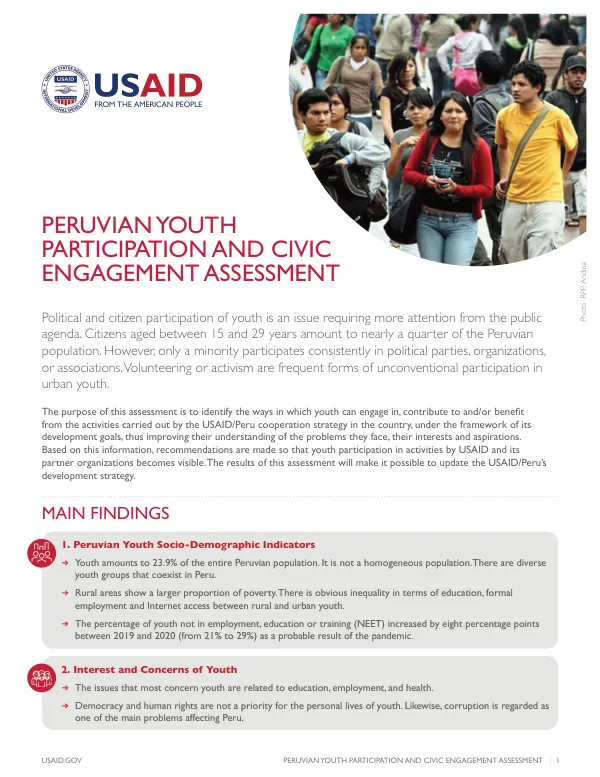
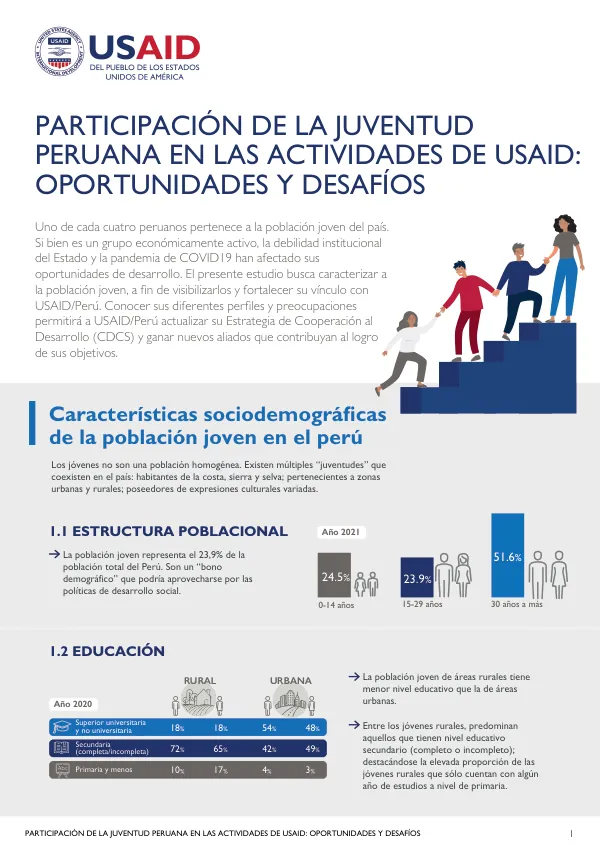
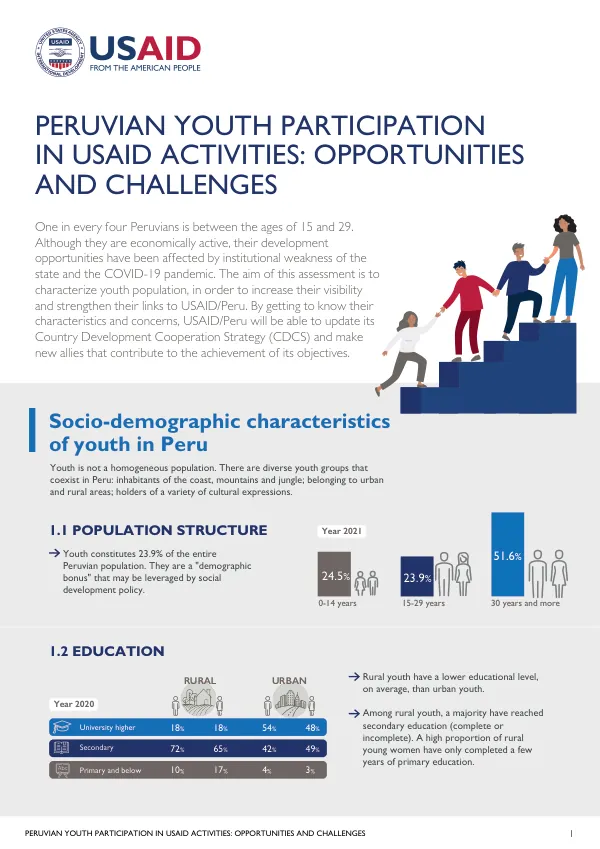
Peruvian youth constitute 23.9% of the entire Peruvian population, presenting a demographic bonus that can be leveraged by social development policy.
2022 · 4 pages
Sign in to readA free account is required to download.
Abstract
The youth population is diverse, with various groups coexisting in Peru, including inhabitants of the coast, mountains, and jungle, as well as those from urban and rural areas, and holders of different cultural expressions. Rural youth have a lower educational level than their urban counterparts, with a majority having reached secondary education. However, a high proportion of rural young women have only completed a few years of primary education. Internet access is also unequal, with rural youth having a 30 percentage point lower rate of access compared to their urban counterparts. This disparity contributes to rural youth migrating to urban areas. Teenage pregnancy rates are higher in rural areas, with rates three times higher than in urban contexts. The highest rates occur in the Amazon region. One in every two teenage women faced some type of family violence in 2019, with rates above the national average. Younger women are the most vulnerable to this type of violence, including physical violence. Informal work rates among youth are higher than those for the rest of the population. The NEET population, consisting of youth not in employment, education, or training, amounted to 2.4 million nationwide in 2020, with an increase of over 8 percentage points compared to 2019. This may be attributed to the COVID-19 pandemic. Youth participation in politics is passive, with a lack of civic identity and commitment to major political parties. Interest in politics is mostly limited to urban areas, and youth participate sporadically in mobilizations with specific goals. In the rural context, manifestations are usually associated with productive activities. Afro-descendent and LGBTIQ+ populations are better able to organize themselves to defend their rights and promote their inclusion in the political agenda. USAID activities in Peru have primarily targeted the general public or families, considering youth as beneficiaries but not as the target population. However, USAID policy recognizes the key role of youth in achieving social, political, and economic change in their own countries. The role played by youth in USAID's current activities is recognized, with them exercising leadership roles in some communities. USAID activities have provided various benefits for youth, including access to leadership training, start-ups, and financing, as well as participation in the commercial stages of the production chain. These benefits are evident in initiatives such as the Peru Cacao Alliance, CR3CE Alliance, and Pro-Bosques. Additionally, USAID activities have promoted alternative crops to drive communities away from narco-terrorism and other illicit activities, and have strengthened capacities in forestry topics. The youth contribution to USAID activities is recognized, with them playing key roles in achieving social, political, and economic change. USAID policy emphasizes the importance of working with youth and making them visible. The document highlights the need for future USAID interventions to target youth and provide them with opportunities for leadership, education, and economic development.
Related documents